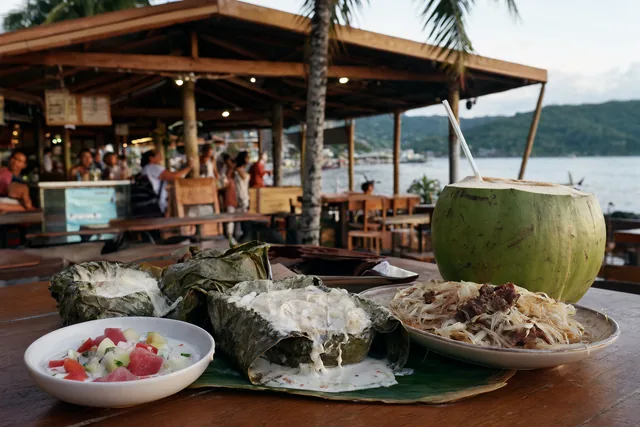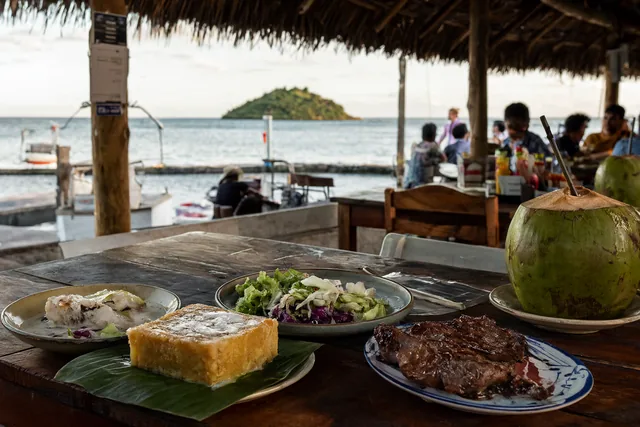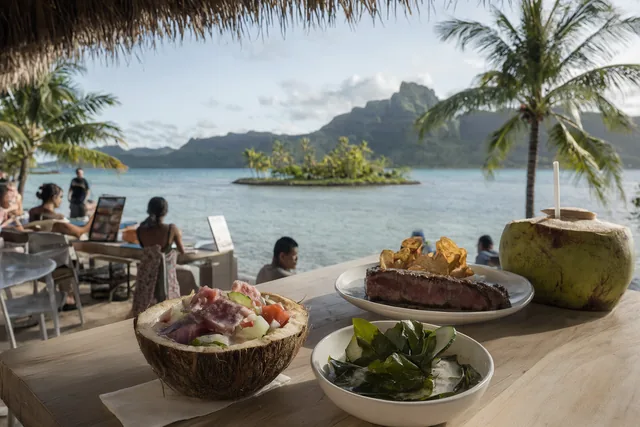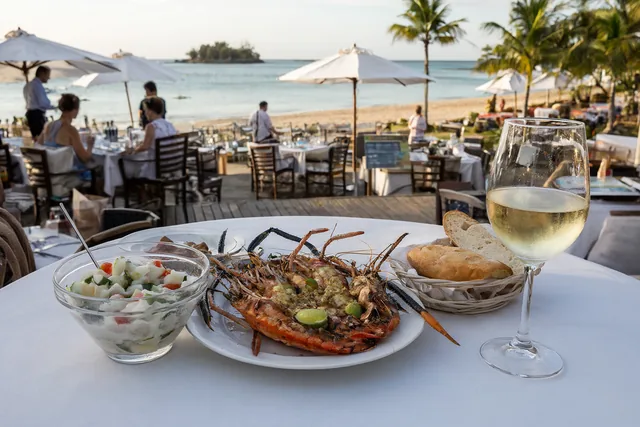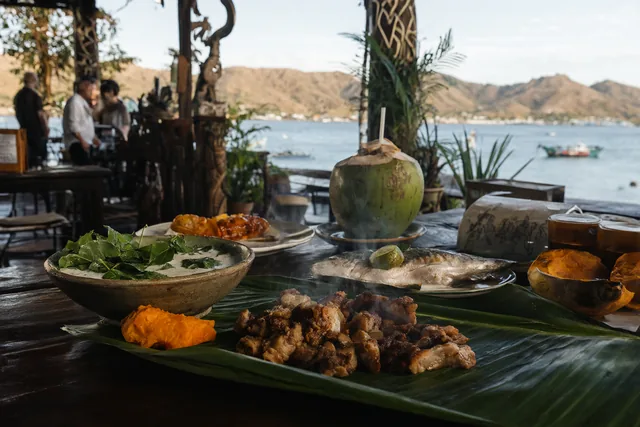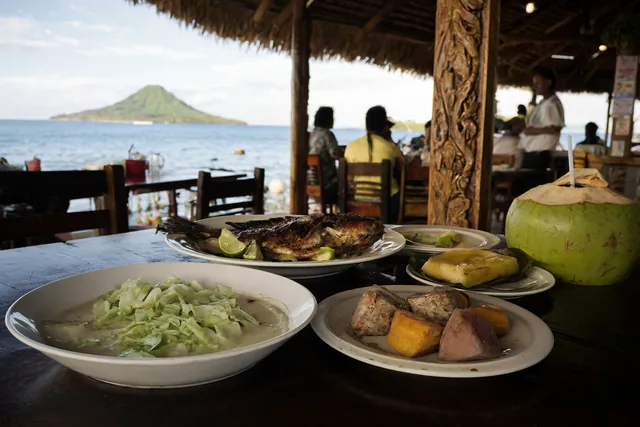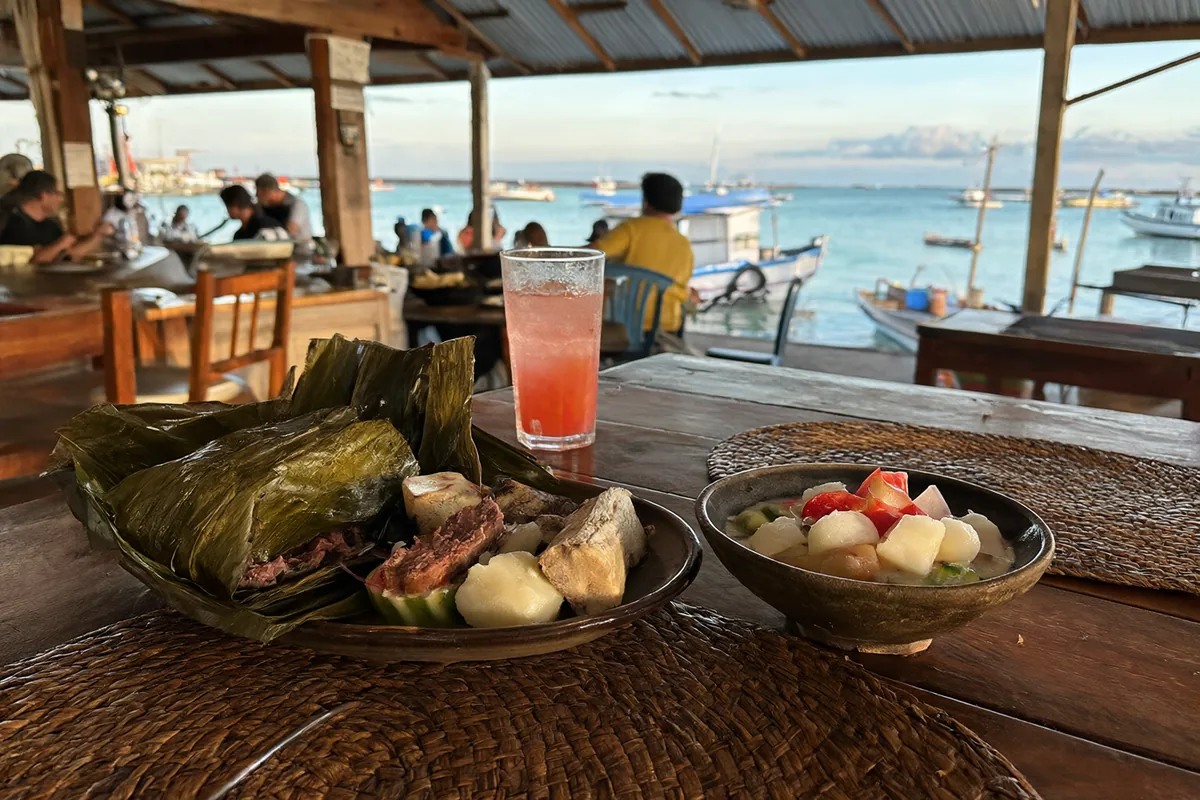
Tonga is the Pacific's last kingdom, and food here is tied to church, family and feasting in a way few other places can match. A Tongan feast table can hold a whole roast pig, parcels of taro leaves baked in the earth oven, raw fish in coconut cream and a mountain of root crops, all cooked for a Sunday or a celebration. This Tonga food guide covers the dishes to know, the Tongan words you will see on menus and at markets, how the Sunday 'umu and kava circles work, tipping and tax, and then where to eat in Nuku'alofa, around Tongatapu, in Neiafu on Vava'u, in Ha'apai and on 'Eua. Restaurants are few outside the capital and Neiafu, so this guide is as much about markets, guesthouse kitchens and feasts as about places with a menu.
What to eat in Tonga: 12 dishes to know
These are the dishes you will meet at markets, feast nights, guesthouses and family tables. Tongan names come first, as that is how most locals say them.
- 'Ota 'ika (everywhere): raw fish, often tuna or a firm reef fish, cured in lemon or lime juice and mixed with coconut cream, onion, tomato, cucumber and sometimes chilli. It is Tonga's signature starter.
- Lu pulu (everywhere): taro leaves wrapped around corned beef, onion and thick coconut cream, tied in banana leaf or foil and baked in the 'umu until rich and soft. It is the centrepiece of Sunday lunch.
- Lu sipi and lu moa (everywhere): the same taro leaf parcel made with lamb or mutton (sipi) or chicken (moa). Lu sipi is often made with mutton flaps imported from New Zealand.
- Puaka tunu (feasts): whole suckling pig roasted on a spit over coals, turned for hours until the skin is crisp. No Tongan feast is complete without one.
- Feke (the coast): octopus, tenderised and cooked in coconut cream, or grilled. It is a favourite feast and market dish.
- 'Ufi (everywhere): yam, the most prestigious crop in Tonga. Large, well-grown yams are given as gifts and presented at important occasions.
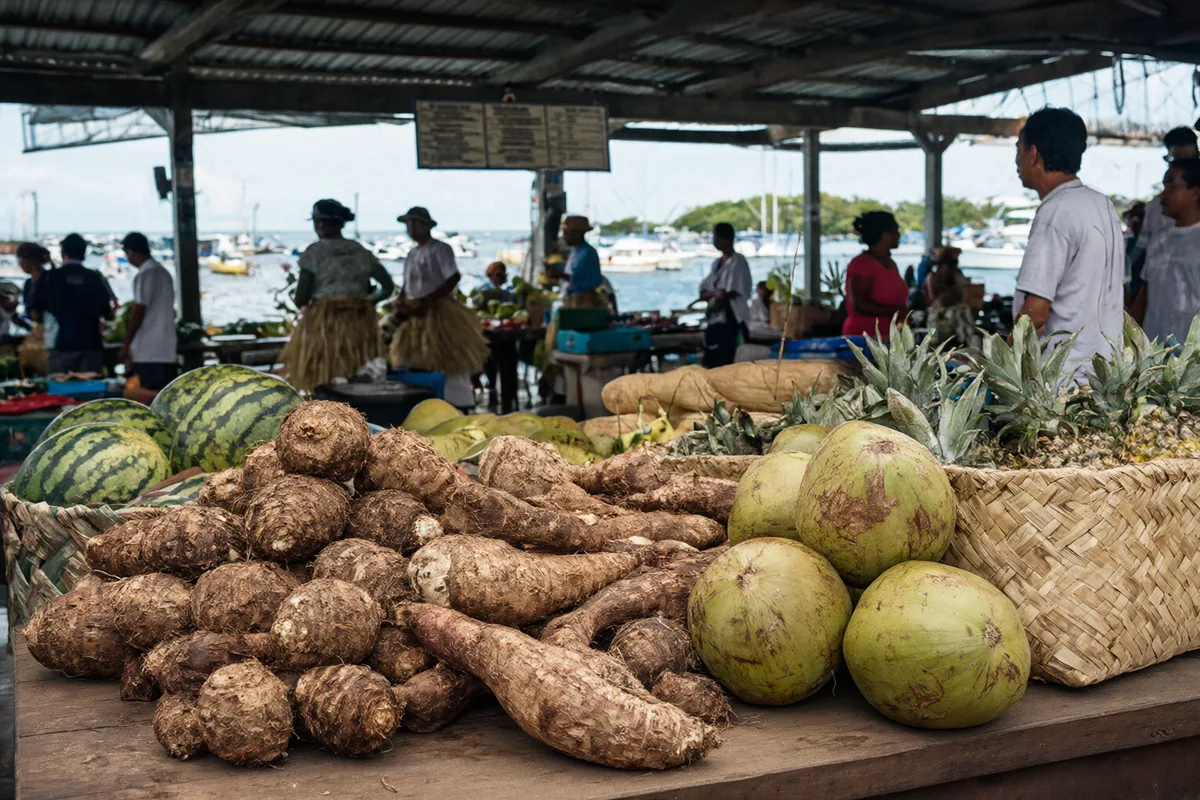
- Talo, manioke and kumala (everywhere): taro, cassava and sweet potato, boiled or baked in the 'umu, the starch at nearly every meal. Mei (breadfruit) and hopa (plantain) appear in season.
- Lū (everywhere): plain taro leaves cooked in coconut cream, a soft green side dish without meat.
- Faikakai (feasts and markets): a sweet pudding of breadfruit, taro or cassava served in a thick caramel sauce made from coconut cream and sugar. Faikakai topai uses small flour dumplings instead.
- 'Otai (everywhere): Tonga's favourite cold drink, grated watermelon or other fruit mixed with coconut milk, sugar and plenty of ice.
- Fish and seafood (everywhere): grilled reef fish, tuna, lobster and clams are common, and in Vava'u and Ha'apai the catch often comes straight from the boat to the guesthouse kitchen.
- Kava (everywhere): the drink made from ground kava root mixed with water, shared in kava circles called faikava in the evening. It tastes earthy, looks like muddy water and makes the tongue tingle.
How to read a menu in Tonga
Menus in Tonga are mostly in English, but market stalls, feast nights and guesthouse kitchens use Tongan names for dishes. Every vowel is pronounced, and the apostrophe (called fakau'a) marks a glottal stop, a short catch in the voice, so 'ota 'ika is "oh-tah ee-kah" with a break before each word. A line over a vowel, as in lū, makes it longer. These are the words you will see most often.
| Local term | Language | Meaning |
|---|---|---|
| 'Umu | Tongan | Earth oven of hot stones, and the food cooked in it |
| 'Ota 'ika | Tongan | Raw fish in citrus and coconut cream |
| 'Ika | Tongan | Fish |
| Lū | Tongan | Taro leaves, and dishes made with them |
| Pulu / sipi / moa | Tongan | Beef (usually corned beef) / lamb or mutton / chicken |
| Puaka | Tongan | Pig or pork; puaka tunu is roast pig |
| Feke | Tongan | Octopus |
| 'Ufi / talo / manioke | Tongan | Yam / taro / cassava |
| Kumala / mei / hopa | Tongan | Sweet potato / breadfruit / plantain |
| Niu | Tongan | Coconut |
| Faikakai | Tongan | Pudding in caramel coconut sauce |
| 'Otai | Tongan | Fruit and coconut milk drink |
| Kai / me'akai | Tongan | To eat / food |
| Faikava | Tongan | An evening kava gathering |
"Pulu" on a Tongan menu almost always means tinned corned beef rather than fresh beef, which surprises many visitors ordering lu pulu. swap.menu explains Tongan dish names when it reads a menu or a feast board, so you know what is inside each parcel before you order.
Tipping, tax and paying the bill
Tipping is not customary in Tonga and is not expected in restaurants, cafés or guesthouses. Service runs at its own gentle pace, and nobody waits for a tip. If you stay for a while with a family-run guesthouse or a small resort, a gift for the family or a contribution to a staff fund at the end of your stay is a kind way to say thanks. Our guide to tax and service charges on menus explains how these lines work around the world.
Tonga charges a consumption tax of 15 percent, normally included in prices in shops and local cafés. Some hotels and resorts quote prices before tax, so check the menu. The currency is the Tongan pa'anga (TOP), written T$ and divided into 100 seniti. Cards are accepted at the main hotels and some restaurants in Nuku'alofa and Neiafu, but markets, taxis, guesthouses, small shops and anywhere on the outer islands need cash. ATMs are in Nuku'alofa and Neiafu, and very scarce elsewhere. If a card machine offers to charge you in your home currency, choose pa'anga: our guide to paying in local currency explains why.
Sunday is different in Tonga. The constitution keeps Sunday as a day of rest, and almost all shops, markets, cafés and businesses close. Families go to church, then gather for a big lunch from the 'umu, the earth oven. Tongan 'umu are dug into the ground: stones are heated on a fire in the pit, the food is wrapped in leaves and laid on top, and the whole oven is covered with more leaves and earth for a couple of hours. Resorts and hotels serve their guests as usual, and some offer an 'umu lunch, but plan ahead, buy snacks and water on Saturday, and arrange Sunday transport in advance. Going to a church service to hear the singing is welcome, and you should dress modestly with shoulders and knees covered.
Meal times on other days are early, with lunch from about noon and dinner from about 6:30pm. Many local places close by early evening.
Kava etiquette: kava is shared in the evening at a faikava, often in a kava club (kalapu) or a community hall, and the men's sessions can run late into the night with singing. Visitors are sometimes invited, and some guesthouses and tours run kava evenings for guests. Sit cross-legged in the circle, accept the coconut-shell cup when it is handed to you, drink it in one go and pass it back. You can politely decline a refill. At some sessions a young woman called a tou'a mixes and serves the kava.
Where to eat in Tonga, island by island
Tonga is spread over four main island groups. Most visitors arrive on Tongatapu, where the capital Nuku'alofa is, and many fly or sail north to Vava'u or Ha'apai. Jump to a destination:
Where to eat in Nuku'alofa
Nuku'alofa is Tonga's capital and the only town with a real choice of restaurants and cafés. The place to start is Talamahu Market in the centre of town, the main produce market, piled with yams, taro, cassava, kumala, watermelons, pineapples, bundles of kava root and coconuts, with handicraft stalls selling woven mats and tapa cloth. Snack stalls nearby sell 'otai, sweet buns, fried dough and plates of local food. Saturday morning is the busiest and best time to go, and it is your last chance to shop before Sunday.
Along Vuna Road, the waterfront road that runs past the white wooden Royal Palace, there are cafés and restaurants with harbour views serving 'ota 'ika, grilled fish, burgers and pizza, and in the backstreets of central Nuku'alofa you will find Chinese restaurants and small takeaways that do fish and chips, chop suey and fried chicken. Fresh fish is sold early in the morning near the wharves. Several hotels and tour operators hold Tongan feast and dance nights during the week, the easiest way to try lu pulu, puaka tunu and faikakai in one sitting. Nuku'alofa is small and quiet in the evening, so check opening hours before setting out, especially on Saturday night.
Where to eat around Tongatapu
Beyond Nuku'alofa, Tongatapu is flat, green and covered in plantations of taro, cassava, yams and coconut palms, with villages every few kilometres. Most visitors staying outside town are at beach resorts on the coast, where meals are usually eaten at the resort: 'ota 'ika, fresh fish, lobster when available and weekly feast nights. Day trips to the blowholes at Houma, the ancient trilithon of Ha'amonga 'a Maui and the royal tombs are the best chance to see village life and buy fruit or 'otai from a roadside stand.
Shops in the villages of Tongatapu are small, often run by Chinese families, and stock bread, tinned food, noodles, biscuits and cold drinks. If you are driving around the island on Sunday, almost nothing will be open, but you will see and smell the 'umu smoke rising from every village by late morning. If a family invites you to share their Sunday meal, accept the plate graciously, and know that guests are often served first and urged to eat more.
Where to eat in Neiafu
Neiafu, the main town of Vava'u, sits above one of the most sheltered natural harbours in the Pacific, the Port of Refuge, and in the sailing season it fills with yachts from around the world. This gives Neiafu a more international set of cafés, bars and restaurants than its size suggests, many along the waterfront, with menus of fish tacos, pizza, burgers and fresh seafood alongside Tongan dishes. From about July to October, humpback whales come to Vava'u to breed and calve, and the town is at its busiest.
The Utukalongalu Market by the harbour in Neiafu sells produce, kava root and handicrafts, and is a good place to buy fruit for a boat trip. Vava'u also grows vanilla, which you will find in shops and on some dessert menus. Many visitors take a day out on the water, and some tours and outer island resorts put on Tongan feasts on the beach with 'umu food and roast pig. Outer island resorts usually include meals, so ask what is on the menu when you book.
Where to eat in Ha'apai
Ha'apai is a scattering of low coral islands between Tongatapu and Vava'u, and it is the quietest of Tonga's main island groups. The main town, Pangai on Lifuka island, has a small market, a few shops, a bakery and a handful of simple guesthouses that serve meals. Food in Ha'apai is home cooking: fish caught the same day, root crops, lū, 'ota 'ika and fruit, often eaten with the family who runs your guesthouse.
Small beach resorts on nearby islands such as Foa and Uoleva include meals, usually set menus based on the catch and whatever is ready in the garden. There are very few places to eat in Ha'apai outside your accommodation, and supplies arrive by boat, so bring cash, snacks and any special foods from Nuku'alofa, and tell your hosts about dietary needs before you arrive. Life here is slow and the welcome is warm, which is the reason to come.
Where to eat on 'Eua
'Eua, a short flight or ferry ride from Tongatapu, is Tonga's hiking island, with rainforest, cliffs, caves and a national park on its high eastern side. The main village, Ohonua, has a wharf, a few shops and a small market, and the island's eco-lodges and guesthouses cook meals for guests. Expect hearty home cooking after a day of walking: fish, chicken, root crops, lū and fruit, with 'umu food on Sunday.
There are almost no restaurants on 'Eua, so choose accommodation that includes meals and carry water and snacks on hikes. Shops stock basics only, and card payments are rare, so bring pa'anga in cash. If you are crossing by ferry from Nuku'alofa, the trip can be rough, so eat lightly beforehand.
Vegetarian, vegan and allergy tips
Tongan cooking is generous with meat, so vegetarians need to ask. The good news is that root crops, plain lū, breadfruit, plantain, fruit, 'otai and faikakai are usually meat free, and resorts and cafés in Nuku'alofa and Neiafu are used to vegetarian requests. Watch for corned beef or mutton in taro leaf parcels, fish in many feast dishes, and food in the 'umu sharing space with pork. There is no everyday Tongan word for vegetarian, so say "vegetarian" and then "no meat, no fish", which is understood in any place that hosts visitors. Vegans should check for butter and milk in baked goods and desserts.
Coconut is in nearly every Tongan dish and drink, which matters for anyone with a coconut allergy. Seafood and shellfish are common at feasts, often without labels. On the outer islands, kitchens work with limited supplies, so tell your guesthouse about any allergy when you book. Our guide to eating abroad with food allergies explains how to explain an allergy clearly.
Useful Tongan phrases for ordering
English is widely spoken in tourist areas, and Tongans are pleased when visitors try a few words.
Mālō e lelei "Hello", the everyday greeting
Fēfē hake? "How are you?"
Fakamolemole "Please"
Mālō 'aupito "Thank you very much"; "mālō" alone is "thanks"
'Io / 'Ikai "Yes" / "No"
'Oku ifo! "It is delicious!"
Nofo ā / 'Alu ā "Goodbye": nofo ā is said by the person leaving, 'alu ā by the person staying
How swap.menu helps you eat in Tonga
A feast board in Nuku'alofa or a guesthouse menu in Neiafu might list lu pulu, lu sipi, feke, faikakai and 'otai with no explanation at all. Photograph the menu with swap.menu and every dish appears in your own language with a short explanation, so you know that lu sipi is mutton baked in taro leaves and that feke is octopus. Visitors from Japan, China, Korea or Europe can read any Tongan menu in their own language, choosing from 29. Every price is converted from pa'anga to your home currency, and we point out any tax added on top at hotels.
Tap the dishes you want, add a note such as "no meat, no fish" or "no coconut", typed or spoken, and swap.menu shows your order clearly for the staff. Your scanned menus are saved, so you can check what you ate in Nuku'alofa when you are out in Vava'u. You can try it right now on a sample menu with the free demo, or see travel pass prices.
Off to Tonga? Your first 3 menu scans are free, and a travel pass starts from $4.99 with nothing that renews.
Start free with 3 scansTonga food FAQ
Do you tip in Tonga?
Tipping is not customary in Tonga and is not expected in restaurants or guesthouses. If you want to thank your hosts after a long stay, a small gift or a contribution to a staff fund is a kind gesture.
What food is Tonga famous for?
Tonga is known for lu pulu (corned beef and coconut cream baked in taro leaves), 'ota 'ika (raw fish in coconut cream), whole roast suckling pig at feasts, yams and other root crops, faikakai pudding and 'otai, a fruit and coconut drink. Kava is the traditional social drink.
Is anything open on Sunday in Tonga?
Very little. Sunday is a day of rest under the Tongan constitution, so shops, markets and most cafés close. Hotels and resorts still serve their guests, and many offer an 'umu lunch, but buy snacks and water on Saturday.
Is Tonga expensive to eat out?
Hotel and resort meals are priced similarly to New Zealand, as many ingredients are imported. Market food, bakeries and local takeaways in Nuku'alofa and Neiafu are good value, and guesthouses on the outer islands often include meals in the price.
Is tap water safe to drink in Tonga?
It is best not to drink tap water in Tonga without treating it. Most visitors drink bottled water or filtered rainwater supplied by their accommodation.
How can I understand Tongan dish names on a menu?
Learn a few words such as lū, 'ika, pulu and 'ufi, or photograph the menu with swap.menu. It translates every dish into your language, explains Tongan names, converts prices from pa'anga to your currency and points out any tax added at hotels.
Travelling further in the Pacific? Read our food guides for nearby islands:
- Samoa food guide
- Fiji food guide
- Cook Islands food guide
- French Polynesia food guide
- New Zealand food guide
- Australia food guide
Or browse every travel food guide.