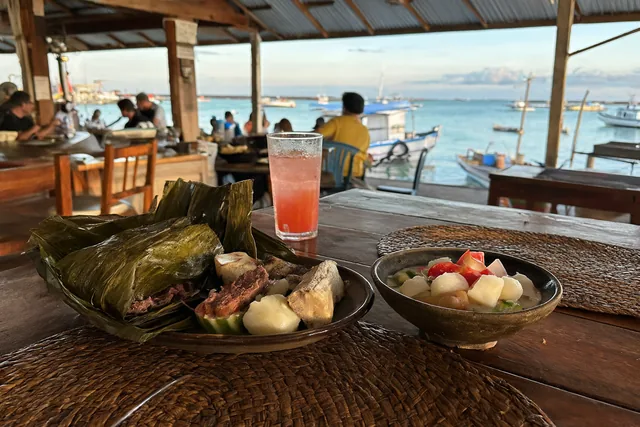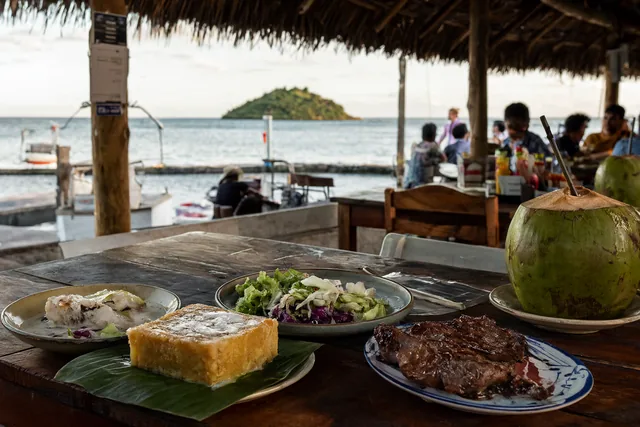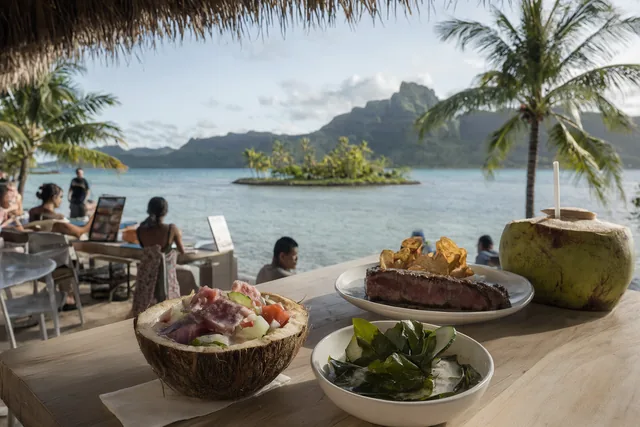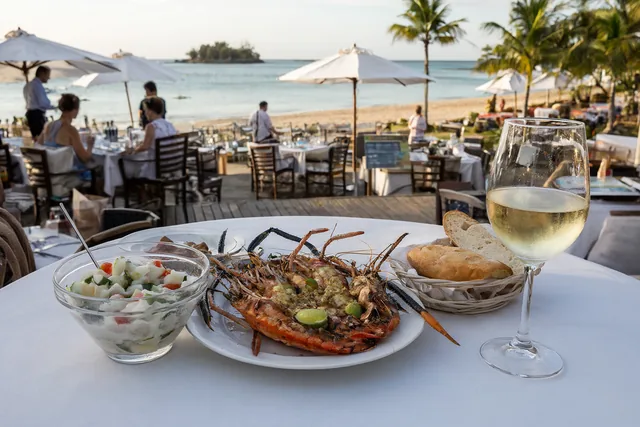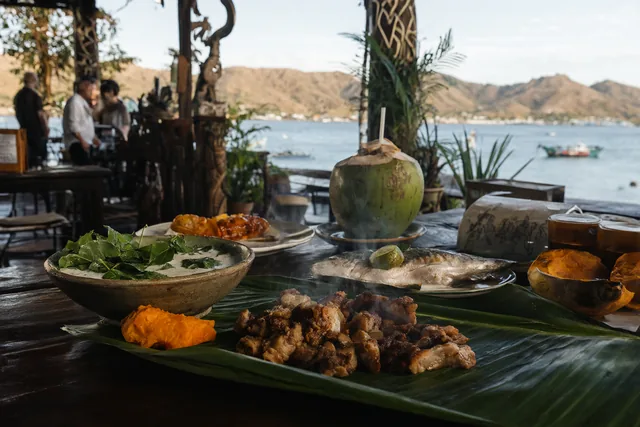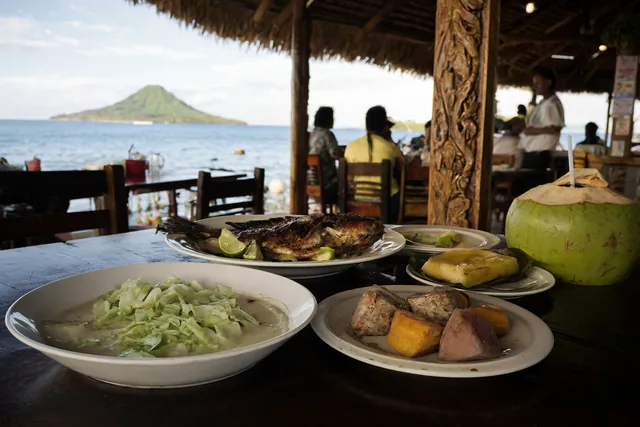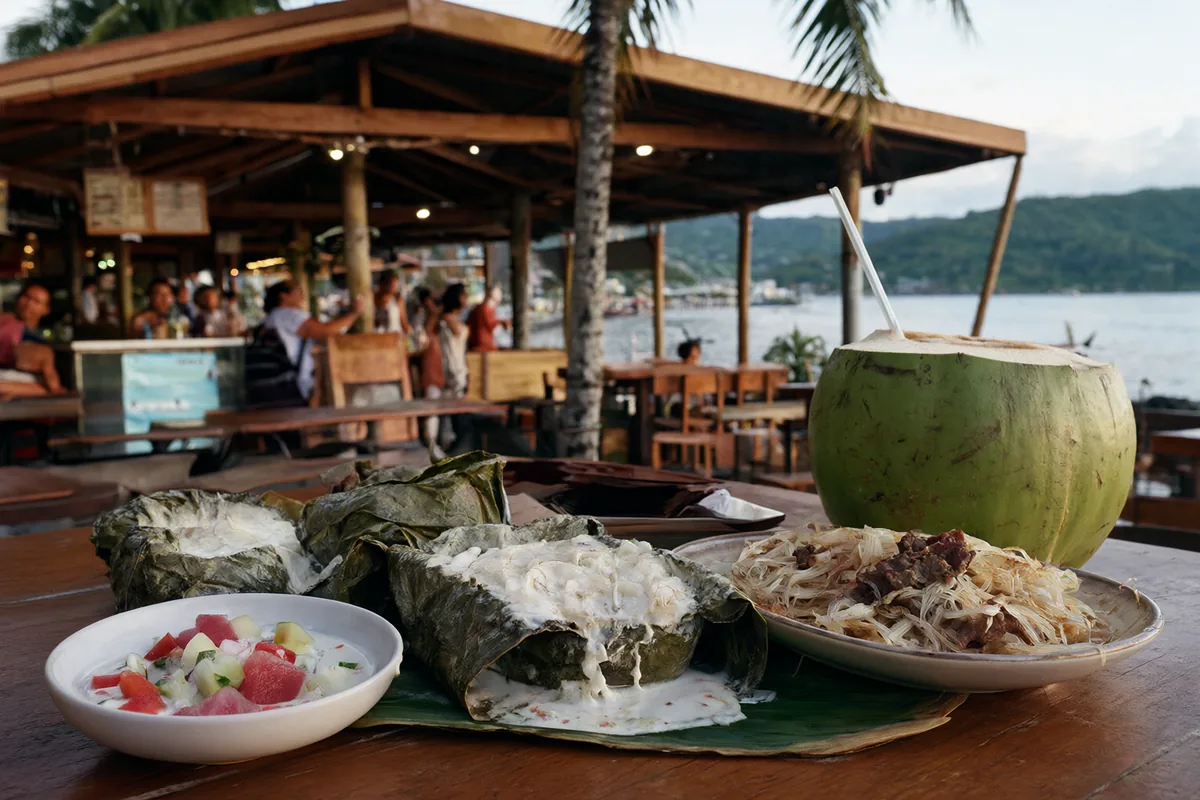
Samoa is one of the most traditional places in the Pacific, and its food follows the rhythm of village life: fish from the reef, taro and breadfruit from the plantation, coconut cream in almost everything, and a Sunday lunch cooked over hot stones that families have shared for generations. This Samoa food guide covers the dishes to know, the Samoan words you will see on menus and market boards, what the umu and the Sunday to'ona'i are, how 'ava (kava) is served, tipping and tax, and then where to eat in Apia, along the south coast of Upolu, at Lalomanu, and on Savai'i in Salelologa and Manase. Much of the best Samoan food is not in restaurants at all, so the markets and beach fale stays get as much space here as the cafés.
What to eat in Samoa: 12 dishes to know
These are the dishes you will meet at markets, fiafia nights, beach fale dinners and Sunday tables. Samoan names come first, as that is how most locals and many menus write them.
- Oka (everywhere): raw fish, usually tuna or another firm white fish, cut into cubes, cured briefly in lemon or lime juice and mixed with coconut cream, onion, tomato, cucumber and sometimes chilli. It is the Samoan cousin of Fiji's kokoda and Tahiti's poisson cru.
- Palusami (everywhere): young taro leaves wrapped around thick coconut cream and onion, then baked in the umu until the leaves are soft and the cream sets. Many versions include tinned corned beef or fish.
- Lu'au (everywhere): taro leaves cooked down with coconut cream, served as a side dish. In Samoa the word means the leaves and the dish, not a party.
- Sapasui (everywhere): Samoa's version of chop suey, glass noodles fried with soy sauce, garlic, ginger and beef, chicken or pork. It arrived with Chinese workers and is now on every family feast table.
- Pisupo (everywhere): tinned corned beef, so central to Samoan cooking that it has its own word. The name comes from "pea soup", one of the first tinned foods traders brought to the islands.
- Fa'alifu talo and fa'alifu fa'i (everywhere): taro or green bananas boiled and then simmered in coconut cream. Simple, filling and on almost every local plate.
- Fa'ausi (everywhere): baked taro or breadfruit cut into pieces and smothered in a sticky sauce of caramelised coconut cream and sugar, served as a dessert at feasts.
- Panipopo (Apia bakeries and markets): soft bread rolls baked in a sweet coconut cream sauce that soaks into the bottom. Best warm in the morning.
- Pani keke (markets and roadside stalls): round fried dough balls, Samoa's everyday doughnut, sold in bags by the half dozen.
- Koko Samoa and koko alaisa (everywhere): koko Samoa is a drink made from locally grown cocoa beans, roasted and ground into a rich paste, then mixed with hot water and sugar. Koko alaisa is rice cooked in that cocoa, often with coconut cream, a breakfast or dessert dish.
- Suafa'i (everywhere): ripe bananas cooked into a sweet porridge with tapioca or sago and coconut cream, served warm or cold.
- 'Ava (everywhere): Samoan kava, made from the ground root of a pepper plant mixed with water. It is served at ceremonies to welcome guests and mark important occasions, and it is earthy, slightly peppery and mildly numbing on the tongue.
Look out too for keke pua'a, a steamed bun filled with pork that Samoans adopted from Chinese cooking, supo esi (a warm pawpaw and coconut soup), and in October or November the rising of the palolo, a reef worm that appears for a few nights a year and is eaten as a seasonal delicacy.
How to read a menu in Samoa
Menus in Samoa are mostly in English, but local cafés, market stalls and the food at a fiafia night often keep their Samoan names. Pronunciation helps: the letter g is said "ng", so tagata (person) is "tah-ngah-tah", and the apostrophe marks a glottal stop, a short catch in the voice, as in pua'a (pig). Every vowel is pronounced. These are the words you will see most often.
| Local term | Language | Meaning |
|---|---|---|
| Umu | Samoan | Above-ground oven of hot stones, and the food cooked in it |
| To'ona'i | Samoan | The Sunday lunch after church, cooked in the umu |
| Oka | Samoan | Raw fish in citrus and coconut cream |
| I'a | Samoan | Fish |
| Moa / pua'a / povi | Samoan | Chicken / pork / beef |
| Pisupo | Samoan | Tinned corned beef |
| Talo / ulu / fa'i | Samoan | Taro / breadfruit / banana |
| Niu / pe'epe'e | Samoan | Coconut / coconut cream |
| Fa'alifu | Samoan | Boiled and simmered in coconut cream |
| Lu'au / palusami | Samoan | Taro leaves in coconut cream / taro leaf parcels baked in the umu |
| Sapasui | Samoan | Chop suey with glass noodles |
| Koko Samoa | Samoan | Hot drink made from local roasted cocoa |
| 'Ava | Samoan | Kava, the ceremonial root drink |
| Fiafia | Samoan | A celebration; at hotels, a buffet dinner with dancing |
"Lu'au" in Samoa is a taro leaf dish, not a feast, and "pisupo" is corned beef, not soup. Words like these trip up visitors every day. swap.menu explains Samoan dish names when it reads a menu or a market board, so you know what is in a palusami before you bite into it.
Tipping, tax and paying the bill
Tipping is not part of Samoan culture and is not expected in restaurants, cafés or beach fales. Service is warm but relaxed, and nobody waits for a tip. If you want to say thank you to staff at a resort or a family-run fale where you stayed for several nights, a contribution to a shared staff fund or a gift for the family is more in keeping with local custom than cash on the table. Our guide to tax and service charges on menus explains how tax and service lines work around the world.
Samoa charges a value added goods and services tax (VAGST) of 15 percent, and in most cafés and restaurants it is already included in menu prices. Some hotels and resorts list prices before tax, so check the small print. The currency is the Samoan tālā (WST), often written WS$ or SAT, divided into 100 sene. Cards are accepted at hotels, larger restaurants and supermarkets in Apia, but markets, buses, taxis, beach fales and village shops run on cash. ATMs are in Apia, at the airport and in Salelologa, and very few elsewhere. When a card machine offers to charge you in your home currency, choose tālā: our guide to paying in local currency explains why.
Meal times are early. Lunch runs from about noon, and many local places close by early evening, while hotel restaurants serve dinner from around 6:30pm. Sunday is a day of church, family and rest across Samoa. Most shops, cafés and market stalls close, and the morning is spent preparing the umu for to'ona'i, the big Sunday lunch eaten after church. Hotels and resorts still serve meals, and some offer a to'ona'i for guests. In many villages there is also an evening prayer time called sā, marked by a bell or a conch shell, when everyone stops and stays quiet. If you are walking or driving through a village when it sounds, stop and wait until it ends.
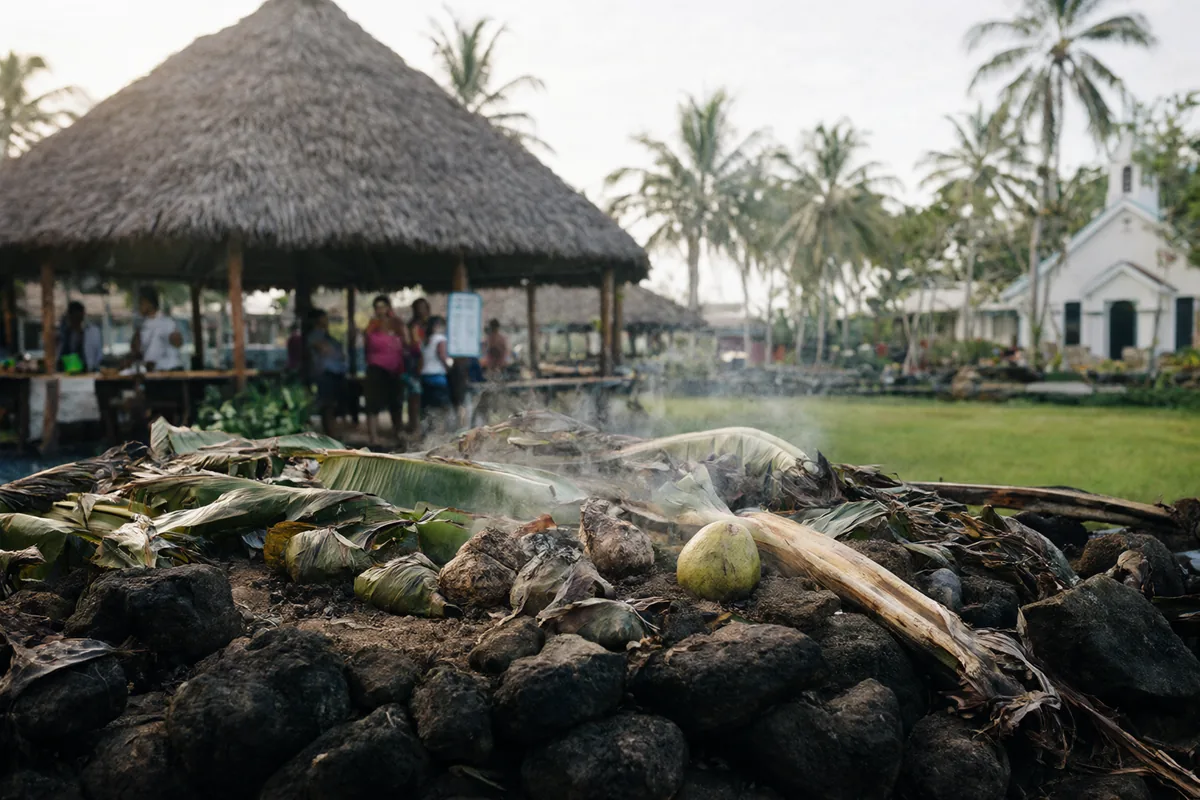
The umu: a Samoan umu is built above ground. Volcanic stones are heated on a fire until they glow, and the food is laid straight on them: taro, breadfruit, palusami parcels, fish and sometimes a whole pig. Everything is covered with banana and breadfruit leaves and left to cook for an hour or two. It is traditionally the work of the men and boys of the family, done early on Sunday morning.
'Ava etiquette: the formal 'ava ceremony welcomes guests, and visitors usually see it at a cultural show or a village visit. Each cup is called out in turn. When yours is handed to you, pour a few drops onto the ground or mat, say "manuia" (good health), and drink. Dress modestly in villages, with shoulders and knees covered, and sit cross-legged rather than pointing your feet at anyone.
Where to eat in Samoa, island by island
Samoa has two main islands. Upolu holds the capital, Apia, the international airport and most hotels, and the larger, quieter Savai'i is an hour away by ferry from Mulifanua wharf. Jump to a destination:
Where to eat in Apia
Apia is the only real town in Samoa and the place with the widest choice of food, from local plates to cafés with good coffee, Chinese restaurants, pizza and hotel dining rooms. The best introduction is the main produce market at Fugalei, often called Maketi Fou ("new market"). Under its long roof, families sell taro, breadfruit, bananas, coconuts, cocoa beans and bundles of 'ava root, and a row of food stalls serves cheap plates of oka, palusami, sapasui, fa'alifu and koko Samoa to market workers and shoppers. It is one of the best value meals in the country.
The Apia fish market on the waterfront is busiest very early in the morning, especially on Sunday when families buy fish for to'ona'i. Along Beach Road, the harbourfront road through the centre of Apia, you will find cafés, bars and hotel restaurants with sea views, and several hotels hold weekly fiafia nights, a buffet of Samoan dishes followed by traditional dance and a fire knife show. Bakeries all over town sell panipopo and pani keke in the morning. Remember that almost everything in Apia closes on Sunday, so plan Sunday meals at your hotel or book a to'ona'i in advance.
Where to eat on Upolu's south coast
The south coast of Upolu is Samoa's beach coast: white sand, lagoons, sea pools and a string of resorts and family-run beach fales, open-sided huts on the sand. Restaurants are few and far between, so most people eat where they stay. Resort menus mix international dishes with oka, grilled fish, palusami and Samoan curries, and many hold a weekly umu or fiafia night. On the road across the island from Apia, and along the coast road, roadside stalls sell drinking coconuts, bananas, pawpaw and pani keke.
Small village shops along the Upolu south coast stock tinned food, bread, biscuits and cold drinks, and they are useful for snacks between meals. If you are staying in a simple beach fale, check whether breakfast and dinner are included, as they usually are, and tell the family about any dietary needs when you book. Many visitors come for the To Sua ocean trench and the Lotofaga area; carry cash and water, as there are no ATMs on this side of Upolu and card payments are rare outside the larger resorts.
Where to eat in Lalomanu
Lalomanu, at the eastern tip of Upolu in the Aleipata district, has one of the most beautiful beaches in the South Pacific and a long line of beach fales run by local families. Almost every visitor eats at their fale, where dinner and breakfast are normally included in the price. Dinner is a shared meal at long tables: grilled or fried fish, chicken, sapasui, taro, palusami and salad, followed by fruit, with the menu changing each night depending on the catch. Breakfast is usually bread, eggs, fruit and tea or koko Samoa.
Lalomanu is a good place to see an umu on a Sunday, as the families running the fales cook one for themselves and often share it with guests. There are no supermarkets or ATMs in Lalomanu, only small village shops, so bring cash and any snacks or special foods from Apia. The sea here is famously clear and the evening meal is a highlight of a stay, so it is worth spending at least two nights.
Where to eat in Salelologa
Salelologa is the ferry town at the eastern end of Savai'i, where the boats from Upolu arrive, and it is the island's main place for shopping and supplies. Around the wharf and the main road you will find the Salelologa market, with produce, fish and food stalls serving plates of local food, several Chinese-run stores and small takeaways selling fried chicken, chop suey and fish and chips. It is not a dining destination, but it is the place to stock up before heading around Savai'i.
Use your stop in Salelologa to get cash, as ATMs elsewhere on Savai'i are rare, and to buy water, fruit and snacks. Savai'i is more traditional than Upolu, with fewer resorts and slower village life, and food outside the hotels is home cooking. On Sunday the island goes quiet, and the smell of umu smoke drifts across every village by mid-morning. If you are lucky enough to be invited to a to'ona'i, bring something to contribute, such as bread, tinned fish or a box of biscuits, as is the custom.
Where to eat in Manase
Manase, on the north coast of Savai'i, is the island's main beach fale area, with a sheltered white beach and a row of family-run fales and small resorts. As at Lalomanu, meals are usually included, served buffet style or family style: fresh fish, chicken, taro, breadfruit, lu'au, oka and tropical fruit, often with an umu or a fiafia evening once a week where guests watch the family dance and the children perform. Fish caught in the lagoon in the morning often ends up on the dinner table in Manase the same night.
Beyond your fale, choices in Manase are limited to a few small shops and roadside stalls selling coconuts, bananas and pani keke. The lava fields, blowholes and waterfalls of Savai'i are within driving distance, so pack a picnic from Salelologa for day trips. Life here moves slowly, and that is the point: people come to Manase to swim, read and eat well-cooked simple food, not to choose between restaurants.
Vegetarian, vegan and allergy tips
Samoan cooking is built on taro, breadfruit, bananas, coconut and fish, so vegetarians can eat well with a little care. Fa'alifu talo, fa'alifu fa'i, plain lu'au, suafa'i, fa'ausi, panipopo and koko Samoa are usually meat free. The catch is that palusami often contains pisupo (corned beef) or fish, sapasui almost always has meat, and food in the umu shares the stones with pork. There is no commonly used Samoan word for vegetarian, so say "vegetarian" and then "no meat, no fish", which everyone in tourist areas understands. Vegans should check for butter in baked goods and milk in koko.
Coconut is in nearly every Samoan dish, from oka to desserts, which is important for anyone with a coconut allergy. Seafood is common, and shellfish may appear at fiafia buffets without labels. At beach fales, the family cooks one meal for everyone, so mention allergies when you book, not on arrival. Our guide to eating abroad with food allergies explains how to explain an allergy clearly when English is not the first language.
Useful Samoan phrases for ordering
English is widely spoken in Apia and anywhere that hosts visitors, but Samoans appreciate any attempt at their language.
Talofa lava "Hello", the warm, respectful greeting; "talofa" alone is fine too
Fa'amolemole "Please"
Fa'afetai tele lava "Thank you very much"; "fa'afetai" alone is "thank you"
Manaia tele "Very nice", a good way to compliment the food
Ioe / Leai "Yes" / "No"
Manuia! "Cheers" or "good health", said when drinking, including at an 'ava ceremony
Tōfā "Goodbye"
How swap.menu helps you eat in Samoa
A market stall in Apia or a fale dinner board might list oka, palusami, fa'alifu, sapasui and fa'ausi with no explanation, and even resort menus use Samoan names without notes. Photograph the menu with swap.menu and every dish appears in your own language with a short explanation, so you know that pisupo is corned beef, that lu'au is taro leaves, and that koko alaisa is a sweet cocoa rice. Visitors from Japan, China, Korea or Europe can read any Samoan menu in their own language, choosing from 29. Every price is converted from Samoan tālā to your home currency, and we point out where VAGST is added on top at hotels.
Tap the dishes you want, add a note such as "no meat, no fish" or "no coconut", typed or spoken, and swap.menu shows your order clearly for the staff. Your scanned menus are saved, so you can look back at what you ate in Apia when you are on Savai'i. You can try it right now on a sample menu with the free demo, or see travel pass prices.
Off to Samoa? Your first 3 menu scans are free, and a travel pass starts from $4.99 with nothing that renews.
Start free with 3 scansSamoa food FAQ
Do you tip in Samoa?
Tipping is not part of Samoan culture and is not expected in restaurants, cafés or beach fales. If you want to thank staff after a long stay, a contribution to a shared staff fund or a small gift for the host family is more fitting than cash on the table.
What food is Samoa famous for?
Samoa is best known for oka (raw fish in coconut cream), palusami (taro leaves baked with coconut cream), food cooked in the umu, sapasui (Samoan chop suey) and koko Samoa, a drink made from local cocoa. Taro, breadfruit and green bananas cooked in coconut cream are part of almost every meal.
What is to'ona'i in Samoa?
To'ona'i is the large Sunday lunch eaten after church, cooked in the morning in an umu of hot stones. It usually includes taro, breadfruit, palusami, fish, chicken or pork and sapasui, and it is the most important family meal of the week.
Is Samoa expensive to eat out?
Hotel and resort restaurants are priced much like Australia or New Zealand, as many ingredients are imported. Market food stalls in Apia and Salelologa, bakeries and local takeaways are very good value, and beach fale stays usually include dinner and breakfast in the price.
Is tap water safe to drink in Samoa?
Tap water in Apia is treated, but it is not always reliable, and most visitors drink bottled, filtered or boiled water. Outside Apia and after heavy rain, stick to bottled water or water your accommodation has treated.
How can I understand Samoan dish names on a menu?
Learn a few words such as i'a, talo, fa'alifu and pisupo, or photograph the menu with swap.menu. It translates every dish into your language, explains Samoan names, converts prices from tālā to your currency and points out any tax added at hotels.
Travelling further in the Pacific? Read our food guides for nearby islands:
- Tonga food guide
- Fiji food guide
- French Polynesia food guide
- Cook Islands food guide
- New Zealand food guide
- Australia food guide
Or browse every travel food guide.