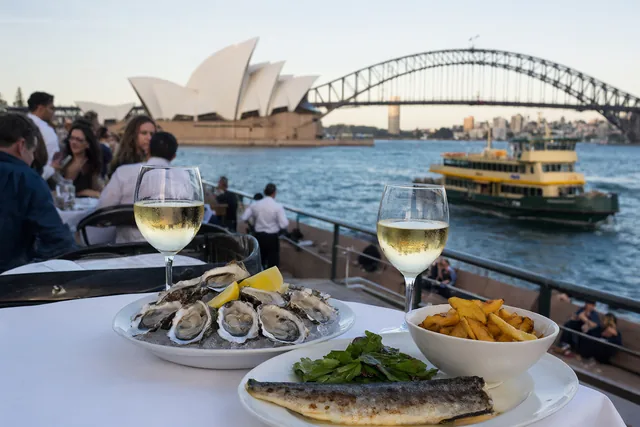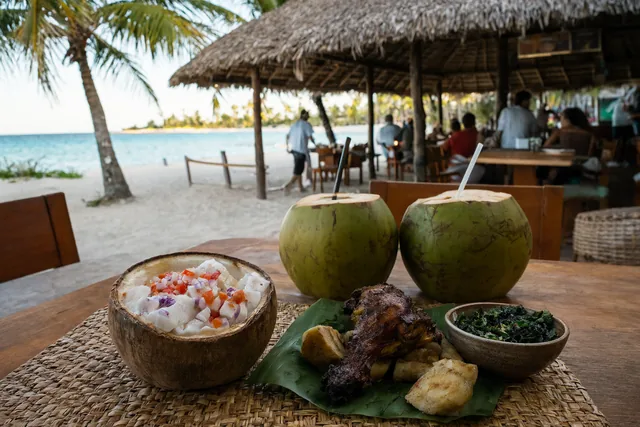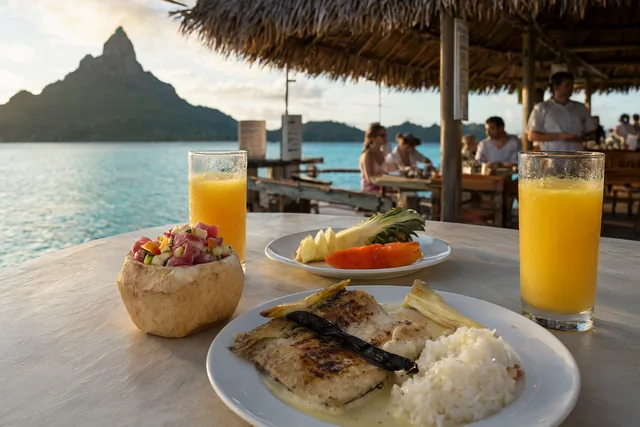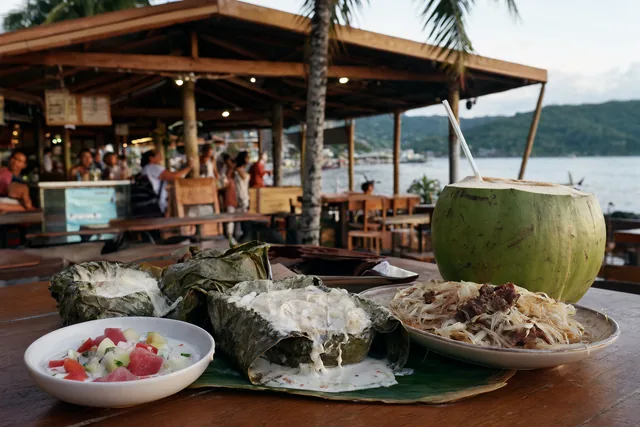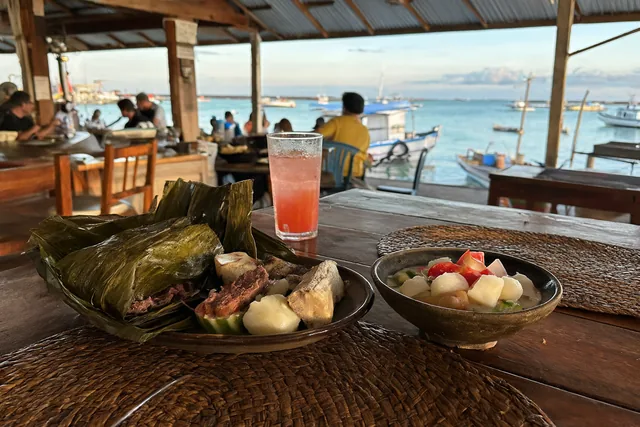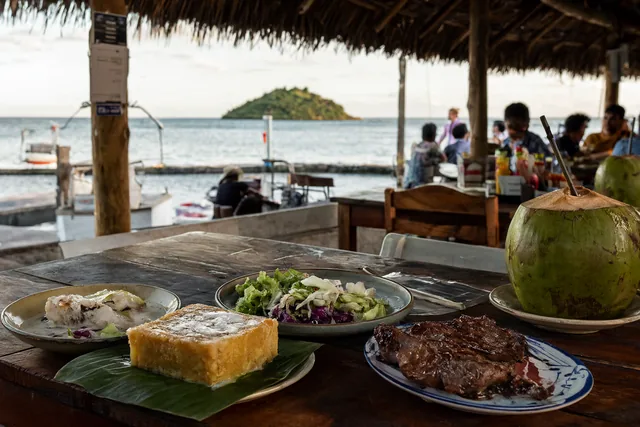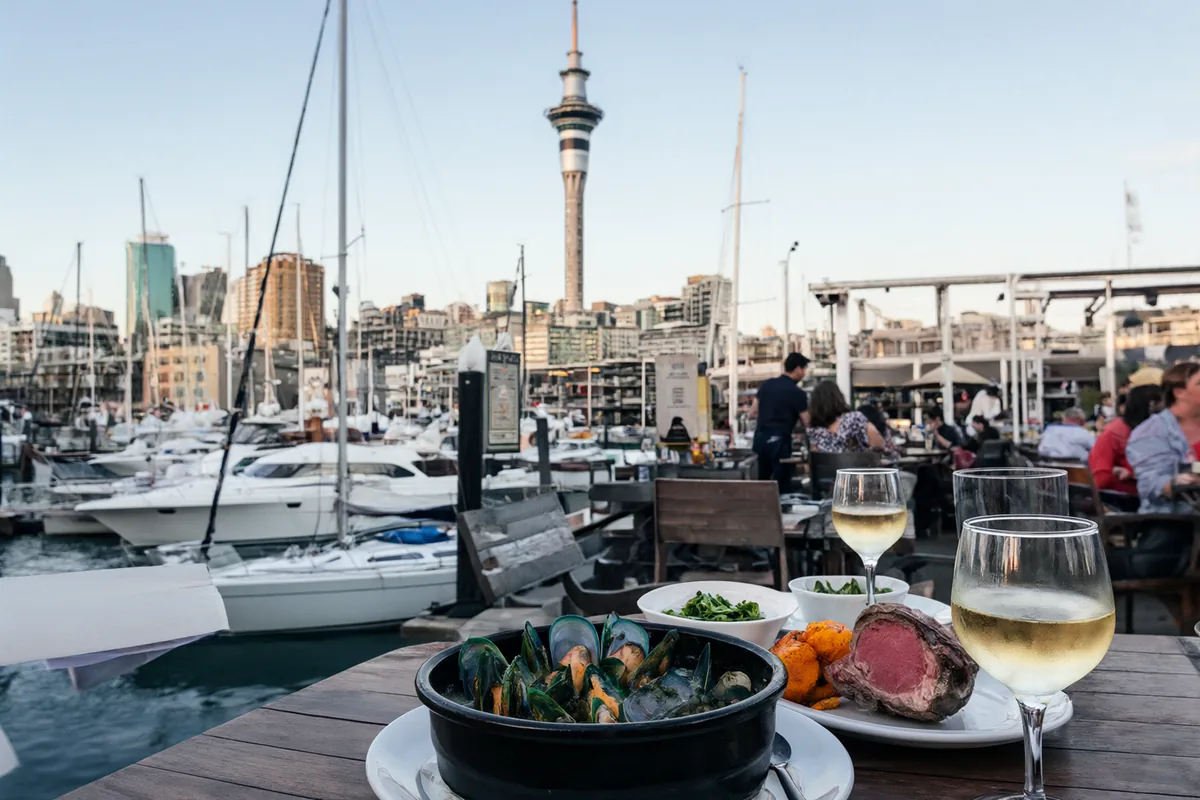
New Zealand eats very well for a country of around five million people. It grows world-class lamb, wine and dairy, its cold, clean seas give it green-lipped mussels, Bluff oysters, crayfish and pāua, and Māori and Pacific Island food traditions give it dishes found nowhere else. This New Zealand food guide is for international visitors and for Australians and Kiwis travelling around the country. It covers the dishes to know, the Māori words and Kiwi slang on menus, how tipping, GST and surcharges work, and then where to eat in Auckland, Wellington, Rotorua, Hawke's Bay, Christchurch, Queenstown and Dunedin.
What to eat in New Zealand: 12 dishes to know
These are the foods New Zealanders are proudest of, from a feast cooked in the ground to the humble cheese roll.
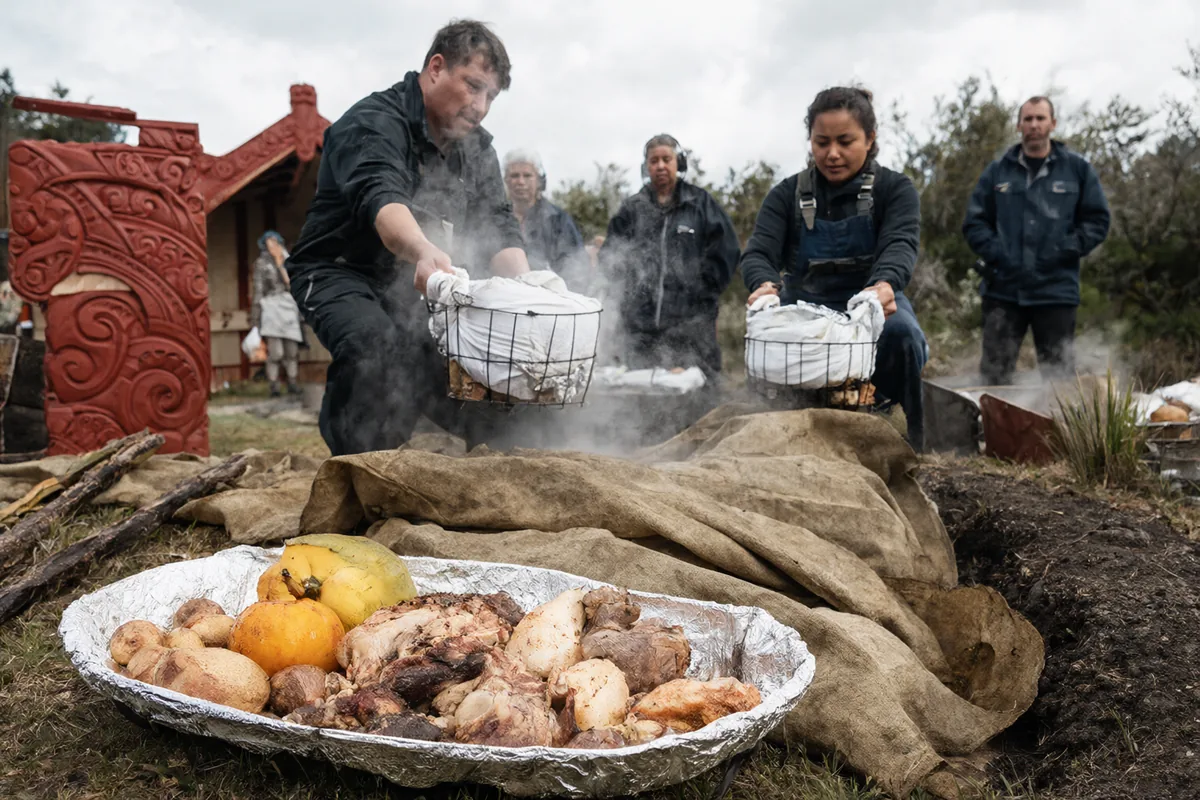
- Hāngī (everywhere, especially Rotorua): the Māori earth oven. Meat, kūmara (sweet potato), potato, pumpkin and stuffing are wrapped and steamed for hours over heated stones in a pit, giving everything a gentle smoky flavour.
- Lamb (everywhere): New Zealand's best-known export, served as a roast, a rack or slow-cooked shoulder. Venison from farmed deer is also excellent.
- Green-lipped mussels (Marlborough and everywhere): large mussels with bright green shell edges, steamed with white wine, garlic and herbs or served in chowder.
- Bluff oysters (Southland): wild oysters from Foveaux Strait, prized for their rich, briny flavour and eaten in the autumn and winter season.
- Pāua (the coast): New Zealand's abalone, with a striking blue-green shell. It is most often minced into rich pāua fritters.
- Whitebait fritters (the West Coast): tiny translucent fish bound with egg into a fritter and eaten in white bread with lemon. The season is in spring, and whitebait is expensive.
- Crayfish (Kaikōura and the coast): spiny rock lobster, called kōura in Māori. The town name Kaikōura means "to eat crayfish".
- Fish and chips (everywhere): the Friday night takeaway, often with blue cod in the South Island or tarakihi, gurnard or snapper in the north, plus kūmara chips.
- Meat pie (everywhere): Kiwis take pies seriously, and the classics are mince and cheese and steak and cheese, from bakeries and petrol stations.
- Cheese rolls (Southland and Otago): thin white bread spread with a cheese and onion mixture, rolled and toasted with butter, jokingly called "Southland sushi".
- Hokey pokey ice cream (everywhere): vanilla ice cream with crunchy pieces of honeycomb toffee, the country's favourite flavour.
- Pavlova (everywhere): a meringue cake with a crisp shell and soft centre, topped with cream and kiwifruit or berries. New Zealand and Australia both claim to have invented it. In autumn, look for feijoa, a fragrant green fruit Kiwis love.
How to read a menu in New Zealand
New Zealand menus are in English, with a growing number of Māori words, and Kiwi English has its own food terms. Fish names in particular are local species that visitors will not recognise. Here are the words you will see most often.
| Term | Meaning |
|---|---|
| Entrée / mains | Starter / main course |
| Flat white / long black | Espresso with steamed milk and thin foam / espresso poured over hot water |
| Kai | Food (Māori), as in "kai time" |
| Kaimoana | Seafood (Māori) |
| Hāngī | Food steamed in a Māori earth oven |
| Kūmara | Sweet potato (Māori) |
| Pāua / kōura | Abalone / crayfish (rock lobster) |
| Blue cod / tarakihi / gurnard / hoki | Local white fish, often used for fish and chips |
| Mince and cheese / steak and cheese | The two classic meat pies |
| Hokey pokey | Honeycomb toffee, usually in ice cream |
| Takeaways / dairy | A takeaway shop / a corner shop |
| BYO / corkage | Bring your own wine / the fee for opening it |
| Tomato sauce | Ketchup |
| Public holiday surcharge | An extra percentage added to the bill on public holidays |
Fish on New Zealand menus is often listed by species name only, such as tarakihi, hāpuku or trevally, and "market fish" changes daily. swap.menu explains each local fish and Māori food word when it reads the menu, and flags any public holiday surcharge printed at the bottom.
Tipping, GST, surcharges and paying the bill
Tipping is not expected in New Zealand. Wages include service, and paying the exact bill is normal. In a nice restaurant, a tip of around 10 percent for excellent service is appreciated but never required, and card terminals rarely prompt you for one. In cafés and pubs, a tip jar is entirely optional.
New Zealand's GST (Goods and Services Tax) of 15 percent is included in menu prices, so the price you see is the price you pay. Many cafés and restaurants add a public holiday surcharge, often around 15 percent, to cover higher wages on those days, and it should be shown on the menu. A few also add one on Sundays. Some places add a small fee for paying by credit card or contactless, which should be signposted at the counter. Our guide to tax and service charges on menus explains how these lines work around the world.
The currency is the New Zealand dollar (NZ$). Cards and contactless payments are accepted almost everywhere, and Kiwis call the card system EFTPOS. If you are visiting from overseas and a terminal offers to charge you in your home currency, choose New Zealand dollars: our guide to paying in local currency explains why. In pubs and casual cafés you usually order and pay at the counter and take a number to your table. Many restaurants, especially Asian ones, are BYO: bring your own wine and pay a small corkage fee.
New Zealanders eat early. Cafés open around 7am and many close by 3 or 4pm, lunch is from noon to 2pm, and dinner is usually 6 to 8:30pm. In small towns, kitchens close early and some restaurants are shut on Mondays and Tuesdays, so plan ahead on road trips. Tap water is safe and free.
Where to eat in New Zealand, city by city
Most visitors drive between the North and South Islands, and every region has its own speciality, from Rotorua's hāngī to Southland's oysters. Jump to a destination:
Where to eat in Auckland
Auckland is New Zealand's biggest and most diverse city, with the largest Polynesian population of any city in the world. The waterfront at the Viaduct Harbour and the Wynyard Quarter, home of the Auckland Fish Market, is the place for seafood with harbour views. Ponsonby Road and Karangahape Road (K Road) have Auckland's best concentration of restaurants, cafés and bars, and Britomart in the city centre has smart restaurants in restored brick warehouses.
Auckland's suburbs are where its diversity shows. Dominion Road is a long strip of regional Chinese restaurants, Sandringham is known for Indian and Sri Lankan food, and in South Auckland the Saturday Ōtara Market sells Pacific Island food such as palusami (taro leaves baked in coconut cream), raw fish in coconut milk and Samoan chop suey. On weekends, Parnell's La Cigale French Market and the Matakana Village Farmers' Market an hour north are popular. Take the ferry to Waiheke Island for vineyard lunches with sea views, one of the classic Auckland days out.
Where to eat in Wellington
Wellington, the compact capital, has more cafés and restaurants per person than almost anywhere, and it claims, alongside Sydney, to be the birthplace of the flat white. Coffee here is taken very seriously, and so is craft beer: Wellington has dozens of breweries and taprooms. Cuba Street is the bohemian heart, with cafés, cheap eats and bars, and Courtenay Place is the nightlife strip.
On Sunday mornings, the Harbourside Market near Te Papa museum sells fruit, vegetables and street food from dozens of stalls. Every August, the Wellington on a Plate festival fills the city's restaurants with special menus and a hard-fought burger competition. An hour over the hills, Martinborough is a small wine town known for Pinot Noir, and an easy day trip from Wellington.
Where to eat in Rotorua
Rotorua, in the geothermal heart of the North Island, is the best place in New Zealand to experience Māori culture and food. Many visitors book a cultural evening that includes a welcome ceremony, a performance and a hāngī feast. At the living village of Whakarewarewa, food is cooked in natural steam boxes and corn on the cob is boiled in the hot pools, a tradition you can taste on a visit. The smell of sulphur hangs over Rotorua, but you stop noticing after a day.
In town, Eat Streat, a covered section of Tutanekai Street near the lake, is lined with restaurants and bars with outdoor tables. Look for hāngī pies and Māori fusion menus that use kawakawa (a peppery native leaf), horopito (native bush pepper) and kūmara. Rotorua also has good cafés and a weekly night market in the city centre.
Where to eat in Hawke's Bay
Hawke's Bay, on the east coast of the North Island, is New Zealand's oldest wine region and its fruit bowl. The art deco city of Napier, rebuilt after a 1931 earthquake, has restaurants and cafés in its pastel buildings, and nearby Hastings and Havelock North are surrounded by orchards and vineyards. The region is best known for Syrah, Chardonnay and Bordeaux-style reds, many from the stony Gimblett Gravels.
The Sunday Hawke's Bay Farmers' Market in Hastings is one of the best in the country, with cheese, stonefruit, apples, bread and coffee. Many wineries have cellar door restaurants, and the flat cycle trails between them make it easy to taste without driving. In summer, roadside stalls in Hawke's Bay sell cherries, peaches and apricots straight from the orchard.
Where to eat in Christchurch
Christchurch, the largest city in the South Island, was rebuilt after the 2011 earthquakes, and its food scene came back with it. The indoor Riverside Market in the central city has produce stalls, butchers, food counters and bars under one roof, and the restored New Regent Street has small cafés and restaurants in pastel Spanish mission buildings. On Saturday mornings, the Christchurch Farmers' Market at Riccarton House and the market in the port town of Lyttelton are local favourites.
Canterbury lamb is the regional pride, and the Waipara Valley to the north makes good Riesling and Pinot Noir. An hour and a half from Christchurch, Akaroa on Banks Peninsula was settled by French colonists, and its waterfront restaurants serve local salmon and seafood. Two and a half hours north, Kaikōura is the place to eat crayfish, from simple roadside caravans by the sea to restaurants, often after a whale watching trip.
Where to eat in Queenstown
Queenstown, on Lake Wakatipu in Central Otago, is New Zealand's adventure capital, and its restaurants cater to hungry skiers, hikers and bungy jumpers. Expect lamb, venison, lake salmon and hearty pub food, plus one famous burger shop with a queue at almost any hour. The lakefront and the streets around the Steamer Wharf have the most choice.
Central Otago is the world's southernmost wine region and famous for Pinot Noir, and the Gibbston Valley, twenty minutes from Queenstown, is lined with cellar doors and winery restaurants. The gold rush town of Arrowtown has old stone cottages turned into restaurants and bars. In summer, the orchards around Cromwell sell cherries and apricots at roadside stalls, and Queenstown's restaurants book out in both ski season and summer, so reserve ahead.
Where to eat in Dunedin
Dunedin, whose name comes from the Gaelic for Edinburgh, was founded by Scottish settlers and is a university city with a lively, affordable food scene. It is the place to try cheese rolls, sold in cafés and bakeries, blue cod from the southern waters, and, in season, Bluff oysters from the far south. The streets around the Octagon, the city centre's eight-sided plaza, have most of the restaurants and bars.
The Saturday morning Otago Farmers' Market beside the grand Dunedin railway station is one of New Zealand's best, with local cheese, lamb, berries and a bacon butty or two for breakfast. Dunedin also has a strong craft beer and coffee culture, thanks to its students. The Otago Peninsula, with its albatross and penguin colonies, has a few cafés with sea views for lunch on a wildlife day out.
Vegetarian, vegan and allergy tips
New Zealand is an easy country for vegetarians, vegans and people with allergies. Most cafés and restaurants label dishes with V, VG, GF and DF (vegetarian, vegan, gluten-free and dairy-free), plant-based milk is standard, and the cities have plenty of fully vegetarian and vegan places. Watch for meat stock in soups and gravy on pies, and note that a traditional hāngī is cooked with meat, so vegetables from it are not vegetarian. Fish sauce and shrimp paste appear in many Asian dishes.
Staff are used to allergy questions, and many menus ask you to mention allergies when ordering. Seafood and shellfish are common, and nuts appear in desserts and baking. If English is not your first language, our guide to eating abroad with food allergies explains how to explain an allergy clearly.
Kiwi food slang and Māori words for ordering
Kiwis are friendly and informal, and Māori words are part of everyday New Zealand English. These are the words and phrases you will hear at the counter and the table.
Kia ora "Hello" or "thanks", from Māori, used by everyone
Can I get a flat white, thanks? The normal, polite way to order coffee
Is it BYO? "Can we bring our own wine?" Ask about corkage too
Bring a plate An invitation that means bring a dish of food to share
Chilly bin A cooler box for drinks and food, essential for a beach picnic
Ka pai "Good" or "well done" (Māori)
Sweet as "Great", "no problem" or "that's fine"
Chur Casual "thanks" or "cheers"
How swap.menu helps you eat in New Zealand
A New Zealand menu can be hard going if you are from overseas: hāngī, kūmara, kawakawa, tarakihi, pāua and "mince and cheese" all need explaining. Photograph the menu with swap.menu and every dish appears in your own language with a short explanation, so a visitor from China, Japan, Korea, Germany or France can read it in any of 29 languages. Every price is converted from New Zealand dollars to your home currency, and we point out public holiday surcharges and card fees so the total holds no surprises. Your scanned menus are saved, so you can compare cafés on a road trip or share a menu with your travel companions.
For Kiwis heading overseas, the same travel pass works abroad: tap the dishes you want, add a note such as "no shellfish", and swap.menu translates your order into the local language, whether you are ordering food in Japan or at a Bali warung. You can try it right now on a sample menu with the free demo, or see travel pass prices.
Off to New Zealand? Your first 3 menu scans are free, and a travel pass starts from $4.99 with nothing that renews.
Start free with 3 scansNew Zealand food FAQ
Do you tip in restaurants in New Zealand?
Tipping is not expected in New Zealand, and paying the exact bill is normal. A tip of around 10 percent for excellent service in a nice restaurant is appreciated but never required.
What food is New Zealand famous for?
New Zealand is famous for lamb, green-lipped mussels, Bluff oysters, pāua, crayfish, whitebait fritters, the Māori hāngī, meat pies, pavlova and hokey pokey ice cream. Its Sauvignon Blanc and Pinot Noir wines and its flat white coffee are also well known.
Is New Zealand expensive to eat out?
Eating out in New Zealand costs about the same as in Australia and more than in much of Europe. Bakery pies, fish and chips, food trucks and Asian restaurants are the best value, and BYO restaurants save on drinks.
Where can I try a hāngī in New Zealand?
Rotorua is the best place, with Māori cultural evenings that include a hāngī feast and a village where food is cooked in geothermal steam. Hāngī are also served at marae events, festivals and some markets around the country.
Is tap water safe to drink in New Zealand?
Yes. Tap water is safe to drink in New Zealand's cities and towns, and restaurants will bring tap water for free. Do not drink untreated water from streams and lakes when hiking.
How can I understand a New Zealand menu if English is not my first language?
Photograph the menu with swap.menu. It translates every dish into your language, explains Māori food words and local fish names, converts prices from New Zealand dollars to your currency and shows any surcharges.
Travelling further in Oceania and Asia? Read our food guides for nearby countries:
- Australia food guide
- Fiji food guide
- French Polynesia food guide
- Indonesia food guide
- Singapore food guide
Or browse every travel food guide.