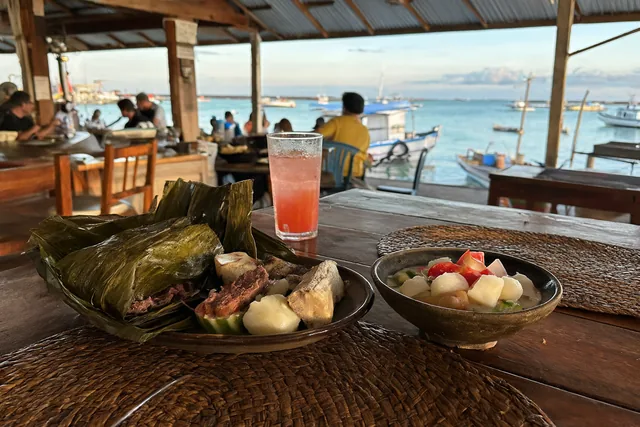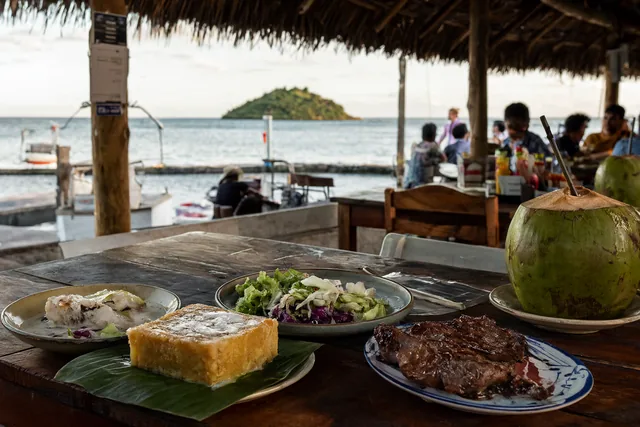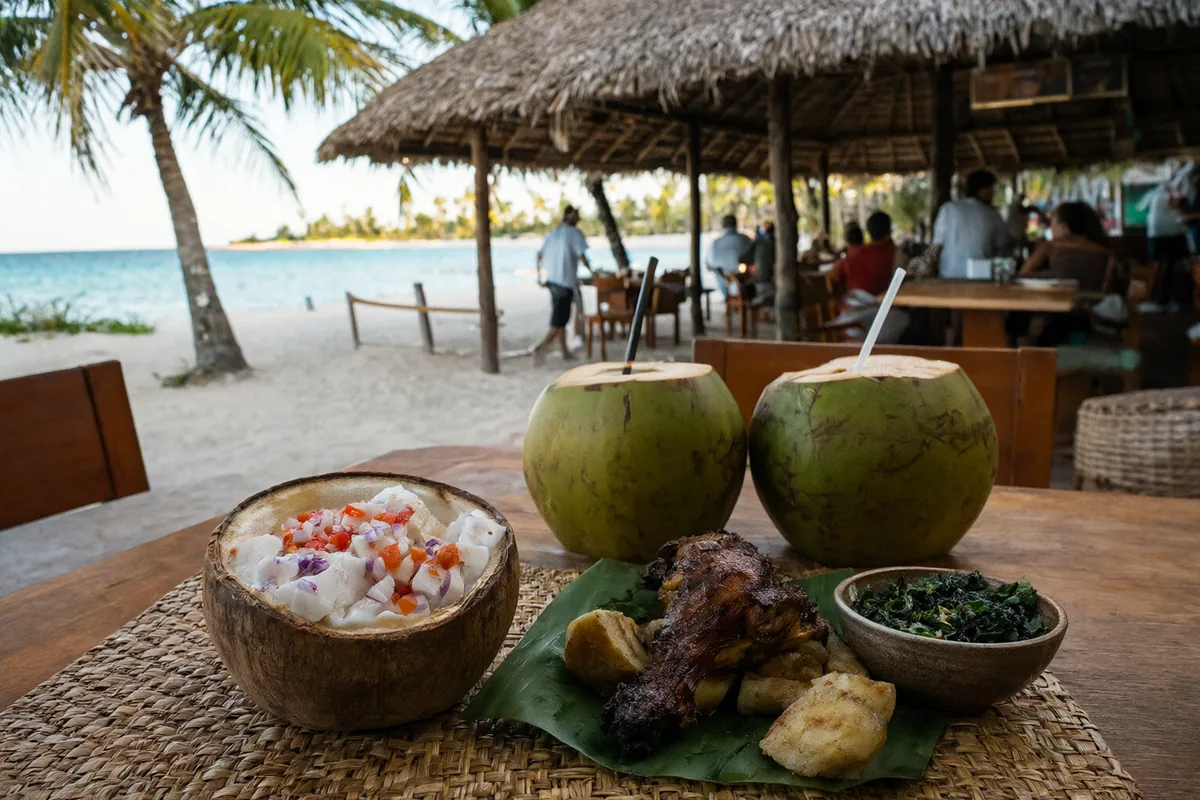
Most visitors to Fiji eat at their resort, and many leave without tasting the food Fijians actually eat. That is a pity, because Fiji has two great cuisines side by side: iTaukei (indigenous Fijian) cooking built on coconut cream, root crops and fresh fish, and Indo-Fijian cooking, brought by indentured labourers from India from 1879, which gave the country its curries, roti and sweets. This Fiji food guide covers the dishes to know, the Fijian and Fiji Hindi words you will see on menus, how to take part in a kava ceremony, tipping and tax, and then where to eat in Nadi, Denarau, Suva, the Coral Coast, the Mamanuca Islands, the Yasawa Islands and Savusavu.
What to eat in Fiji: 12 dishes to know
These are the dishes you will find at markets, cafés, village feasts and on the better resort menus. The Fijian name comes first where one is used.
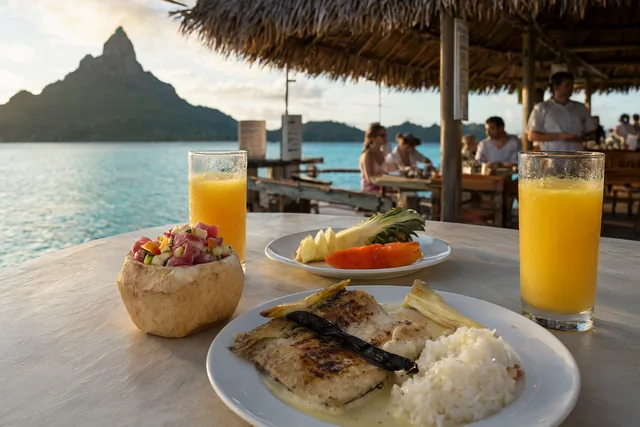
- Kokoda (everywhere): Fiji's signature dish, raw fish such as walu (Spanish mackerel) or mahi mahi cured in lemon or lime juice, then mixed with coconut cream, chilli, onion and tomato, and often served in a coconut shell.
- Lovo (everywhere): the Fijian earth oven. Chicken, pork, fish and root vegetables are wrapped in leaves and cooked for hours over hot stones in a pit. It is a Sunday and celebration meal, and most resorts hold a lovo night.
- Rourou (everywhere): young taro leaves cooked down in coconut cream into a soft, rich green side dish.
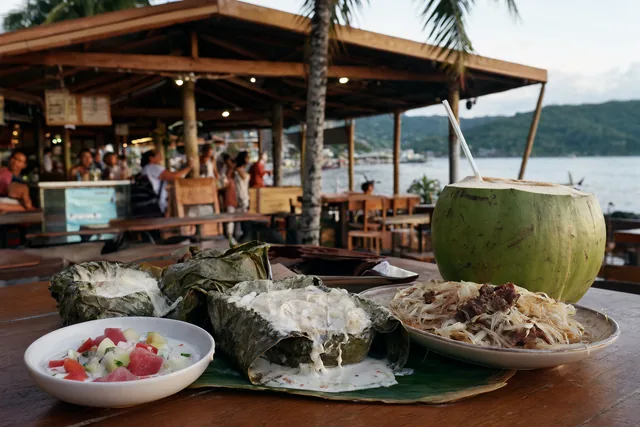
- Palusami (everywhere): parcels of taro leaves filled with coconut cream and onion, often with corned beef or fish, baked in the lovo.
- Ika vakalolo (everywhere): fish cooked in coconut cream. Ika means fish, and lolo is coconut cream.
- Dalo and tavioka (everywhere): taro and cassava, boiled or baked, the starch at almost every Fijian meal, alongside kumala (sweet potato) and uto (breadfruit).
- Nama (the coast): sea grapes, a bright green seaweed that pops in the mouth, served as a salad with coconut cream and chilli.
- Curry and roti (everywhere, especially Nadi and the west): chicken, goat, lamb, fish or vegetable curries with soft roti flatbread. A roti parcel, curry wrapped in roti, is the classic takeaway lunch.
- Dhal and bhaji (everywhere): Indo-Fijian dhal is a thin, comforting lentil soup served with rice, and bhaji is a dry curry of local leafy greens.
- Duruka (seasonal): sometimes called Fijian asparagus, the unopened flower of a cane plant, cooked in coconut cream or curry and sold in markets for a short season around April and May.
- Gulgula and Indian sweets (everywhere): gulgula are sweet fried dough balls, often made with banana, and Indian sweet shops sell barfi, ladoo and jalebi, especially around Diwali.
- Yaqona (everywhere): kava, a drink made from the ground root of a pepper plant mixed with water. It looks like muddy water, numbs the lips slightly, and is drunk at ceremonies and gatherings across Fiji. Locals often call it "grog".
How to read a menu in Fiji
Menus in Fiji are written in English, but dishes often keep their Fijian or Fiji Hindi names, and local cafés may not explain them at all. Fijian spelling also has some surprises: c is said "th", q is "ng-g", b is "mb" and d is "nd", so yaqona is "yang-gona" and dalo is "ndalo". Here are the words you will see most often.
| Word | Language | Meaning |
|---|---|---|
| Kokoda | Fijian | Raw fish cured in citrus with coconut cream |
| Lovo | Fijian | Food cooked in an earth oven |
| Lolo / vakalolo | Fijian | Coconut cream / cooked in coconut cream |
| Miti | Fijian | A sauce of coconut cream with lemon, chilli and onion |
| Ika | Fijian | Fish |
| Kai | Fijian | Freshwater mussels |
| Rourou | Fijian | Taro leaves cooked in coconut cream |
| Dalo / tavioka / kumala | Fijian | Taro / cassava / sweet potato |
| Vudi / uto | Fijian | Plantain / breadfruit |
| Yaqona | Fijian | Kava, the ceremonial root drink |
| Roti / roti parcel | Fiji Hindi | Flatbread / curry wrapped in roti |
| Dhal / bhaji | Fiji Hindi | Thin lentil soup / curried leafy greens |
| Puri | Fiji Hindi | Puffed fried bread |
| Gulgula | Fiji Hindi | Sweet fried dough balls |
Indo-Fijian curries in local cafés can be properly hot, while resort versions are usually mild. If you are not sure, ask for "less chilli" or for the chilli on the side. swap.menu explains Fijian and Fiji Hindi dish names when it reads the menu, and lets you add a note like that to your order.
Tipping, tax and paying the bill
Tipping is not part of Fijian culture and is not expected in restaurants or cafés. Many resorts have a staff Christmas fund box at reception instead, where a contribution at the end of your stay is shared among all the staff, including those you never see. If you want to thank someone for great service, that box is the best way. Our guide to tax and service charges on menus explains how tax and service lines work around the world.
Most menus in Fiji show prices including tax. Some resort and hotel menus show prices before government taxes and levies, which are then added to the bill, so look for "VAT inclusive" or "plus taxes" in the small print. The currency is the Fijian dollar (FJ$). Cards are accepted at resorts, on Denarau and in larger restaurants and supermarkets in Nadi and Suva, but markets, buses, taxis, roadside stalls, village visits and small cafés usually need cash. ATMs are in the towns, but scarce or absent on the outer islands. If a card terminal offers to charge you in your home currency, choose Fijian dollars: our guide to paying in local currency explains why.
Meal times are similar to Australia and New Zealand: lunch from about noon to 2pm, dinner from 6:30pm. Sunday is a day of church and family for most Fijians, so many shops and local eateries close, and Sunday lunch is often a lovo. Service everywhere runs on "Fiji time", relaxed and unhurried, so build in time.
Kava etiquette: if you visit a village, bring a bundle of yaqona root as a gift (a sevusevu) for the chief, which you can buy at any market. When the bowl is passed to you, clap once, say "bula", drink the cup in one go, hand it back and clap three times. Dress modestly in villages, with shoulders and knees covered, and remove hats.
Where to eat in Fiji, island by island
Most visitors fly into Nadi on the main island, Viti Levu, and divide their time between the Coral Coast, Denarau and the outer islands. Jump to a destination:
Where to eat in Nadi
Nadi town, ten minutes from the international airport, is the best place in Fiji for Indo-Fijian food, as most people in the west of Viti Levu are of Indian descent. Along the main street, curry houses and cafés serve goat and chicken curry with roti, fish curry, dhal and rice, and roti parcels to take away, often for a few dollars. Indian sweet shops sell barfi and ladoo by weight, and the colourful Hindu temple at the southern end of town is worth a visit before lunch.
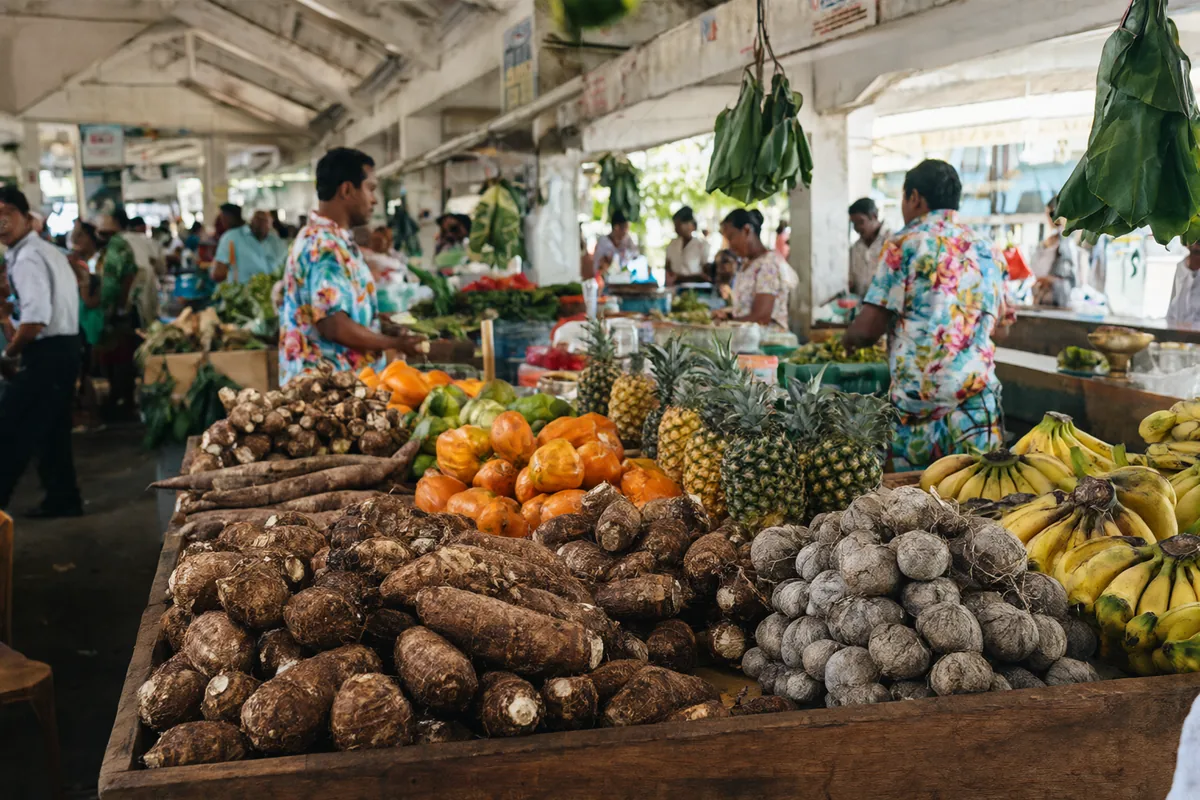
The Nadi Municipal Market is the place to see local produce: piles of dalo, cassava, pineapples, pawpaw and bananas, bundles of rourou and duruka in season, and a section selling yaqona root for sevusevu gifts. Near the beach at Wailoaloa, a strip of backpacker hostels and casual restaurants serves fish and chips, curries and cold Fiji beer by the sea. Nadi is also where most visitors start and end their trip, so it is worth a meal in town rather than only at the hotel.
Where to eat on Denarau
Denarau Island, joined to the mainland near Nadi by a short causeway, is Fiji's main resort zone, with large international hotels, a golf course and the Port Denarau Marina. The marina has the biggest choice of restaurants and bars in the Nadi area, from pizza and seafood to Indian and Asian food, and it is where the ferries and day cruises to the islands leave from, so it is busy from early morning.
Denarau's resorts hold weekly lovo and meke nights, where you watch the earth oven being opened and eat lovo chicken, pork, fish, palusami and dalo, followed by traditional dancing. They are the easiest way to try Fijian food, though often milder than village cooking. Prices on Denarau are much higher than in Nadi town, so many visitors take a taxi or the local bus into Nadi for a curry lunch.
Where to eat in Suva
Suva, the capital on the wetter southeast coast of Viti Levu, is one of the most multicultural cities in the South Pacific, and it is where you will find Fiji's widest range of food. The Suva Municipal Market is one of the largest produce markets in the Pacific, with two floors of root crops, fruit, vegetables, spices and a whole section of yaqona sellers, and the fish market nearby sells the morning catch, sea grapes and shellfish. Saturday morning is the busiest and best time to go.
Suva's curry houses and Indian restaurants are excellent, and the city also has a long-established Chinese community, so chop suey, chow mein and Cantonese-style restaurants are everywhere. Cafés along Victoria Parade and around the city centre serve kokoda, fish and chips and good coffee to office workers. On Sundays most of Suva is closed, but families gather for lovo lunches after church. If you are only staying on the west side of Viti Levu, Suva is a long day trip, but it shows a side of Fiji the resorts do not.
Where to eat on the Coral Coast
The Coral Coast is the stretch of resorts, villages and beaches along the south of Viti Levu, between Nadi and Suva. Most visitors eat at their resort, where lovo nights, meke performances and, at some, fire walking shows by performers from Beqa island are held during the week. Many resorts also organise visits to nearby villages, where you can take part in a kava ceremony and share a meal of fish, dalo and rourou.
The market town of Sigatoka sits at the mouth of the Sigatoka Valley, known as the "salad bowl of Fiji" for its vegetable farms, and its produce market and curry cafés are worth a stop. Along the Queens Road, roadside stalls sell fresh coconuts, pineapples and corn. Further east, the town of Pacific Harbour has a few casual restaurants and is a base for shark diving and river trips. The Coral Coast is quieter than Denarau, and resort prices are often lower.
Where to eat in the Mamanuca Islands
The Mamanuca Islands, a short boat ride from Port Denarau, are the classic Fiji postcard: small islands with white sand and coral reefs, most occupied by a single resort. On many islands the resort is the only place to eat, so check whether a meal plan is included or compulsory, and what it costs, before you book. Menus mix international dishes with kokoda, grilled fish, curries and weekly lovo nights.
Day trippers can eat at the island resorts that welcome visitors, on day cruises that include a barbecue lunch, or at a few beach bars. Seafood is the best choice, as most other ingredients come by boat from the mainland. Prices in the Mamanuca Islands are high, so a few snacks and drinks bought in Nadi are useful, if your resort allows them.
Where to eat in the Yasawa Islands
The Yasawa Islands stretch north from the Mamanucas in a long chain of volcanic islands, served by a daily ferry from Port Denarau. Many of the budget and mid-range resorts are owned and run by local villages, and meals are usually included in a compulsory meal plan. The food is simple, home-style Fijian cooking: fish curry, kokoda, dalo, cassava, rourou and fruit, often served as a buffet, with a lovo once a week.
Because there are no shops on most islands in the Yasawa Islands, bring snacks, any special dietary foods and cash from Nadi, as card payments may be limited. Tell your resort about dietary needs when you book, since all supplies arrive by boat. Village visits, kava evenings and church on Sunday with the community are often part of a stay.
Where to eat in Savusavu
Savusavu, on the island of Vanua Levu, is a small, relaxed town on a deep bay, popular with yachts and divers. Its main street has a produce and kava market, Indian curry cafés, bakeries and a few waterfront restaurants and bars at the marinas, where sailors gather for fish and chips and sunset drinks. Hot springs bubble up near the shore, and locals have long used them to cook root crops.
The area around Savusavu grows copra and kava, and there are pearl farms in the bay that offer tours. Food here is local and good value: kokoda, fresh fish, curries and seasonal fruit. Fewer tourists come to Savusavu than to the west of Viti Levu, so you are more likely to eat alongside Fijian families, and cash is more useful than cards.
Vegetarian, vegan and allergy tips
Thanks to Indo-Fijian cooking, Fiji is easier for vegetarians than most Pacific islands: dhal, bhaji, vegetable curries, roti, puri and rice are on menus everywhere, and many Hindu Indo-Fijians are vegetarian themselves. iTaukei cooking is harder, as palusami often contains corned beef and dishes may share the lovo with meat. The word to use is simply "vegetarian", which everyone understands. Ask whether curries contain fish or meat stock, and say "no meat, no fish" to be clear.
Coconut is in almost everything, from kokoda to rourou and desserts, which matters for anyone with a coconut allergy. Shellfish and fish are common, and resort kitchens on remote islands may have limited alternatives, so tell your resort about any allergy before you arrive. Our guide to eating abroad with food allergies explains how to explain an allergy clearly.
Useful Fijian and Fiji Hindi phrases
Everyone in the tourist areas speaks English, but a few words of Fijian or Fiji Hindi are warmly received.
Bula! "Hello", Fijian, said with a big smile; also said before drinking kava
Ni sa yadra "Good morning" (Fijian), said "nee sah yahn-dra"
Vinaka / Vinaka vakalevu "Thank you" / "Thank you very much" (Fijian)
Io / Sega "Yes" / "No" (Fijian); "sega, vinaka" is "no, thank you"
Moce "Goodbye" (Fijian), said "mo-they"
Namaste The greeting used by Indo-Fijians
Dhanyavaad "Thank you" in Fiji Hindi
Less chilli, please Worth saying in local curry houses
How swap.menu helps you eat in Fiji
A local café menu in Fiji might list rourou, palusami, bhaji, kai and gulgula without a word of explanation, and resort menus are not always clearer. Photograph the menu with swap.menu and every dish appears in your own language with a short explanation, so you know that kai here means freshwater mussels and that miti is a coconut cream sauce. Visitors from China, Japan, Korea or Europe can read any Fijian menu in their own language, choosing from 29. Every price is converted from Fijian dollars to your home currency, and we point out any taxes and levies added on top at resorts.
Tap the dishes you want, add a note such as "less chilli" or "no coconut", typed or spoken, and swap.menu shows your order clearly for the staff. Your scanned menus are saved, so you can check what you ate on Denarau when you are back in Nadi. You can try it right now on a sample menu with the free demo, or see travel pass prices.
Off to Fiji? Your first 3 menu scans are free, and a travel pass starts from $4.99 with nothing that renews.
Start free with 3 scansFiji food FAQ
Do you tip in Fiji?
Tipping is not part of Fijian culture and is not expected. Many resorts have a staff Christmas fund box at reception, where a contribution at the end of your stay is shared among all the staff.
What food is Fiji famous for?
Fiji is best known for kokoda, raw fish in coconut cream, and lovo, food cooked in an earth oven, along with rourou, palusami, dalo and cassava. Indo-Fijian curries with roti are just as much a part of everyday Fijian food, and kava is the national drink.
Is Fiji expensive to eat out?
Resort restaurants and island meal plans are expensive, as many ingredients are shipped in. Local curry houses, cafés and markets in Nadi, Suva and Savusavu are very good value, and a roti parcel lunch costs only a few dollars.
Is tap water safe to drink in Fiji?
Tap water in Nadi, Suva and most resorts is treated, but many visitors stick to bottled or filtered water to be safe. On outer islands and after heavy rain or cyclones, drink bottled water and follow any boil water notices.
How do you drink kava in Fiji?
When the bowl is offered, clap once, say "bula", drink the cup in one go and hand it back, then clap three times. If you visit a village, bring kava root as a gift for the chief, and dress modestly.
How can I understand Fijian dish names on a menu?
Learn a few words such as lolo, ika, dalo and rourou, or photograph the menu with swap.menu. It translates every dish into your language, explains Fijian and Fiji Hindi names, converts prices from Fijian dollars to your currency and points out any added taxes.
Travelling further in Oceania? Read our food guides for nearby countries:
Or browse every travel food guide.