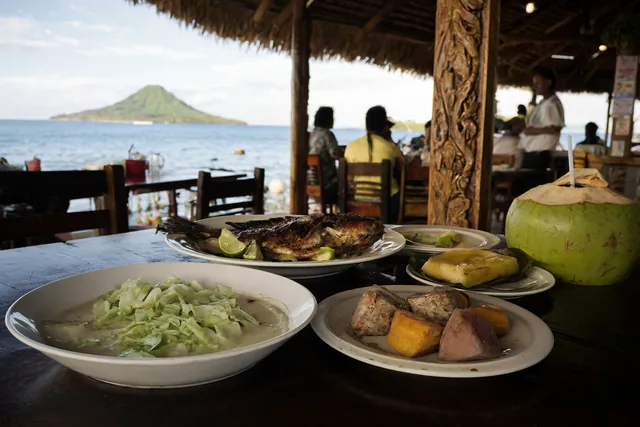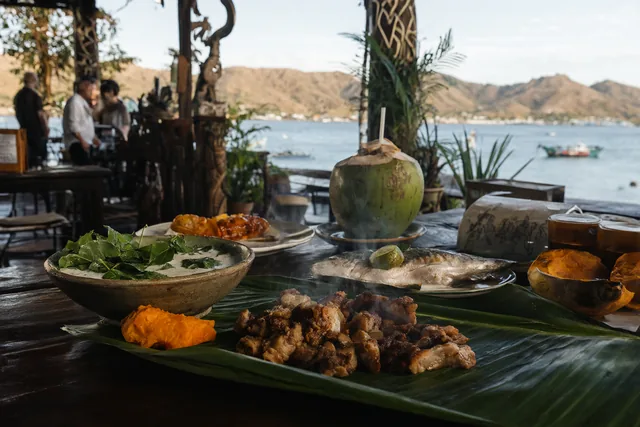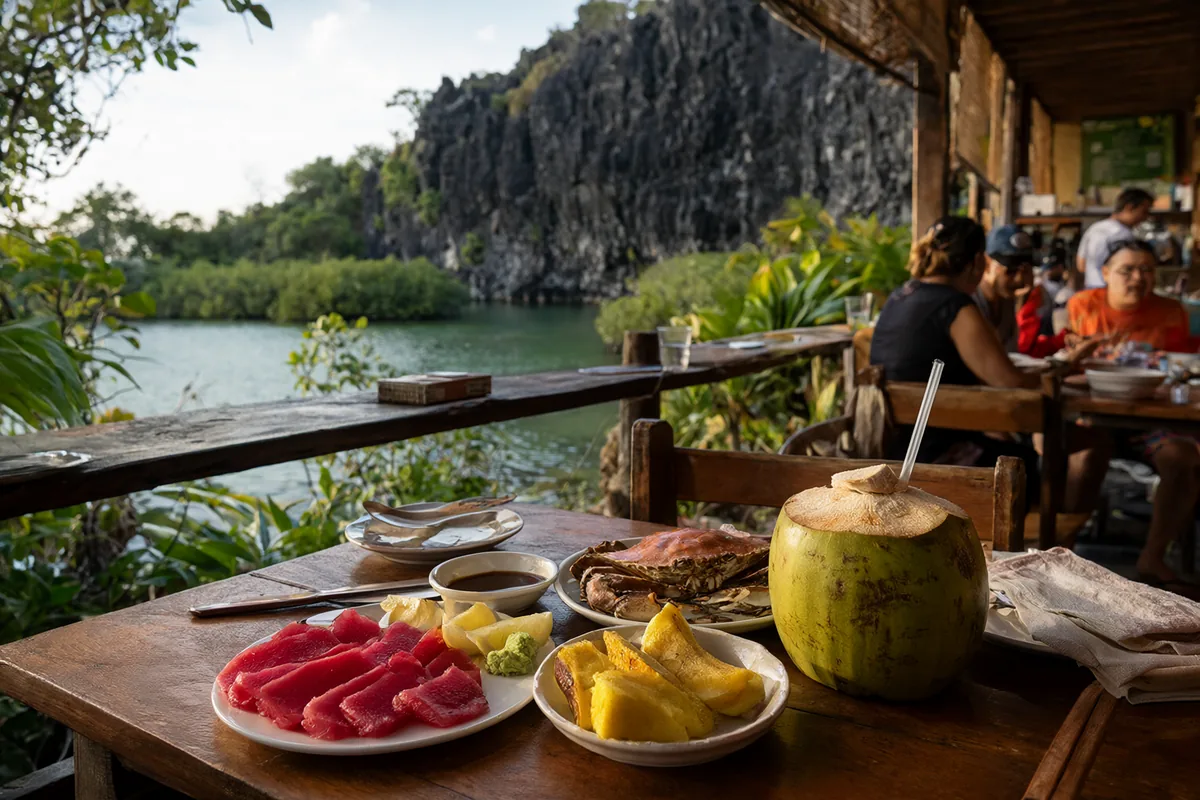
The Federated States of Micronesia is four island states, Pohnpei, Chuuk, Yap and Kosrae, strung across more than 2,500 kilometres of the western Pacific, each with its own language and customs. Food everywhere starts with breadfruit, taro, yams, bananas, coconut and fish, and Japanese rule before 1945 left a lasting taste for sashimi and rice. This Micronesia food guide covers the dishes to know, the local and borrowed words you will see on menus, how sakau (the Pohnpeian kava) is shared, betel nut customs in Yap, tipping and paying, and then where to eat in Kolonia and around Pohnpei, in Weno on Chuuk, on Yap and on Kosrae. Restaurants are few, so this guide is honest about what is there: small town eateries, hotel dining rooms, markets and roadside stands.
What to eat in Micronesia: 11 dishes to know
These are the foods you will meet at local eateries, hotels, markets and family gatherings across the four states. Local names are given where they are commonly used.
- Breadfruit (everywhere): the staple of the islands, roasted, boiled, fried as chips or cooked in coconut milk. On Pohnpei it is called mahi. Traditionally it is also preserved by fermenting it in leaf-lined pits, a sour, strong-smelling food (mahr in Pohnpeian) that kept families fed through storms and lean seasons.
- Kón (Chuuk): pounded breadfruit or taro, worked on a board into a dense, sticky paste and often mixed with coconut cream. It is Chuuk's everyday staple and a feast dish.
- Yams (Pohnpei): on Pohnpei, giant yams (kehp) are grown for prestige, and the largest, which can need several men to carry, are presented at feasts to honour chiefs.
- Taro (everywhere): including giant swamp taro, grown in wet patches and boiled, baked or cooked in coconut milk.
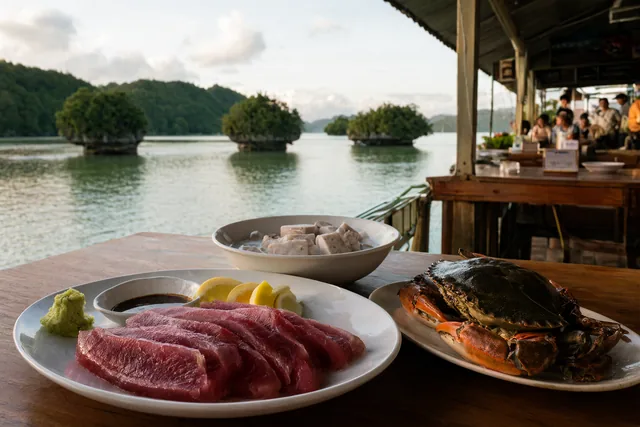
- Tuna sashimi (everywhere): fresh yellowfin or skipjack tuna, sliced and served with soy sauce, wasabi or hot pepper and lemon, a legacy of the Japanese era and on almost every menu.
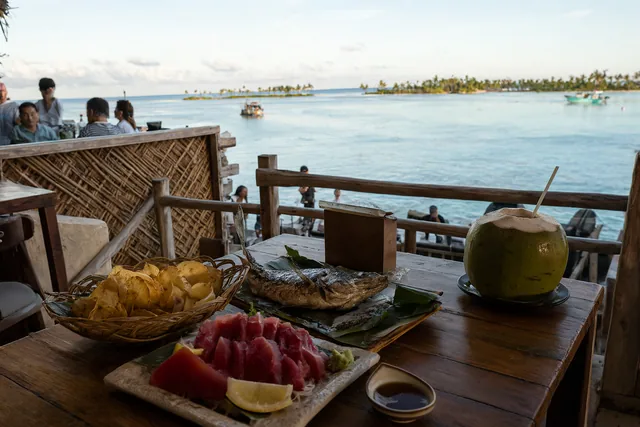
- Reef fish (everywhere): grilled, fried or cooked in coconut milk, and usually served with rice or breadfruit.
- Mangrove crab and coconut crab (special occasions and some restaurants): mangrove crab is steamed or cooked in coconut milk, and coconut crab, the giant land crab, is a prized feast food that is not always available.
- Pohnpei pepper (Pohnpei): black pepper grown on Pohnpei, with a strong, fragrant heat, sold in small packets as a local product and used on fish and sashimi.
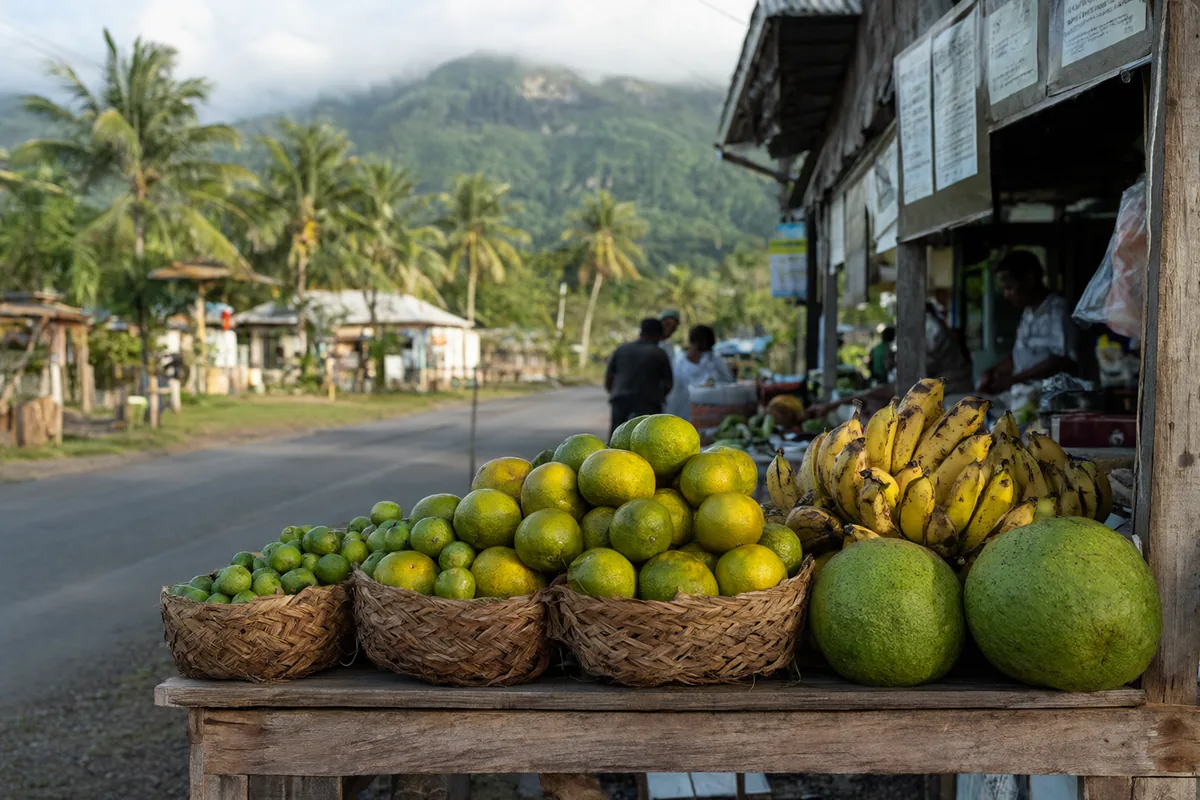
- Kosrae tangerines (Kosrae): sweet, juicy citrus with green skins even when ripe, Kosrae's best-known crop, along with limes.
- Bananas in coconut milk (everywhere): green or ripe bananas simmered in coconut milk, a side dish or sweet dish at home and at gatherings.
- Sakau (Pohnpei and Kosrae): kava made by pounding the roots of the pepper plant on a large flat stone with water, then squeezing the pulp through hibiscus bark fibres. Pohnpeian sakau is thick, slippery and famously strong.
In towns you will also see rice with almost everything, Spam and tinned fish, instant noodles, fried chicken and Japanese-style bento boxes, which have become everyday food. In Yap and Chuuk, tuba, the sap from coconut palm flowers, is drunk fresh and sweet or left to ferment.
How to read a menu in Micronesia
Menus in Micronesia are in English, the common language between the states, but local foods are known by their names in Pohnpeian, Chuukese, Yapese or Kosraean, and Japanese words are part of everyday food vocabulary. These are the words you will see or hear most often.
| Local term | Language | Meaning |
|---|---|---|
| Sakau | Pohnpeian | Kava made from pounded pepper plant roots |
| Sakau market | Local English | A simple bar selling sakau by the cup |
| Kamadipw | Pohnpeian | A traditional feast with sakau, yams and pigs |
| Mahi / mahr | Pohnpeian | Breadfruit / fermented preserved breadfruit |
| Kehp | Pohnpeian | Yam |
| Kón | Chuukese | Pounded breadfruit or taro |
| Tuba | Local | Coconut palm sap, fresh or fermented |
| Betel nut | English | Areca nut chewed with lime and pepper leaf |
| Sashimi | Japanese | Sliced raw fish, usually tuna |
| Bento | Japanese | A boxed meal of rice and sides |
| Local food | Local English | Island starches: breadfruit, taro, yam, bananas |
| Market price | English | Priced by the day's catch, usually crab or lobster |
"Local food" on a menu or at a gathering means the island starches, breadfruit, taro, yam and bananas, rather than a particular dish. Crab and lobster are often at "market price", so ask before you order. swap.menu explains local food words and flags market-price items when it reads a menu.
Tipping, tax and paying the bill
Tipping is not a Micronesian custom, and it is not expected in local eateries, stores or markets. In hotel restaurants that cater to divers and visitors, a tip of around 10 percent is appreciated but not required, and dive guides and boat crews are commonly tipped at the end of a trip. Our guide to tax and service charges on menus explains how tax and service lines work around the world.
Each state sets its own sales taxes, and they may be included in prices or added at the till. The currency is the US dollar. Cards are accepted at the main hotels and dive operators and at some restaurants and supermarkets, but most small eateries, sakau markets, stores and taxis need cash. There are a few ATMs in the main town of each state, but bring enough cash for your trip in case they are out of order. If you use a card from outside the United States and the terminal offers to charge you in your home currency, choose US dollars: our guide to paying in local currency explains why.
Meal times are early: breakfast from about 6am, lunch around noon, and dinner from about 6pm, with many eateries closing early in the evening. Sunday is a day of church across Micronesia, and on Kosrae it is observed very strictly: most activities stop, including diving and many tours, and visitors should keep the day quiet.
Sakau etiquette: on Pohnpei, sakau is part of every important occasion, and at a traditional ceremony the first cups go to the highest-ranking people present in a strict order. At a sakau market in Kolonia, visitors are welcome to buy a cup. It is served in a coconut shell or cup, and you drink it slowly or in a few gulps, then hand it back or pass it on. It is very strong, so start with one cup, never drive afterwards, and do not mix it with alcohol. Betel nut in Yap: chewing betel nut is central to Yapese social life and is often shared as a gesture of friendship. You may be offered some; a polite "no, thank you" is fine.
Where to eat in Micronesia, state by state
Each state of Micronesia has its own main island and town, and they are linked by air rather than by boat: Chuuk, Pohnpei and Kosrae are on the island-hopping flight route between Guam and Hawaii, and Yap is reached via Guam. Most visitors combine two or three states. Jump to a destination:
Where to eat in Kolonia
Kolonia, the main town of Pohnpei, is the largest town in Micronesia and has the best choice of food in the country, though that still means a modest number of places. Small restaurants and hotel dining rooms serve tuna sashimi, grilled reef fish, mangrove crab, fried chicken, Japanese set meals, Chinese and Filipino dishes and burgers, and many are casual, with counter ordering and simple tables. Breadfruit and taro appear as sides on some menus, and Pohnpei pepper is often on the table.
In the evening, look for a sakau market, a simple bar where sakau is pounded and sold by the cup. Locals gather to drink quietly after work, and visitors are welcome to join. Several of the hotels in Kolonia have terraces with views over the harbour to Sokehs Rock, the island's landmark basalt cliff, and they are the best spots for sunset dinners. Small stores around town sell bento boxes, rice balls and snacks for day trips, and on Pohnpei you will need them, as there are few places to eat outside Kolonia.
Where to eat around Pohnpei
Beyond Kolonia, Pohnpei is mountainous, wet and green, with rainforest, waterfalls and mangroves around its coast. Its most famous sight is Nan Madol, a ruined city of basalt islets built on the reef off Madolenihmw on the east coast, often visited with a local guide. There are almost no restaurants on the road around Pohnpei, only small village stores selling drinks, rice and snacks, so pack lunch from Kolonia for a day out.
Village life on Pohnpei revolves around family, church and the traditional title system, and feasts called kamadipw bring together sakau, giant yams, pigs and breadfruit to honour chiefs. Some cultural tours and eco-lodges around Pohnpei include a meal of local food or a sakau demonstration, which is the best chance to taste breadfruit, taro and fish cooked the traditional way. Ask your guide about etiquette before visiting a village.
Where to eat in Weno
Weno, also known by its old name Moen, is the main island and town of Chuuk, inside the vast Chuuk Lagoon. The lagoon was once a major Japanese naval base, and dozens of wrecks from the Second World War lie on its floor, which is why most visitors come here: to dive. The dive hotels in Weno have restaurants serving breakfast before the boats leave and simple dinners of fish, sashimi, rice, chicken and steak after a day on the wrecks.
Outside the hotels, food in Weno is mostly small stores and takeaways selling rice plates, fried chicken, noodles and fish, and the island's daily food is kón, pounded breadfruit or taro, with fish and coconut. Dive trips usually include lunch on the boat or on a small island. Roads in Weno are rough and services are basic, so most visitors take meals at their hotel and arrange transport through it.
Where to eat on Yap
Yap is the most traditional of Micronesia's states, known for its huge stone money discs, its men's houses and stone paths, and the manta rays that feed in its channels all year. The main town, Colonia, is small, with a handful of hotel restaurants and local eateries serving fish, mangrove crab, sashimi, rice and taro, and stores selling betel nut, tuba and snacks. Most visitors eat at their dive hotel.
The best time to see Yapese food culture is Yap Day on 1 March, a festival of traditional dance, games and food stalls where villages share local dishes. At other times, a village visit with a guide may include a meal of taro, breadfruit, fish and coconut. Customs are strong on Yap: always ask before entering a village or walking on a stone path, dress modestly, and accept that betel nut will be chewed around you everywhere.
Where to eat on Kosrae
Kosrae, the easternmost state, is a single high island with rainforest-covered mountains, quiet villages and healthy reefs, and it is often called the "Island of the Sleeping Lady" for the shape of its ridgeline. There are only a few places to eat, mainly the restaurants at small eco-lodges and dive resorts and some local eateries near the main town, Tofol, and the old ruined city of Lelu. Menus are simple: fresh fish, sashimi, mangrove crab, rice, breadfruit and taro.
Kosrae is famous for its tangerines, green-skinned and sweet, and its limes, sold at roadside stands and in small stores in season. Sakau is also drunk here. On Sundays almost everything on Kosrae closes for church, so plan meals with your lodge and buy snacks on Saturday. Kosrae is one of the quietest, friendliest places in the Pacific, and a slow dinner of fish caught that day is part of its appeal.
Vegetarian, vegan and allergy tips
Micronesia's traditional food is largely plant based, with breadfruit, taro, yams, bananas and coconut, but restaurant menus are built around fish, crab and meat, and many vegetables are cooked with fish or meat. Vegetarians can usually get rice, breadfruit, taro, bananas in coconut milk and fruit, and hotel kitchens can often make a vegetable dish if asked ahead. "Vegetarian" is understood in hotels and restaurants. Watch for fish-based stock in Japanese-style soups.
Seafood and shellfish are everywhere, soy sauce is common, and coconut is used in many local dishes, which matters for anyone with a shellfish, soy, gluten or coconut allergy. Medical facilities are limited, especially on Chuuk, Yap and Kosrae, so carry any allergy medication and tell your hotel about allergies when you book. Our guide to eating abroad with food allergies explains how to explain an allergy clearly.
Useful Micronesian phrases
English is spoken across Micronesia and is used by everyone who works with visitors, but each state has its own language, and a greeting in it is always welcome.
Kaselehlie "Hello" in Pohnpeian
Kalahngan "Thank you" in Pohnpeian
Ran annim "Good morning" or "hello" in Chuukese
Kinisou "Thank you" in Chuukese
Mogethin "Hello" in Yapese
Kammagar "Thank you" in Yapese
Kulo "Thank you" in Kosraean
How swap.menu helps you eat in Micronesia
A menu in Kolonia or Weno might list sashimi, mangrove crab at "market price", local food and a bento of the day, with little explanation, and the food you meet at a village gathering may have no menu at all. Photograph the menu with swap.menu and every dish appears in your own language with a short explanation, so you know that local food means breadfruit, taro and yam, and that kón is pounded breadfruit. Visitors from Japan, China, Korea or Europe can read any menu in Micronesia in their own language, choosing from 29. Every price is converted from US dollars to your home currency, and we flag market-price items so the bill does not surprise you.
Tap the dishes you want, add a note such as "no shellfish" or "no soy sauce", typed or spoken, and swap.menu shows your order clearly for the staff. Your scanned menus are saved, so you can check what you ate on Pohnpei when you are on Kosrae. You can try it right now on a sample menu with the free demo, or see travel pass prices.
Off to Micronesia? Your first 3 menu scans are free, and a travel pass starts from $4.99 with nothing that renews.
Start free with 3 scansMicronesia food FAQ
Do you tip in Micronesia?
Tipping is not a Micronesian custom and is not expected in local eateries. In hotel restaurants around 10 percent is appreciated but not required, and dive guides and boat crews are commonly tipped.
What food is Micronesia known for?
The Federated States of Micronesia is known for breadfruit, taro, yams and coconut, fresh tuna sashimi and reef fish, mangrove crab, Pohnpei pepper and Kosrae tangerines. Sakau, the strong Pohnpeian kava, is the traditional drink.
What is sakau?
Sakau is the Pohnpeian name for kava, made by pounding pepper plant roots on a stone with water and squeezing the pulp through hibiscus fibres. It is thick, strong and numbing, and it is drunk at ceremonies and in simple bars called sakau markets.
Is Micronesia expensive to eat out?
Hotel restaurants are priced similarly to the United States, as much food is imported. Local eateries, stores and fresh fish are better value, and choice is limited, so many visitors eat at their hotel.
Is tap water safe to drink in Micronesia?
No. Drink bottled, boiled or filtered water in all four states, and follow your hotel's advice after heavy rain.
How can I understand menus and food words in Micronesia?
Menus are in English, with local and Japanese words for many foods. Photograph the menu with swap.menu and it explains local dish names, translates the menu into your own language and converts prices from US dollars to your currency.
Travelling further in the region? Read our food guides for nearby islands:
- Palau food guide
- Guam food guide
- Marshall Islands food guide
- Northern Mariana Islands food guide
- Japan food guide
Or browse every travel food guide.