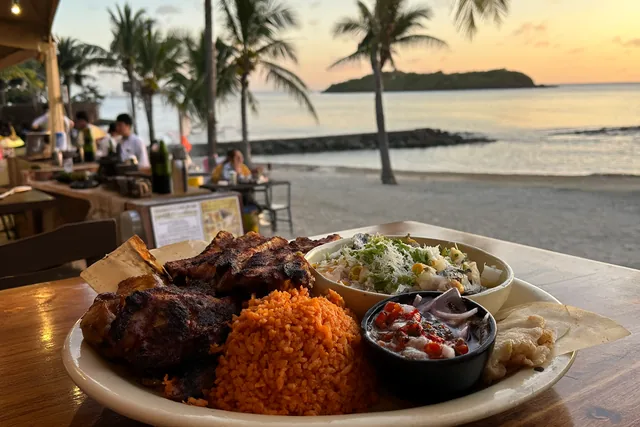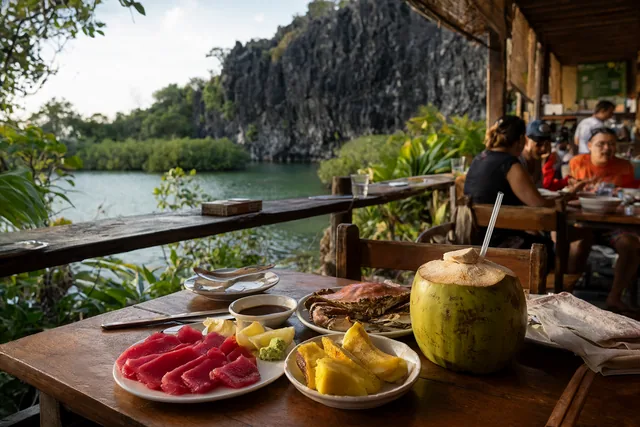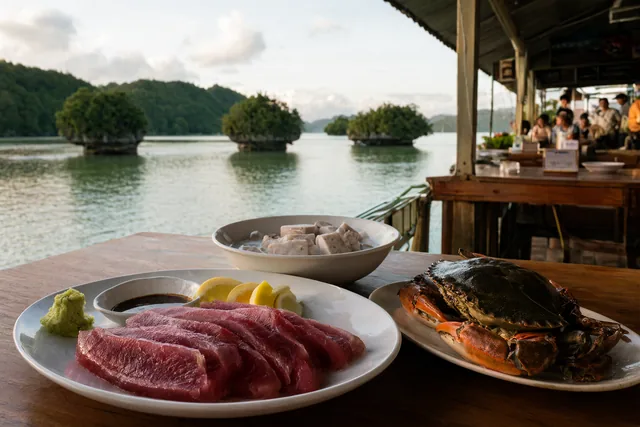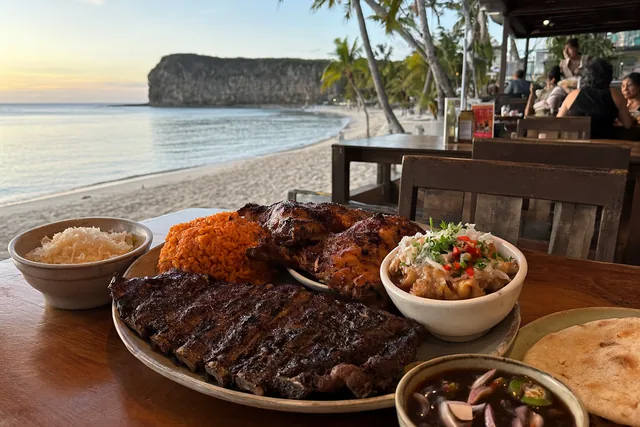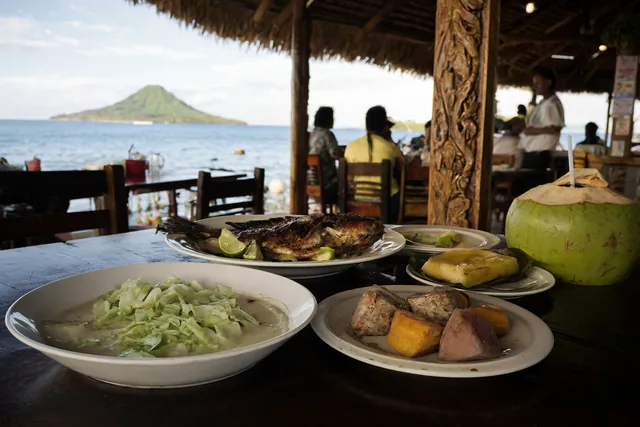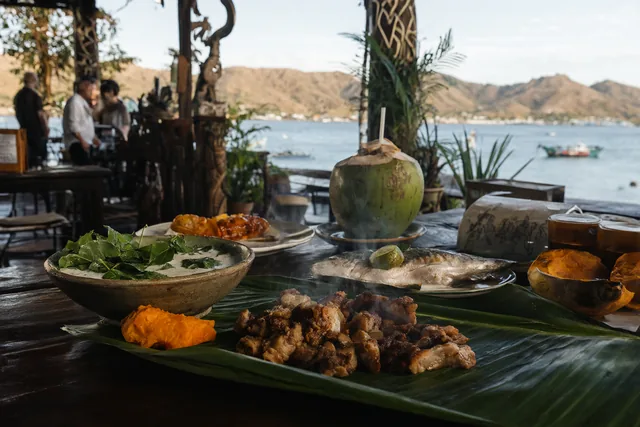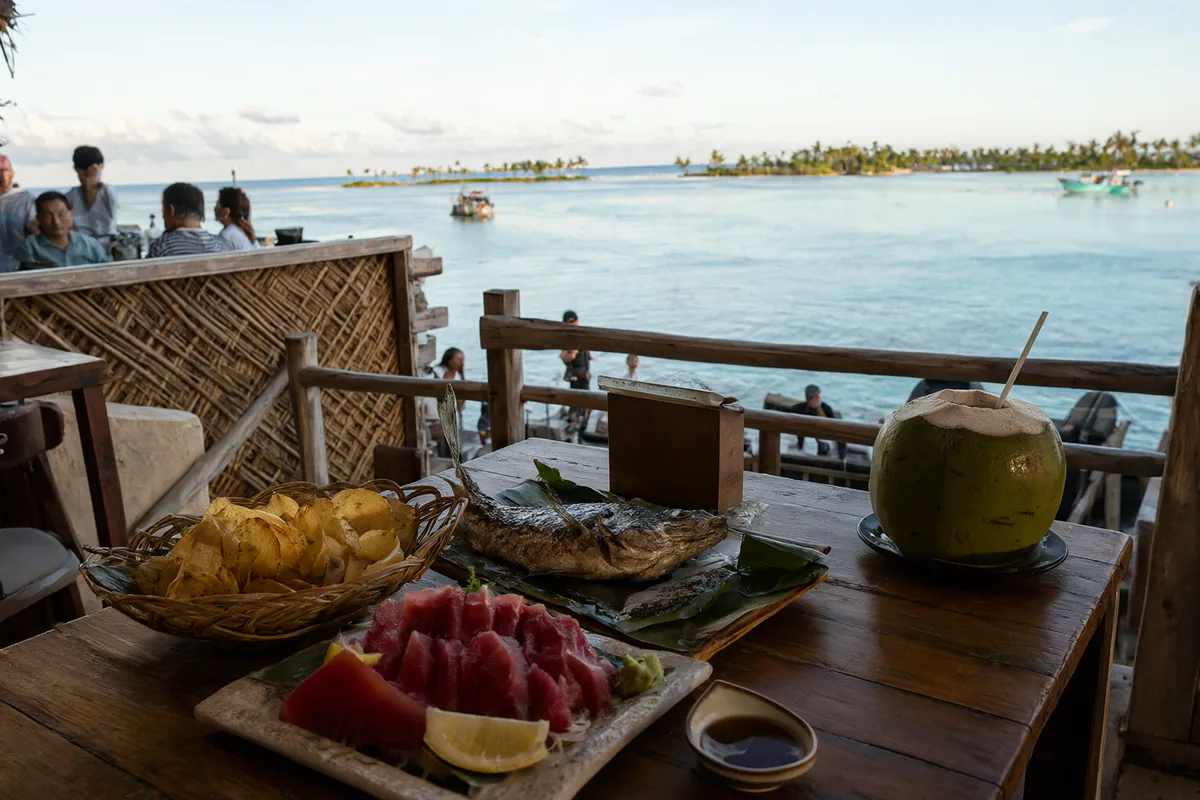
The Marshall Islands are 29 low coral atolls and five islands in the central Pacific, most of them only a few metres above the sea, and their food has always been shaped by what grows on sand and coral: coconut, breadfruit, pandanus and arrowroot, with fish from the lagoon and the open ocean. Today imported rice, flour and tinned food sit beside these traditional foods, and Majuro, the capital, has restaurants serving some of the freshest tuna sashimi in the Pacific. This Marshall Islands food guide covers the dishes to know, the Marshallese words for food, tipping and paying, and then where to eat in Majuro, out at Laura, on Arno, on Ebeye and on the outer atolls. It is a small food scene, so the guide is honest about what you will find.
What to eat in the Marshall Islands: 11 dishes to know
These are the foods you will meet at Majuro's restaurants, at family parties and on the outer atolls. The Marshallese name is given where it is commonly used.
- Tuna sashimi (Majuro and everywhere): Majuro is one of the busiest tuna transshipment ports in the Pacific, and fresh yellowfin is served raw in thick slices with soy sauce, wasabi, lemon and hot pepper on almost every restaurant menu.
- Grilled and fried reef fish (everywhere): whole reef fish caught in the lagoon, grilled over coconut husks or fried, and eaten with rice or breadfruit. Fish is called ek in Marshallese.
- Breadfruit (everywhere, in season): called mā, breadfruit is roasted whole in the fire, boiled, baked in an earth oven or fried as chips. The main season is roughly the middle of the year.
- Bwiro (outer atolls and family events): breadfruit preserved by fermenting it, traditionally in pits lined with leaves, then kneaded and baked. It is sour and strong, and was essential for long canoe voyages and seasons without fresh breadfruit.
- Pandanus (everywhere): called bōb, the fruit of the pandanus tree is cut into wedges and the sweet, fibrous ends are chewed raw. It is also cooked down into a thick paste (jāānkun) that is dried in sheets and keeps for months.
- Coconut in every form (everywhere): drinking coconut (ni), grated mature coconut, coconut cream, and iu, the spongy, sweet centre of a sprouting coconut, eaten as a snack.
- Jekaro (outer atolls): the sweet sap tapped from the flower stalk of the coconut palm, drunk fresh, boiled into syrup or used to sweeten other foods.
- Arrowroot (outer atolls): called makmōk, its starch is used to make puddings, often with coconut and pandanus or breadfruit.
- Jukjuk (parties): rice balls rolled in freshly grated coconut, a favourite at birthday parties and family celebrations.
- Clams, lobster and coconut crab (outer atolls): giant clams, spiny lobster and coconut crab are eaten on the outer islands and served at special occasions, though supplies are limited.
- Rice, chicken and doughnuts (everywhere): imported rice, fried chicken, tinned meat and fried doughnuts and pancakes sold by families are everyday food in Majuro and Ebeye.
How to read a menu in the Marshall Islands
Menus in the Marshall Islands are in English, and restaurants in Majuro are often run by Japanese, Chinese, Korean, Taiwanese or Filipino owners, so you will see dishes from those kitchens alongside local fish. Marshallese words are used for local foods at markets, family events and on the outer atolls. These are the words you are most likely to hear or see.
| Local term | Language | Meaning |
|---|---|---|
| Ek | Marshallese | Fish |
| Mā | Marshallese | Breadfruit |
| Bwiro | Marshallese | Fermented preserved breadfruit |
| Bōb | Marshallese | Pandanus fruit |
| Jāānkun | Marshallese | Dried pandanus paste |
| Ni | Marshallese | Drinking coconut |
| Iu | Marshallese | Spongy centre of a sprouting coconut |
| Jekaro | Marshallese | Sweet coconut palm sap |
| Makmōk | Marshallese | Arrowroot, used for puddings |
| Jukjuk | Marshallese | Rice balls rolled in grated coconut |
| Sashimi | Japanese | Sliced raw fish, usually tuna |
| Bento | Japanese | Boxed meal of rice and sides |
| Market price | English | Priced by the day's catch, often lobster or crab |
Many Majuro menus mix Japanese, Chinese and Korean dishes with local fish, and lobster or reef fish may be at "market price". swap.menu explains each dish in your language and flags market-price items, so you know what you are ordering and roughly what it will cost.
Tipping, tax and paying the bill
Tipping is not a Marshallese custom and is not expected in local eateries, stores or markets. In hotel restaurants and places that serve many visitors, a small tip for good service is appreciated but not required, and dive and fishing crews are commonly tipped at the end of a trip. Our guide to tax and service charges on menus explains how tax and service lines work around the world.
Menu prices in Majuro are usually what you pay, though a few hotel restaurants add a service charge, so check the bill. The currency is the US dollar. Cards are accepted at the main hotels and some restaurants and larger stores in Majuro, but most small eateries, taxis, stores, and everything on Ebeye and the outer atolls run on cash. There are a few ATMs in Majuro, and very few elsewhere, so bring enough cash for any trip beyond the capital. If you use a card from outside the United States and the terminal offers to charge you in your home currency, choose US dollars: our guide to paying in local currency explains why.
Meal times are early, with breakfast from about 6am, lunch at noon and dinner from about 6pm, and many eateries close early in the evening. Sunday is a day of church and family, and many businesses close or open shorter hours. Family celebrations are a big part of Marshallese life, especially the kemem, a large party for a child's first birthday, where food is shared with the whole community. If you are invited to one, go, eat, and accept the plate of food you are given to take home.
Eating on the outer atolls: on the outer islands, families share fish, breadfruit, pandanus and coconut, and visitors staying in a village are usually fed by their hosts. Bring gifts of food from Majuro, such as rice, flour, sugar or tinned goods, which are valued, as supplies arrive by ship only every few weeks. Dress modestly, with knees covered, especially for women.
Where to eat in the Marshall Islands, atoll by atoll
Most visitors fly into Majuro, the capital atoll, and many go no further. Ebeye is reached via flights to Kwajalein, and the outer atolls by small plane or boat. Jump to a destination:
Where to eat in Majuro
Majuro is a long, thin ring of islands joined by a single road that runs for about 50 kilometres between the lagoon and the ocean. Most restaurants are in the downtown area known as DUD, after the three islets of Delap, Uliga and Djarrit, with a few near the airport. The choice is wider than you might expect: hotel restaurants with lagoon views, Japanese restaurants serving sashimi and set meals, Chinese, Korean and Filipino eateries, and small cafés selling coffee, sandwiches, fried chicken and plate lunches.
The dish to order in Majuro is tuna sashimi, as fresh as it gets thanks to the fishing fleets in the lagoon, followed by grilled reef fish. Small stores and family stalls sell doughnuts, pancakes, rice balls and drinking coconuts, and local handicraft shops sell woven baskets and fans. The Alele Museum in Uliga explains traditional navigation, stick charts and atoll life, and is a good stop between meals. Restaurants close fairly early, so plan dinner from around 6pm, and enjoy the sunset over the lagoon.
Where to eat in Laura
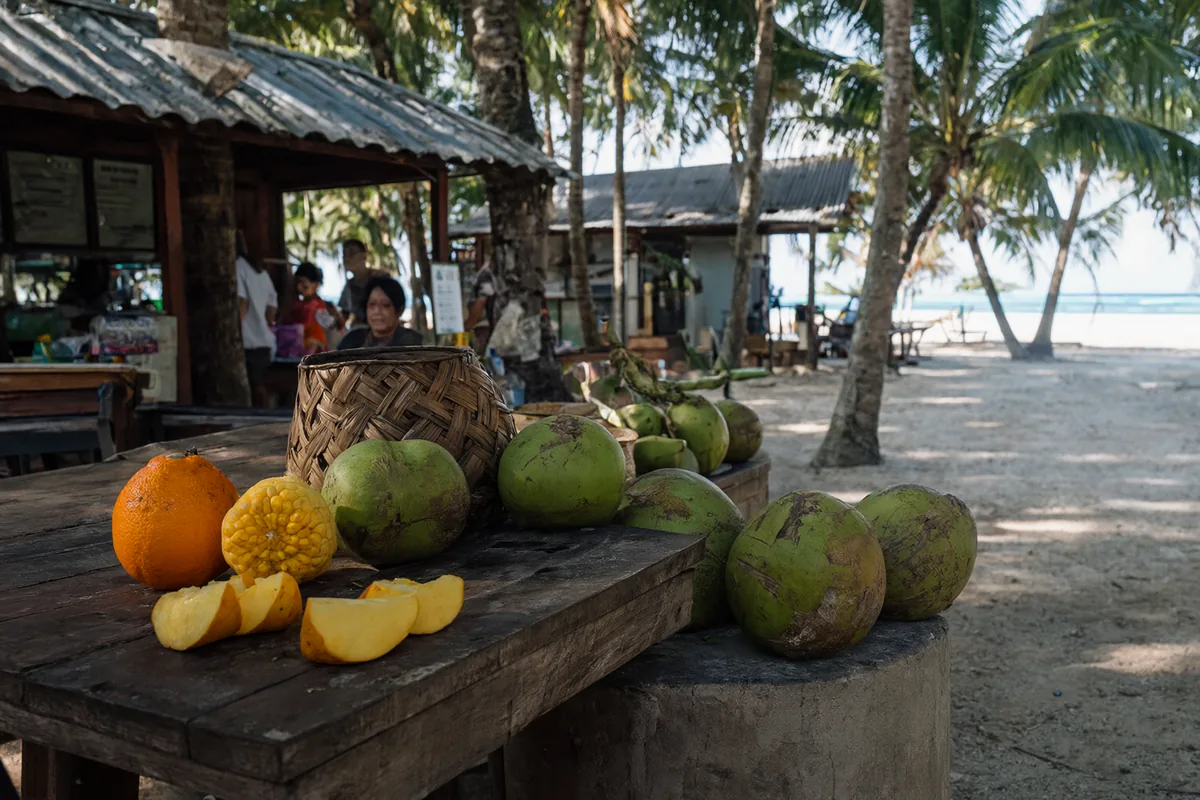
Laura, at the western end of Majuro atoll at the end of the road from town, is the most rural part of the capital atoll, with wider land, gardens, breadfruit and pandanus trees, and a calm white beach popular for weekend picnics. It is the place to see the traditional foods of the atoll growing, and in season you may find breadfruit, pandanus, bananas and drinking coconuts sold from homes and small stands along the road.
There are only small stores in Laura, so most visitors bring a picnic from downtown Majuro, or buy fried chicken, rice and drinks from a shop on the way. Families gather at Laura beach on Sundays and holidays to swim and share food, and the atmosphere is relaxed. Pay any small beach access fee asked by the landowner, and take your rubbish with you, as the land belongs to local families.
Where to eat on Arno
Arno atoll is close to Majuro, reached by boat across the open sea, and it offers a taste of outer island life without a long flight. Villages here live by fishing and gathering coconuts, breadfruit and pandanus, and there are very few shops and no restaurants. Visitors usually come on a day trip or stay with local families or in a simple guesthouse, with meals cooked by their hosts.
Food on Arno is what the atoll provides: fish from the lagoon and reef, breadfruit, coconut, pandanus and rice brought from Majuro. Bring your own water, snacks and some food to share as a gift, and check boat times and sea conditions carefully, as the crossing can be rough. A day on Arno, with a lunch of grilled fish and breadfruit on the beach, is one of the best ways to understand Marshallese food.
Where to eat on Ebeye
Ebeye, in Kwajalein Atoll, is one of the most densely populated islands in the Pacific, a small island packed with homes, churches and stores. It sits next to Kwajalein island, a US military installation that is not open to casual visitors, and most people reach Ebeye by flying to Kwajalein and taking a short ferry. Food on Ebeye comes mostly from small stores and family-run eateries selling rice plates, fried chicken, fish, doughnuts and noodles.
There are only a few simple places to sit down and eat on Ebeye, and visitors usually eat at their guesthouse or with hosts. Fresh fish from the lagoon is the best choice when available. Bring cash, as card payments are rare, and expect basic services. Ebeye is not a tourist destination, but it shows the reality of urban life on a crowded atoll.
Where to eat on the outer atolls
The outer atolls of the Marshall Islands, such as Mili, Jaluit, Likiep and Wotje, are among the most remote inhabited places on earth, reached by infrequent domestic flights or supply ships. There are no restaurants, and visitors stay in simple guesthouses or with families, who cook fish, breadfruit, pandanus, coconut and rice, and sometimes coconut crab, lobster or clams. Traditional foods such as bwiro and jāānkun are still made here.
A stay on the outer atolls needs planning: bring enough cash, food to share, water treatment, and any special foods or medicines you need, and arrange your stay through the local government or a contact in Majuro. Some atolls still carry the wrecks and gun emplacements of the Second World War, and Jaluit was the administrative centre under German and Japanese rule. Life is quiet and communal, and a meal of fresh fish and breadfruit eaten with your hosts is the highlight.
Vegetarian, vegan and allergy tips
The traditional foods of the Marshall Islands, breadfruit, pandanus, arrowroot, bananas and coconut, are plant based, but restaurant menus centre on fish, chicken and meat, and fresh vegetables are scarce, as most are imported. Vegetarians can usually find rice, noodle and tofu dishes at Asian restaurants in Majuro, and breadfruit and fruit in season. "Vegetarian" is understood in restaurants. On Ebeye and the outer atolls, bring some of your own food.
Fish and shellfish are everywhere, soy sauce is common in restaurant dishes, and coconut is in many local foods, which matters for anyone with a shellfish, soy, gluten or coconut allergy. Medical facilities are very limited outside Majuro and Ebeye, so carry any allergy medication and explain allergies clearly when booking. Our guide to eating abroad with food allergies explains how to explain an allergy clearly.
Useful Marshallese phrases
English is widely spoken in Majuro, especially by anyone who works with visitors, but Marshallese is the language of daily life, and a few words make a real difference, especially on the outer atolls.
Iọkwe "Hello", also meaning love and compassion; often spelled "yokwe"
Iọkwe eok "Hello to you", a warmer greeting
Ewi am mour? "How are you?", literally "how is your life?"
Kommol "Thank you"
Kommol tata "Thank you very much"
Emman "Good", a simple way to compliment the food
How swap.menu helps you eat in the Marshall Islands
A Majuro restaurant menu might run from tuna sashimi and Korean stews to Chinese noodles and local reef fish at market price, and the food at a family party may come with Marshallese names like bwiro and jukjuk. Photograph a menu with swap.menu and every dish appears in your own language with a short explanation, so you know what each dish is before you order. Visitors from Japan, Taiwan, Korea or Europe can read any menu in the Marshall Islands in their own language, choosing from 29. Every price is converted from US dollars to your home currency, and we flag market-price items.
Tap the dishes you want, add a note such as "no shellfish" or "no soy sauce", typed or spoken, and swap.menu shows your order clearly for the staff. Your scanned menus are saved, so you can find your favourite sashimi place in Majuro again. You can try it right now on a sample menu with the free demo, or see travel pass prices.
Off to the Marshall Islands? Your first 3 menu scans are free, and a travel pass starts from $4.99 with nothing that renews.
Start free with 3 scansMarshall Islands food FAQ
Do you tip in the Marshall Islands?
Tipping is not a Marshallese custom and is not expected in local eateries or stores. A small tip in a hotel restaurant is appreciated, and dive and fishing crews are commonly tipped.
What food is the Marshall Islands known for?
The Marshall Islands are known for fresh tuna sashimi and reef fish, breadfruit, pandanus and coconut, and traditional preserved foods such as bwiro (fermented breadfruit) and jāānkun (dried pandanus paste). Jukjuk, rice balls in grated coconut, are a party favourite.
Is the Marshall Islands expensive to eat out?
Restaurant prices in Majuro are similar to the United States, and imported groceries are expensive. Tuna sashimi and local fish are usually good value, and small eateries and stores are the cheapest options.
Is tap water safe to drink in the Marshall Islands?
No. Drink bottled, filtered or treated rainwater. On the outer atolls, bring a way to treat water, as supplies depend on rain catchment.
What time do people eat dinner in the Marshall Islands?
Dinner is usually from about 6pm, and many restaurants in Majuro close fairly early in the evening. Lunch is around noon, and breakfast starts early.
How can I understand menus in the Marshall Islands?
Menus are in English, often with Japanese, Chinese and Korean dishes. Photograph the menu with swap.menu and it explains each dish, translates the menu into your own language and converts prices from US dollars to your currency.
Travelling further in the Pacific? Read our food guides for nearby islands:
Or browse every travel food guide.