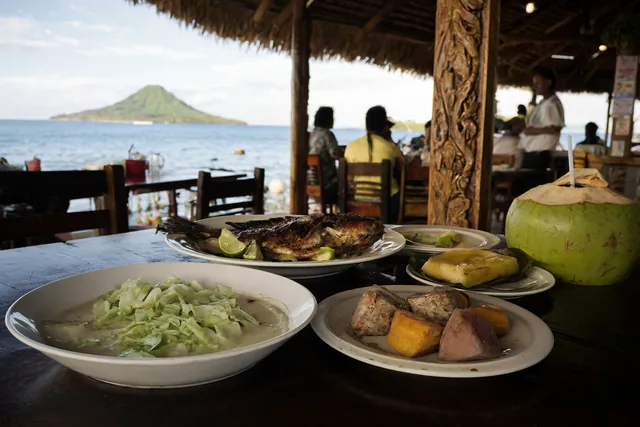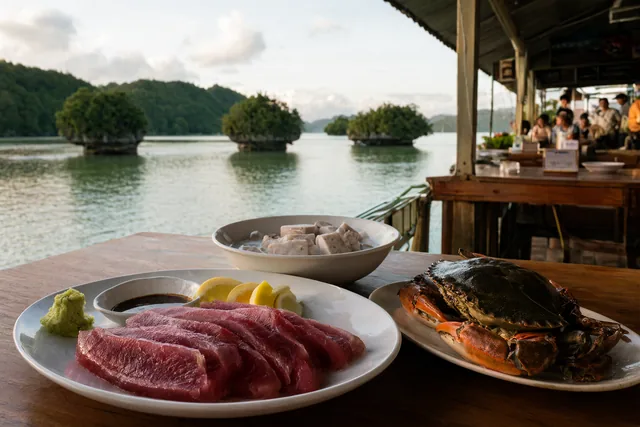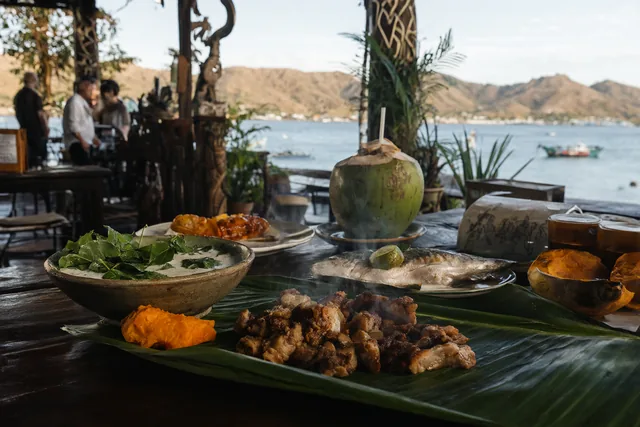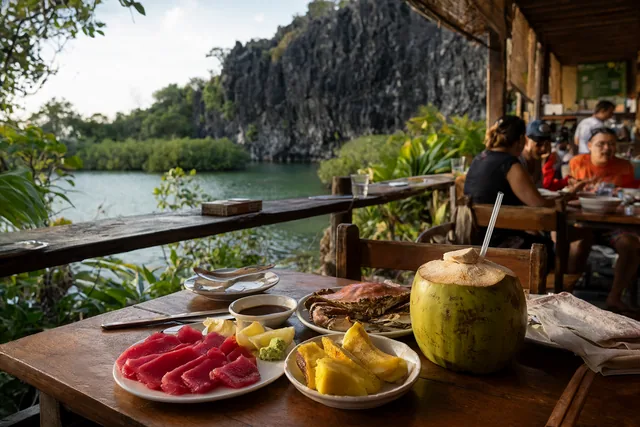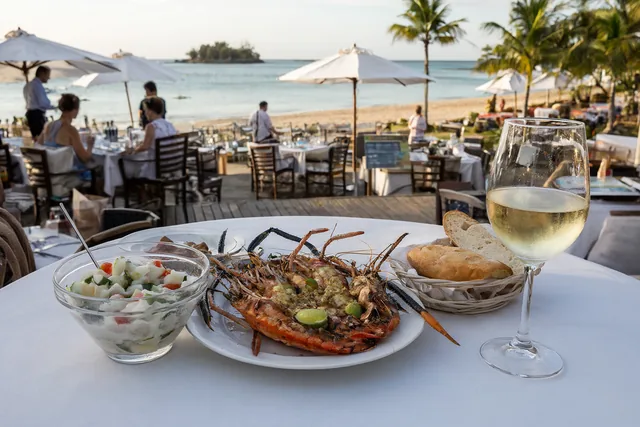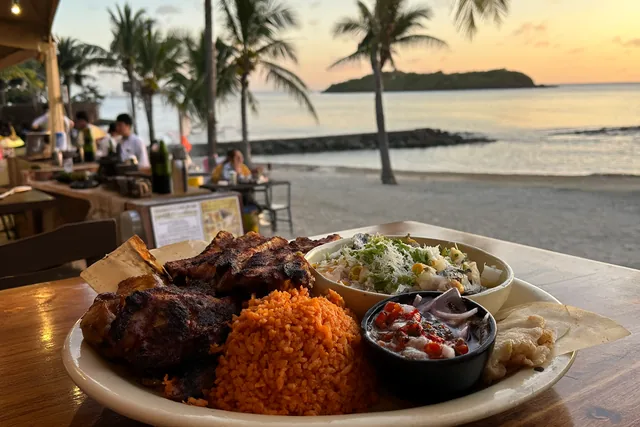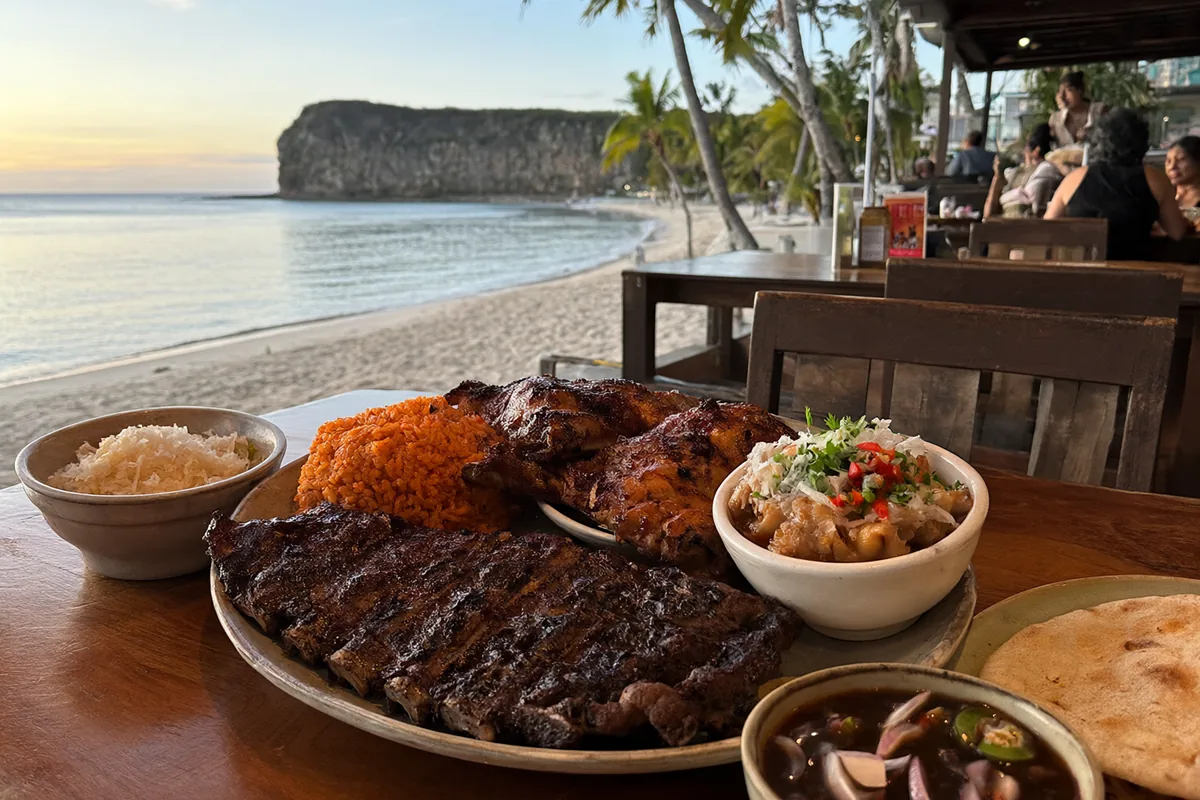
Guam is an American territory in the western Pacific, closer to Tokyo and Manila than to Hawaii, and its food shows every chapter of its history. The base is Chamorro (CHamoru) cooking: grilled meat with a sharp soy and lemon dipping sauce, rice tinted orange with achote seeds, and kelaguen, chopped meat or seafood "cooked" in lemon juice with coconut and hot pepper. Three centuries of Spanish rule added empanadas, latiya and fiestas, and Filipino, Japanese, Korean and American influences fill in the rest. This Guam food guide covers the dishes to know, the Chamorro words you will see on menus, village fiestas and the night market, tipping and paying, and then where to eat in Tumon, Hagåtña, Tamuning, Dededo and the villages of southern Guam.
What to eat in Guam: 12 dishes to know
These are the dishes you will find on a Chamorro fiesta table, at the night market and in local restaurants. The Chamorro name comes first where one is commonly used.
- Hineksa' agaga' (everywhere): red rice, coloured and lightly flavoured with achote (annatto) seeds, cooked with onion and garlic and sometimes peas. It comes with almost every Chamorro meal.
- Chamorro barbecue (everywhere): chicken, pork ribs and beef short ribs marinated in soy sauce, vinegar, onion and garlic, then grilled over coals. Every family has a marinade, and every weekend somebody has the grill going.
- Finadene' (everywhere): the essential dipping sauce of soy sauce, lemon juice or vinegar, onion and hot pepper, spooned over rice, meat and fish. It is on every Guam table.
- Kelaguen mannok (everywhere): grilled chicken finely chopped and mixed with lemon juice, salt, green onion, hot pepper and often grated coconut, served cold. There are also versions with shrimp (uhang), beef, fish and Spam.
- Kådun pika (everywhere): chicken stewed with soy sauce, vinegar, garlic and plenty of hot pepper, sometimes with coconut milk. Pika means spicy.
- Tinaktak (local restaurants and fiestas): thinly sliced or minced beef cooked in coconut milk with green beans or other vegetables.
- Empanada (fiestas and bakeries): the Chamorro empanada is a crisp, bright orange turnover filled with a creamy, savoury rice-flour filling coloured with achote, quite different from Latin American versions.
- Titiyas (everywhere): Chamorro flatbread, made with flour and coconut milk and cooked on a griddle, or from corn (titiyas mai'es). Eat it with kelaguen or barbecue.
- Gollai appan lemmai (fiestas): breadfruit cooked in coconut milk, a traditional side dish that appears at family gatherings.
- Buñelos (bakeries and fiestas): fried dough snacks, sweet with banana (buñelos aga) or savoury with shrimp (buñelos uhang), often served with finadene'.
- Latiya (fiestas and bakeries): Guam's favourite dessert, a sponge cake topped with a thick vanilla custard and a dusting of cinnamon, from the Spanish era.
- Apigigi' (fiestas and markets): grated young coconut and tapioca wrapped in banana leaf or coconut leaf and grilled, a chewy, lightly sweet snack.
You will also see Filipino lumpia (fried spring rolls) and pancit (noodles) at nearly every gathering, and Spam, loved across Guam, turns up fried with eggs at breakfast and in kelaguen.
How to read a menu in Guam
Menus in Guam are in English, often with Japanese and Korean versions in the tourist areas of Tumon. Local restaurants and fiesta tables use Chamorro names for many dishes, and some words have more than one spelling, as the official CHamoru spelling differs from older forms. In Chamorro, the apostrophe marks a glottal stop and å is said like the "a" in "father". These are the words you will see most often.
| Local term | Language | Meaning |
|---|---|---|
| Hineksa' agaga' | Chamorro | Red rice coloured with achote |
| Finadene' | Chamorro | Soy, lemon or vinegar, onion and hot pepper sauce |
| Kelaguen | Chamorro | Chopped meat or seafood dressed with lemon, coconut and pepper |
| Kådun | Chamorro | Stew or soup |
| Pika | Chamorro | Spicy |
| Mannok / guihan / uhang | Chamorro | Chicken / fish / shrimp |
| Aga / lemmai / niyok | Chamorro | Banana / breadfruit / coconut |
| Gollai | Chamorro | Vegetables, or a vegetable dish |
| Donne' sali | Chamorro | Boonie pepper, a small, very hot local chilli |
| Titiyas | Chamorro | Flatbread |
| Latiya | Chamorro | Custard sponge cake |
| Fiesta plate | Local English | A plate with red rice, barbecue, kelaguen and sides |
| Plate lunch | Local English | A filling set lunch of rice, a main and sides |
| Boonie pepper | Local English | Wild hot chilli, used in finadene' |
Boonie peppers are small but fierce, and finadene' at a local place can be much hotter than at a resort. Ask for it on the side if you are not sure. swap.menu explains Chamorro dish names like kelaguen and kådun pika when it reads a menu, and lets you add a note like "sauce on the side" to your order.
Tipping, tax and paying the bill
Guam follows American tipping customs. In sit-down restaurants, a tip of 15 to 20 percent of the bill is expected, and a dollar or two per drink at a bar. Some restaurants, especially in hotels and for larger groups, add a service charge automatically, so check the bill before adding a tip on top. At counters, food trucks and the night market, a tip jar is optional. Our guide to tax and service charges on menus explains how service charges work around the world.
Guam does not add a general sales tax at the till the way most US states do, so the menu price is usually what you pay before the tip. The currency is the US dollar. Cards are accepted almost everywhere in Tumon and Tamuning and in most restaurants around the island, but bring cash for the night market, flea markets, roadside stands and village fiestas. If you use a card from outside the United States and the terminal offers to charge you in your home currency, choose US dollars: our guide to paying in local currency explains why.
Meal times are American: breakfast early, lunch around noon and dinner from about 6pm. Many hotel restaurants and bars in Tumon stay open late, while local restaurants in the villages often close earlier. Breakfast in Guam can be hearty, with fried rice, eggs and Spam or sausage on many menus.
Fiestas and fandånggos: each village in Guam has a patron saint, and its fiesta, after a mass and a procession, is celebrated with food in family homes and community halls. A fiesta table might hold red rice, barbecue, kelaguen, kådun pika, pancit, lumpia, titiyas, empanadas and latiya, and guests, including visitors, are often encouraged to eat and take a plate home. Weddings (fandånggo) and family parties are just as generous. If you are invited, go hungry and accept a second plate.
Where to eat in Guam, village by village
Guam is about 50 kilometres long, and most visitors stay in Tumon, with day trips to the capital and the quieter south. Jump to an area:
Where to eat in Tumon
Tumon, on the curving white beach of Tumon Bay, is Guam's hotel and resort district, and it has the largest concentration of restaurants on the island. Pale San Vitores Road, the main street through Tumon, is lined with hotels, shopping centres and restaurants serving everything from steak and seafood to Japanese ramen, Korean barbecue and burgers, many with menus in English, Japanese and Korean. Hotel restaurants hold beachfront barbecue dinners and cultural shows with Chamorro and Pacific island dancing, which are an easy way to try red rice, kelaguen and barbecue in one go.
For more local food in Tumon, look for small Chamorro restaurants and plate lunch places a block or two back from the main road, which serve red rice, barbecue plates, kelaguen and kådun pika at lower prices than the hotels. The bay is calm and shallow, and sunset over the water and the cliffs of Two Lovers Point is the moment most visitors choose for dinner. Book ahead for popular hotel restaurants in Tumon during Japanese and Korean holiday periods, when the area is at its busiest.
Where to eat in Hagåtña
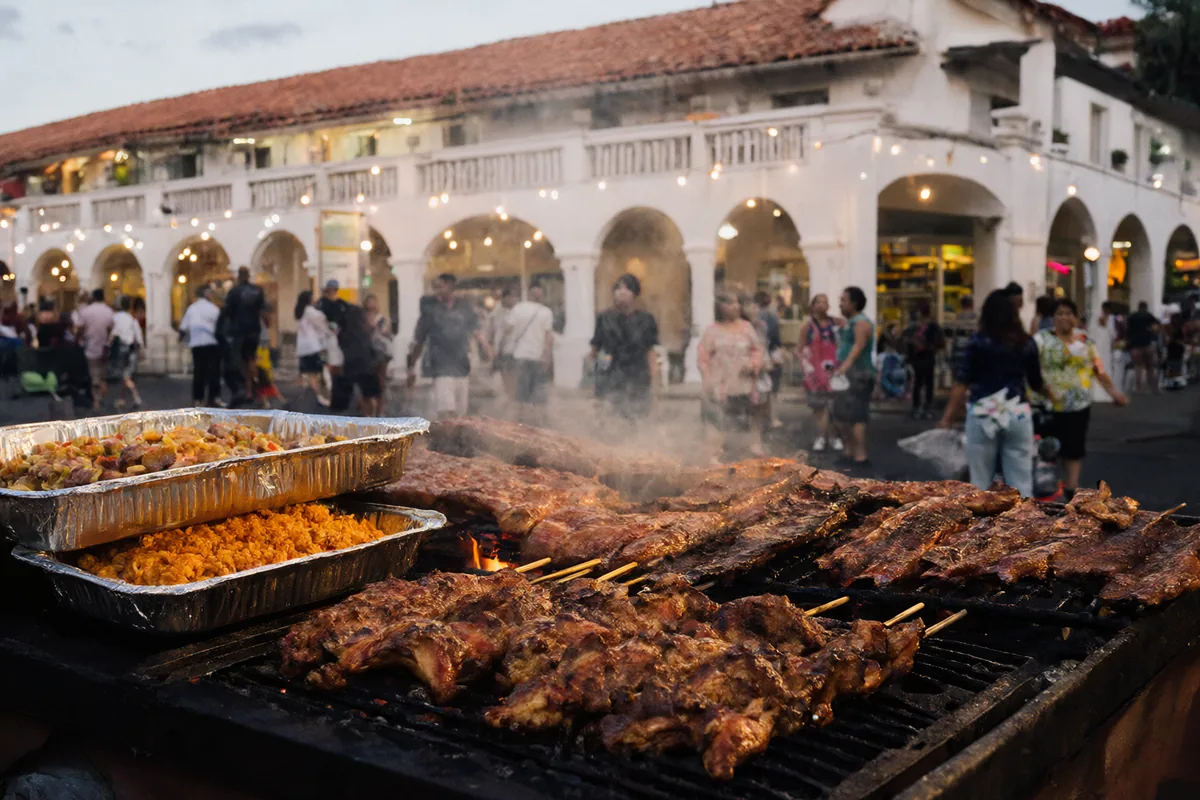
Hagåtña, the capital, is a small city on the west coast, with the Plaza de España, the cathedral basilica and the Latte Stone Park within a short walk. Its food highlight is the Wednesday night market at Chamorro Village, a cluster of Spanish-style buildings near the waterfront, where stalls grill barbecue skewers, ribs and chicken and sell red rice, kelaguen, empanadas, lumpia, apigigi' and fresh coconuts, with live music and dancing and craft stalls. Arrive early in the evening, bring cash, and expect long queues at the busiest grills.
During the rest of the week, Chamorro Village has a few restaurants and shops, and the streets of Hagåtña have local diners, bakeries and Chamorro restaurants that serve office workers at lunchtime with plate lunches of red rice, barbecue, kelaguen and finadene'. The waterfront Paseo park is a popular place to sit with a takeaway plate. Hagåtña is quiet at night apart from Wednesday, so it is best visited for lunch or the market.
Where to eat in Tamuning
Tamuning, between Hagåtña and the airport, is the commercial heart of Guam, where residents shop, work and eat. Along Marine Corps Drive and the surrounding streets you will find many of the island's local restaurants: Chamorro barbecue places, Filipino eateries serving adobo, sinigang and lechon, Korean restaurants, Japanese diners, bakeries selling pan de leche and latiya, and coffee shops. Prices in Tamuning are generally lower than in Tumon's hotels.
Tamuning is a good place to try a proper plate lunch, a Chamorro breakfast of fried rice and eggs, or a takeaway box of barbecue for the beach. Many places are casual, with counter ordering and a handful of tables, and Filipino bakeries are worth a stop for breakfast pastries. Because Tamuning is close to the airport, it is also a good last stop for a meal before a flight.
Where to eat in Dededo
Dededo, in the north, is the most populous village on Guam, and a residential area where many local families live. Its best-known food experience is the Dededo Flea Market, held early on weekend mornings, where farmers sell local fruit and vegetables, including bananas, papaya, star apples, boonie peppers and taro, and food stalls serve barbecue, empanadas, titiyas, buñelos and drinking coconuts. Go early, before it gets hot, and bring cash.
Dededo has a mix of Chamorro, Filipino, Korean and Micronesian residents, and the village's restaurants and shops reflect it, with Filipino bakeries, Korean grocers and small eateries serving food from Chuuk and other islands of Micronesia. Dededo also holds one of the larger village fiestas, and like other villages it welcomes guests. It is not a tourist area, which is exactly why it is a good place to see everyday Guam food.
Where to eat in southern Guam
Southern Guam is hilly, green and quieter than the north, with small villages such as Inarajan (Inalåhan), with its old Spanish-era houses and natural sea pools, Umatac (Humåtak), where Magellan is said to have landed in 1521, and Merizo (Malesso'), the jumping-off point for Cocos Island. Restaurants are few here, but roadside stands sell fresh fruit, coconuts and snacks, and the occasional village restaurant serves barbecue, red rice and fish.
The best way to eat in southern Guam is to time a drive with a village fiesta, when families open their homes and halls to visitors, or to join a cultural tour that includes demonstrations of traditional cooking, coconut husking and weaving. Many people pack a picnic of barbecue and red rice from Tamuning or Hagåtña for the drive around the south, stopping at the beach parks with covered picnic tables that locals use for weekend barbecues.
Vegetarian, vegan and allergy tips
Chamorro cooking is centred on meat and seafood, so vegetarians need to look a little harder. Red rice is usually meat free, though some versions use bacon or stock, and titiyas, gollai appan lemmai, buñelos aga, latiya and fresh fruit are good options. Tumon and Tamuning have plenty of international restaurants with vegetarian and vegan dishes, including Japanese, Korean and Indian places. "Vegetarian" is understood everywhere. Be aware that finadene' is usually made with soy sauce, which contains wheat, and kelaguen often contains coconut.
Coconut is common in Chamorro cooking, shellfish appears in kelaguen and buñelos, and soy sauce is in nearly every marinade, which matters for anyone with a coconut, shellfish, soy or gluten allergy. Restaurants in Guam are used to American-style allergy questions, so ask clearly. Our guide to eating abroad with food allergies explains how to explain an allergy clearly.
Chamorro phrases and Guam food terms
Everyone in Guam speaks English, but a few words of Chamorro are always appreciated, and some local food terms are useful when ordering.
Håfa adai "Hello", Guam's warm everyday greeting
Si Yu'os ma'åse' "Thank you"
Mannge'! "Delicious!"
Biba! "Hooray!" or "cheers", heard at fiestas and parties
Fiesta plate, please Red rice, barbecue, kelaguen and sides on one plate
Finadene' on the side Useful if you are not sure how much hot pepper you can take
Not too pika, please "Not too spicy", understood in any local restaurant
Adios "Goodbye", borrowed from Spanish
How swap.menu helps you eat in Guam
Guam's menus are in English, but a local menu can list kelaguen, kådun pika, tinaktak, titiyas and gollai appan lemmai without a word of explanation. Photograph it with swap.menu and every dish is explained in plain language, so you know that kelaguen is chopped chicken dressed in lemon and coconut, and that an empanada here is filled with rice cream. Visitors from Japan, Korea, the Philippines and China can read any menu in Guam in their own language, choosing from 29, and every price is converted from US dollars to your home currency.
Tap the dishes you want, add a note such as "no coconut" or "sauce on the side", typed or spoken, and swap.menu shows your order clearly for the staff. Your scanned menus are saved, so you can find that plate lunch place in Tamuning again on your last day. You can try it right now on a sample menu with the free demo, or see travel pass prices.
Off to Guam? Your first 3 menu scans are free, and a travel pass starts from $4.99 with nothing that renews.
Start free with 3 scansGuam food FAQ
Do you tip in Guam?
Yes. Guam follows American customs, so a tip of 15 to 20 percent is expected in sit-down restaurants. Check the bill first, as some hotel restaurants and large groups have a service charge added automatically.
What food is Guam famous for?
Guam is famous for Chamorro barbecue, red rice coloured with achote, chicken kelaguen and finadene' dipping sauce. Kådun pika, empanadas, titiyas and latiya are also classic dishes, and fiestas bring them all together on one table.
When is the night market in Guam?
The night market at Chamorro Village in Hagåtña is held on Wednesday evenings, with barbecue stalls, local food, crafts and live music. Bring cash and arrive early in the evening.
Is Guam expensive to eat out?
Hotel restaurants in Tumon are priced like resort areas in the mainland United States. Local Chamorro restaurants, plate lunch places, the night market and the weekend flea market in Dededo are much better value.
Is tap water safe to drink in Guam?
Tap water in Guam is treated to US standards and is generally safe to drink, though many residents prefer filtered or bottled water. After typhoons, follow any boil water notices.
How can I understand Chamorro dish names on a menu?
Learn a few words such as kelaguen, finadene', kådun and pika, or photograph the menu with swap.menu. It explains every Chamorro dish, translates the menu into your own language if English is not your first language, and converts prices to your home currency.
Travelling further in the region? Read our food guides for nearby islands and countries:
- Northern Mariana Islands food guide
- Palau food guide
- Micronesia food guide
- Philippines food guide
- Japan food guide
- South Korea food guide
Or browse every travel food guide.