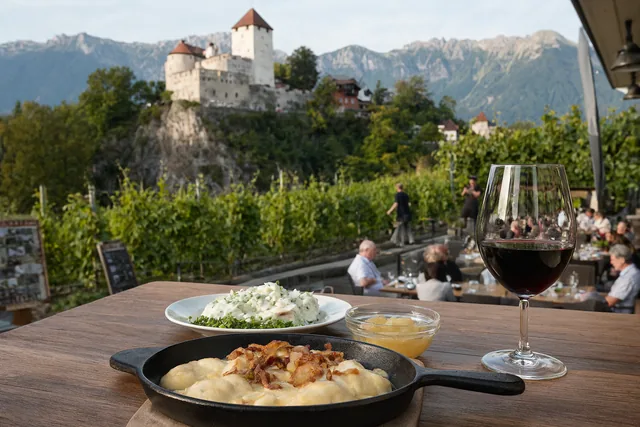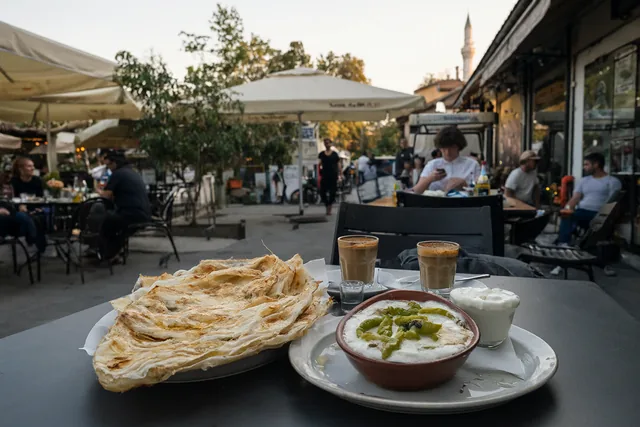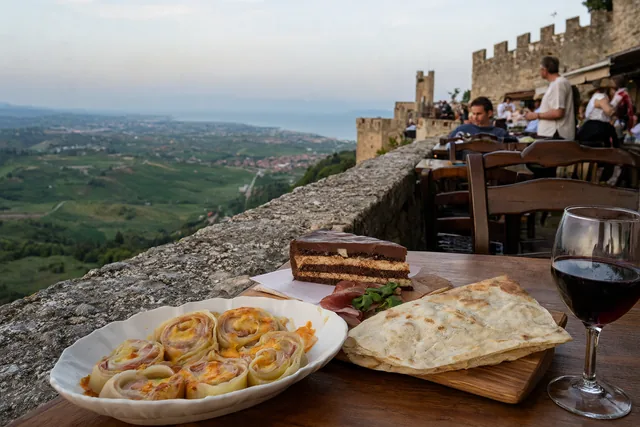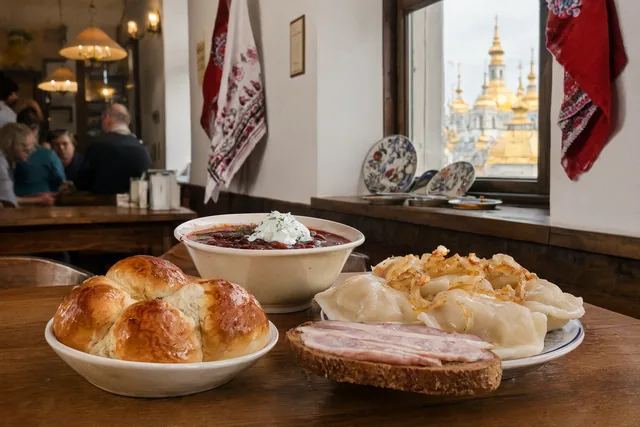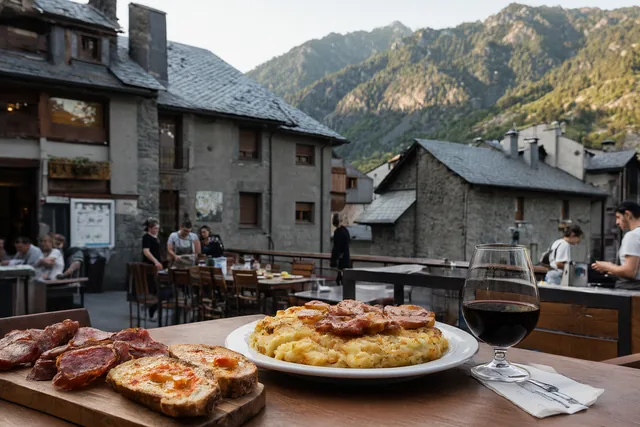
Moldova is one of the least visited countries in Europe and one of the best value places to eat and drink in it. This is wine country first: the rolling hills between the Prut and Dniester rivers are covered in vineyards, and some of the largest wine cellars in the world are dug into the limestone under them. The food is hearty home cooking built on cornmeal, sheep's cheese, sour cream, cabbage and pork, with Romanian, Ukrainian, Russian, Turkish and Jewish influences. This Moldova food guide covers the dishes to know, how to read a menu in Romanian and Russian, how tipping and paying in lei work, then goes through where to eat in Chișinău, Orheiul Vechi, the wine cellars of Cricova and Mileștii Mici, Purcari in the south, Soroca in the north and Comrat, the capital of Gagauzia. If you are crossing the Prut, read our Romania food guide too, because the two countries share most of their dishes.
What to eat in Moldova: 12 dishes to know
Moldovan cooking is village food made generously. Most meals start with salads, pickles and cheese, then a soup, then a main dish, and there is always bread or mămăligă on the table. These are the dishes to look for.
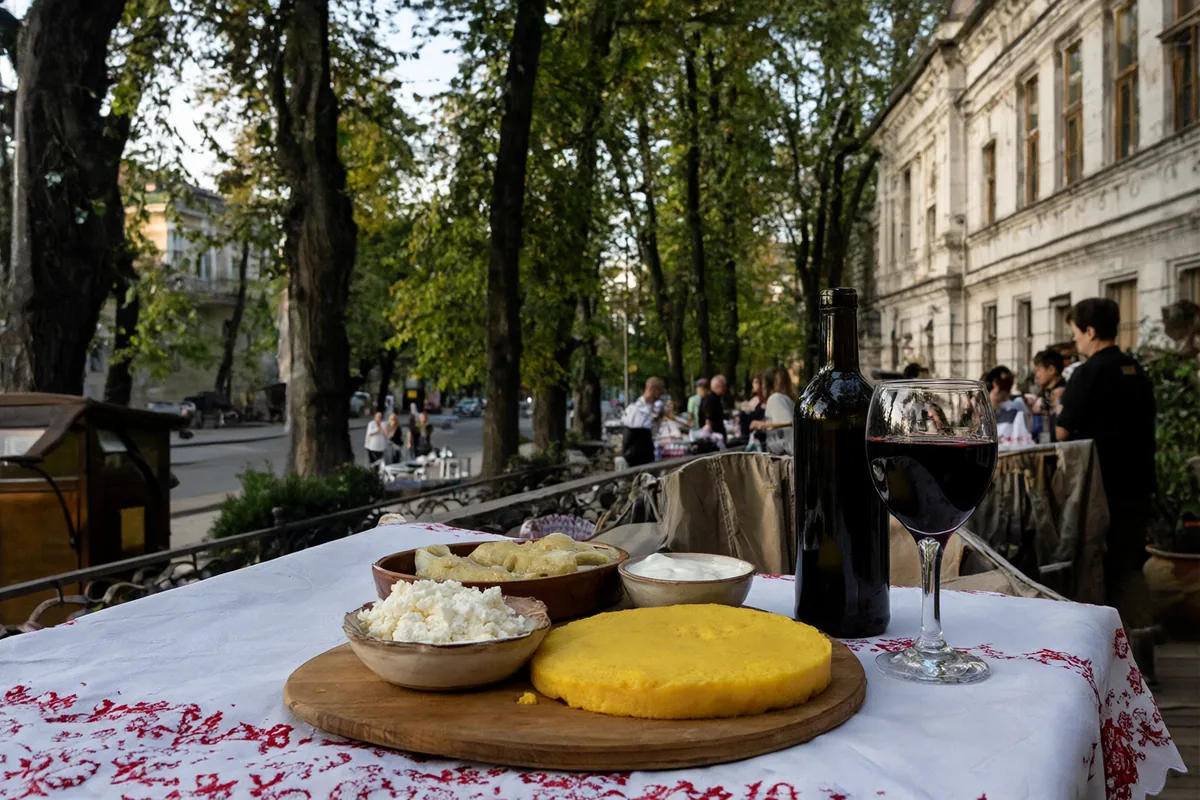
- Mămăligă (everywhere): a thick cornmeal porridge, cooked until firm enough to slice with a thread, and served with brânză (crumbled salty sheep's cheese), smântână (sour cream) and often a fried egg or pork crackling. It is the base of Moldovan food.
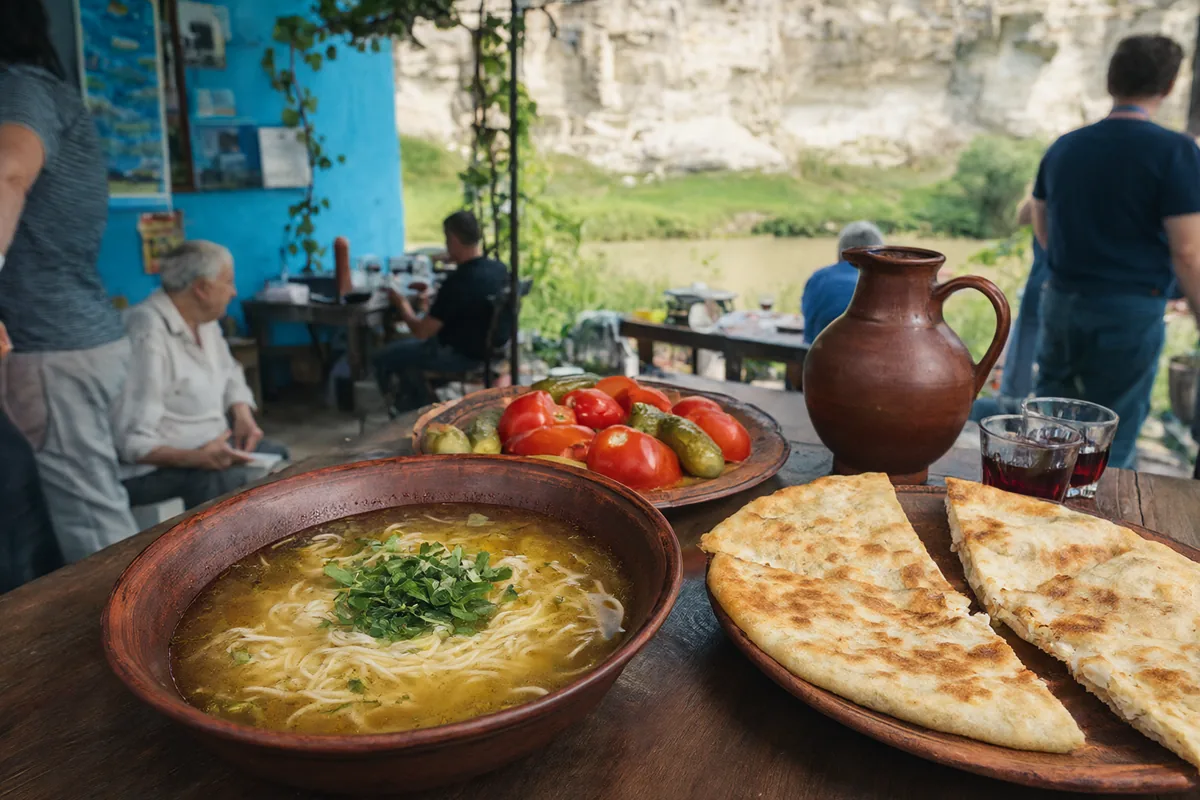
- Zeamă (everywhere): the national soup, a sour chicken broth with homemade noodles, vegetables and plenty of lovage, soured with borș, fermented wheat bran. It is said to cure hangovers.
- Plăcinte (bakeries and restaurants): thin, flaky pies filled with brânză, cabbage, potato, pumpkin or cherries, either fried flat in a pan or baked. Every grandmother has her own.
- Vertută (bakeries): stretched pastry rolled around a filling of cheese, apple or pumpkin and coiled into a spiral before baking.
- Sarmale (everywhere): rolls of pickled cabbage or vine leaves stuffed with rice and minced pork, slow-cooked and served with sour cream and mămăligă.
- Tochitură moldovenească (traditional restaurants): pieces of pork, sometimes with sausage and liver, fried and simmered in a garlic and tomato sauce, served with mămăligă, brânză and a fried egg.
- Colțunași (everywhere): boiled dumplings filled with brânză, potato or sour cherries and served with sour cream, the Moldovan cousin of Ukrainian varenyky.
- Mititei (grills and markets): small skinless grilled sausages of minced beef and pork with garlic, eaten with mustard and bread. Also called mici.
- Răcituri (winter and holidays): a cold meat jelly of pork and chicken with garlic, set in bowls and eaten at Christmas and New Year.
- Salată de vinete (everywhere): smoky grilled aubergine chopped with onion and oil, spread on bread as a starter. Pickled vegetables (murături) are always nearby.
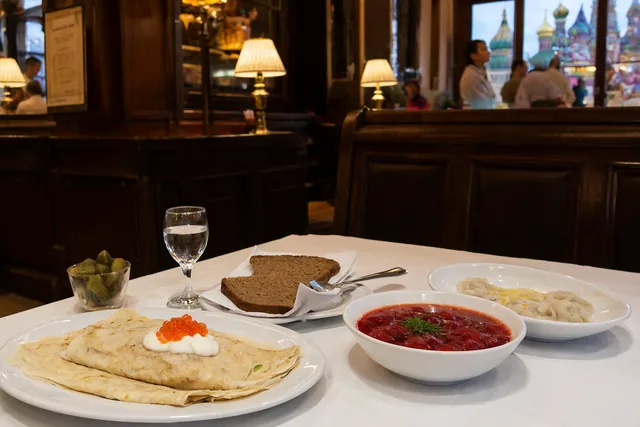
- Pelmeni and borscht (cafés and canteens): Russian and Ukrainian dishes are everyday food in Moldova, so you will also find meat dumplings, beetroot soup and blini (pancakes).
- Moldovan wine (everywhere): look for the local grapes Fetească Neagră and Rara Neagră (reds) and Fetească Albă and Fetească Regală (whites). Divin is Moldovan grape brandy, and village homes make their own house wine.
How to read a Romanian and Russian menu
Romanian is the official language of Moldova, and Russian is very widely spoken, especially in Chișinău, the north and Gagauzia. Many menus are printed in both, and restaurants in the capital often add English. As in other former Soviet countries, menus often list the weight of each portion in grams, for example 250/50 for a main with its sauce, and some items, such as grilled meat, fish and salads from a counter, are priced per 100 grams.
| Romanian | Russian (romanised) | Meaning |
|---|---|---|
| Gustări | Закуски (zakuski) | Starters and cold snacks |
| Salate | Салаты (salaty) | Salads |
| Felul întâi / supe | Первые блюда (pervye blyuda) | First courses: soups |
| Felul doi | Вторые блюда (vtorye blyuda) | Main courses |
| Garnituri | Гарниры (garniry) | Side dishes, often ordered separately |
| Desert | Десерт (desert) | Desserts |
| Carne de porc / vită / pui | Свинина / говядина / курица (svinina / govyadina / kuritsa) | Pork / beef / chicken |
| Pește | Рыба (ryba) | Fish |
| Brânză | Брынза (brynza) | Salty white sheep's cheese |
| Smântână | Сметана (smetana) | Sour cream |
| La grătar | На гриле (na grile) | Grilled |
| De casă | Домашний (domashniy) | Homemade |
| Vin de casă | Домашнее вино (domashneye vino) | House or homemade wine |
| Apă plată / minerală | Вода без газа / с газом (voda bez gaza / s gazom) | Still / sparkling water |
Side dishes in Moldova are often listed and charged separately, so a grilled pork chop may arrive alone unless you also order mămăligă, potatoes or salad from the garnituri section. Prices per 100 grams can also add up on grilled meat and fish. swap.menu reads menus in Romanian and Russian, explains every dish and flags weight-based prices so you know the real cost.
Tipping, paying in lei and meal times
Menu prices in Moldova include VAT, called TVA. Some restaurants in Chișinău add a service charge of around 10 percent, which should be stated on the menu or the bill, so check before you tip. Where there is no service charge, leaving about 10 percent in a sit-down restaurant is normal, and rounding up is enough in cafés and bars. Our guide to tax and service charges on menus explains how these lines work.
The currency is the Moldovan leu (MDL), plural lei, usually written as "lei" or "MDL" after the price. Cards and contactless payment are widely accepted in Chișinău restaurants, cafés and supermarkets, but markets, village guesthouses, small bakeries and taxis outside the capital usually want cash. ATMs are easy to find in towns. If a card machine offers to charge you in your home currency, choose lei: our guide to paying in local currency explains why that saves you money.
Lunch is usually eaten from about noon to 3pm, and many restaurants offer a cheap set lunch (prânz or business lunch) on weekdays. Dinner runs from about 7pm to 10pm, and restaurants in Chișinău stay open late on weekends. Moldova is one of the cheapest countries in Europe for eating out, and even a good bottle of local wine costs little by Western standards. Most visitors drink bottled water rather than tap water, which is what locals advise.
Where to eat in Moldova, town by town
Moldova is small and most trips start in Chișinău, with day trips to the wine cellars, the cave monastery at Orheiul Vechi and the fortress at Soroca. Distances are short, roads are improving, and many visitors hire a driver for the wine routes. Jump to a destination:
Where to eat in Chișinău
Chișinău, the capital, is a green city of wide boulevards, parks and Soviet-era blocks, and it has the widest choice of food in Moldova. Traditional Moldovan restaurants serve mămăligă, zeamă, sarmale and plăcinte in folk-style dining rooms with embroidered cloths, often with live music on weekend evenings. Alongside them you find Georgian, Ukrainian, Russian, Italian and Middle Eastern restaurants, coffee shops and a growing number of wine bars pouring Moldovan wines by the glass. The centre around Ștefan cel Mare boulevard, the Cathedral Park and the streets around Strada 31 August 1989 is where most restaurants and terraces are.
The Central Market (Piața Centrală), a short walk from the main boulevard, is the biggest market in Moldova and worth an hour: halls of brânză, smoked meats, pickles, honey, dried fruit and nuts, and stalls selling plăcinte and coffee. Bakeries all over Chișinău sell plăcinte and vertută for breakfast or a cheap lunch. On the first weekend of October, National Wine Day fills the main square of Chișinău with winemakers from across the country, and it is the best single event for tasting Moldovan wine.
Where to eat in Orheiul Vechi
Orheiul Vechi, about an hour north of Chișinău, is Moldova's best-known sight: a cave monastery cut into a limestone cliff above a loop of the Răut river, with archaeological remains in the gorge below. The village of Butuceni at the foot of the cliff has blue-painted farmhouses, and several of them run guesthouses (pensiuni) and restaurants serving home cooking: zeamă, plăcinte made to order, mămăligă with brânză and smântână, grilled meat, pickles and the family's own wine.
A meal at Orheiul Vechi is one of the best food experiences in Moldova, especially if you stay overnight, when dinner and breakfast are usually included. Some guesthouses offer cooking demonstrations where you can learn to stretch plăcinte dough. On summer weekends Orheiul Vechi is busy with day trips, so book lunch in advance, and bring cash.
Where to eat in Cricova and Mileștii Mici
The two great underground wine cellars are both close to Chișinău. Cricova, about 15 kilometres north, has more than a hundred kilometres of tunnels in old limestone mines, with streets named after grape varieties, and visitors are driven through on a small train or car. Mileștii Mici, a similar distance south, has an even longer network of galleries and is listed by Guinness World Records for the largest wine collection in the world, with well over a million bottles.
Both cellars run guided tours that end with a tasting, and the longer tours include a meal of Moldovan dishes in underground dining halls, with cheese, cold cuts, salads, a hot dish and several wines, including sparkling wine at Cricova. Book tours in advance, bring a warm layer as the cellars stay cool all year, and arrange transport back to Chișinău rather than driving after the tasting.
Where to eat in Purcari
Purcari is a small village in the south-east of Moldova, near the Dniester and the Ukrainian border, and it has been known for red wine since the 19th century. The local red blends, built on Cabernet Sauvignon, Saperavi and Rara Neagră, are among Moldova's most famous wines. The winery estate here offers tours, tastings and meals, and the surrounding Ștefan Vodă district has other estates on the national wine route.
Food in Purcari and the south is centred on the wineries themselves, which serve set lunches and tasting menus with grilled meat, local cheese and fish from the Dniester. There are few independent restaurants in the villages, so plan your meals around winery visits and book ahead. Purcari is about two hours' drive from Chișinău, so many visitors stay overnight in winery guesthouses.
Where to eat in Soroca
Soroca is a town on the Dniester in the north of Moldova, famous for its round 15th-century stone fortress and for the hill above town where wealthy Roma families have built houses in extravagant styles. It is a long day trip from Chișinău, about two and a half to three hours by road, and it makes sense to combine it with a stop in the north.
Soroca's food scene is small and honest: cafés and simple restaurants in the town centre serve Moldovan and Russian dishes such as zeamă, sarmale, colțunași, pelmeni and grilled meat, and the town market sells cheese, fruit and plăcinte. Prices in Soroca are lower than in Chișinău, and portions are large. Walk up to the Candle of Gratitude monument on the cliff for views over the river, then eat in the centre.
Where to eat in Comrat
Comrat is the capital of Gagauzia, an autonomous region in the south of Moldova whose people, the Gagauz, are Orthodox Christians who speak a Turkic language. Russian is the main language of daily life here, so menus are usually in Russian and Gagauz rather than Romanian. The cooking has a distinct identity, with more lamb, peppers and spice than in the rest of Moldova.
Dishes to look for in Comrat include şorpa, a spicy lamb soup traditionally cooked in large pots for weddings and festivals, and kaurma, meat fried and preserved in its own fat. Gagauzia is also a wine region with many small producers. Comrat is a quiet town with only a few restaurants and cafés, so it suits travellers who want to see a less visited side of Moldova rather than a dining destination.
Vegetarian, vegan and allergy tips
Moldovan food is heavy on pork, dairy and eggs, but vegetarians can manage. Mămăligă with brânză and smântână, plăcinte with cheese, cabbage, potato or pumpkin, colțunași with cheese or cherries, aubergine salad and pickles are all meat-free. The Romanian word for vegetarian is vegetarian (vegetariană for a woman), and in Russian it is вегетарианец (vegetarianets). During Orthodox fasting periods, especially Lent, many restaurants offer de post (fasting) dishes, which contain no meat, dairy or eggs and are usually vegan.
Watch for hidden ingredients. Soups are usually made with meat or chicken broth, sarmale often contain pork even when the menu says "with rice", and many vegetable dishes are fried in lard or topped with crackling. Sour cream is added to almost everything, so ask for it on the side if you avoid dairy. Walnuts are common in desserts and some salads. Our guide to eating abroad with food allergies explains how to explain an allergy clearly when you do not speak the language.
Useful Romanian and Russian phrases for ordering
Bună ziua "Good day", the polite greeting in Romanian (Russian: Здравствуйте, zdravstvuyte)
O masă pentru două persoane, vă rog "A table for two, please"
Ce ne recomandați? "What do you recommend?"
Aș vrea asta, vă rog "I would like this, please" (pointing at the menu)
Sunt alergic / alergică la... "I am allergic to..." (alergic for a man, alergică for a woman)
Nota, vă rog "The bill, please" (Russian: Счёт, пожалуйста, schyot, pozhaluysta)
Noroc! "Cheers!", literally "luck"
Mulțumesc, a fost foarte gustos "Thank you, it was very tasty" (Russian: Спасибо, было очень вкусно, spasibo, bylo ochen vkusno)
How swap.menu helps you eat in Moldova
Moldovan menus switch between Romanian and Russian, sometimes on the same page, and dish names such as zeamă, tochitură or răcituri mean nothing to most visitors. Photograph the menu with swap.menu and every dish appears in your language with the original name beside it and a short explanation, so you know that zeamă is a sour chicken noodle soup and that răcituri is cold meat jelly before you order. Every price is converted from Moldovan lei to your home currency, and swap.menu points out service charges, separately priced sides and items sold per 100 grams.
Tap the dishes you want, add a note such as "no pork" or "sour cream on the side", typed or spoken, and swap.menu translates your order into Romanian or Russian. Show the waiter your phone, or let them scan the QR code and read your order on their own screen. Try it on a sample menu with the free demo, or see travel pass prices.
Off to Moldova? Your first 3 menu scans are free, and a travel pass starts from $4.99 with nothing that renews.
Start free with 3 scansMoldova food FAQ
Do you tip in restaurants in Moldova?
Leaving about 10 percent is normal in sit-down restaurants in Moldova, unless a service charge is already on the bill. In cafés and bars, rounding up is enough.
What food is Moldova famous for?
Moldova is famous for mămăligă (cornmeal porridge) with sheep's cheese and sour cream, zeamă chicken noodle soup, plăcinte pies, sarmale cabbage rolls and above all its wine. The cellars at Cricova and Mileștii Mici are among the largest in the world.
Is Moldova cheap to eat out in?
Yes, Moldova is one of the cheapest countries in Europe for eating out. A full meal with wine in a good Chișinău restaurant costs much less than in Western Europe, and set weekday lunches and bakeries are very cheap.
Is tap water safe to drink in Moldova?
Most visitors and many locals drink bottled water in Moldova rather than tap water. Bottled still and sparkling water is cheap and sold everywhere.
Do Moldovan menus use Romanian or Russian?
Both. Romanian is the official language and Russian is widely spoken, so many menus are printed in both, and Chișinău restaurants often add English. In Gagauzia and parts of the north, Russian is more common.
How can I read a menu in Moldova if I do not speak Romanian or Russian?
Photograph the menu with swap.menu. It translates every dish into your language from Romanian or Russian, explains what it is, converts prices from lei to your currency and translates your order back for the waiter.
Travelling further in Europe? Read our food guides for nearby countries:
- Romania food guide
- Ukraine food guide
- Bulgaria food guide
- Georgia food guide
- Hungary food guide
- Turkey food guide
Or browse every travel food guide.