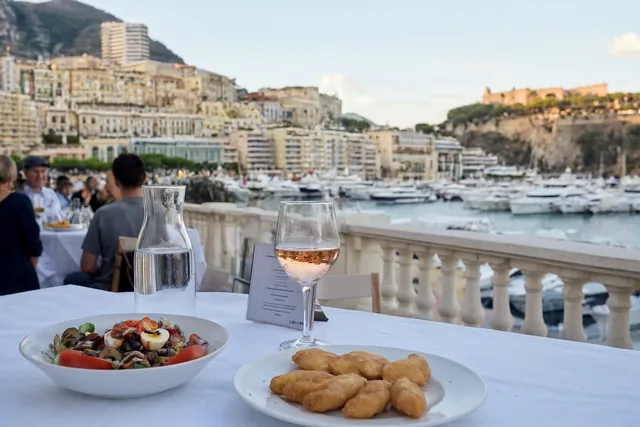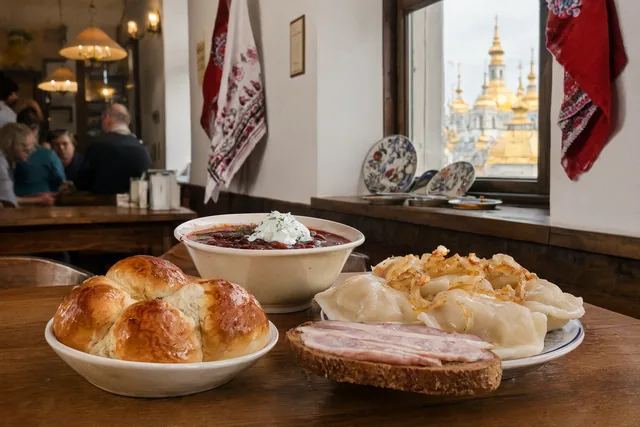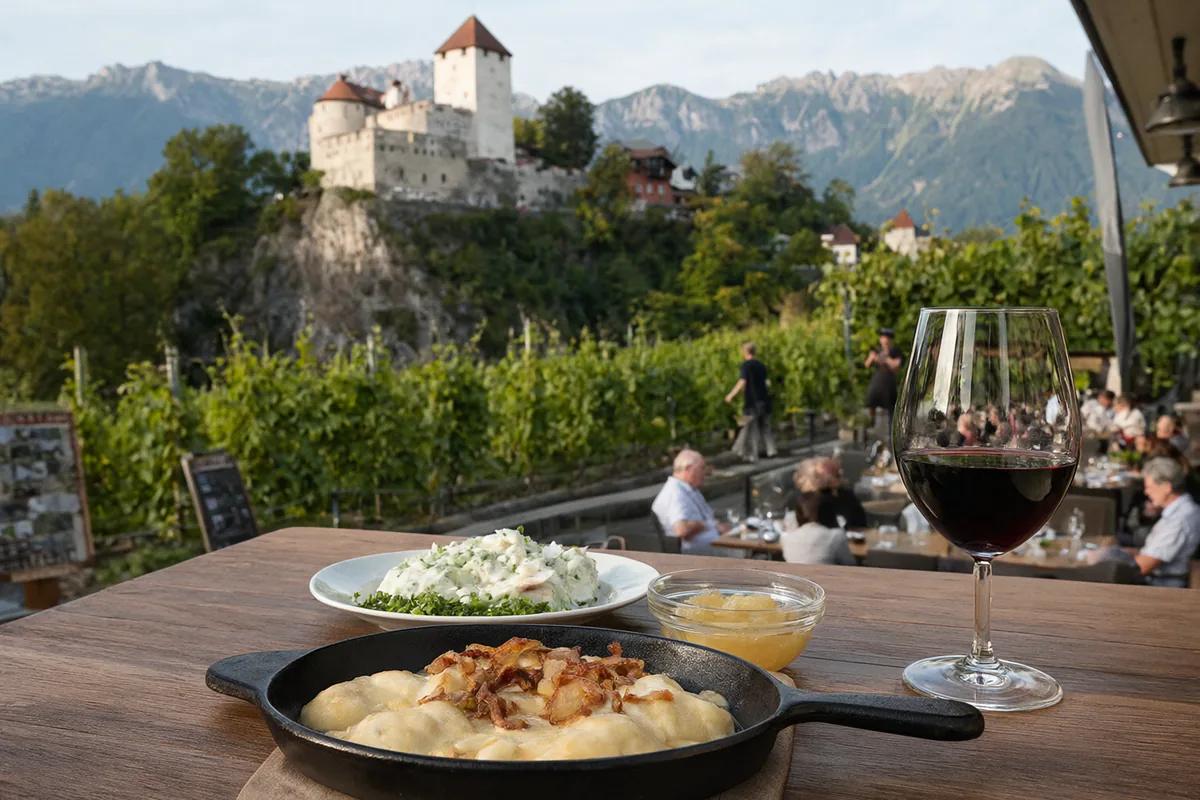
Liechtenstein is a small Alpine principality of eleven villages along the Rhine between Switzerland and Austria, and you can drive its length in about half an hour. Its food sits between its two neighbours: Swiss in its love of cheese and its prices, Austrian in its dumplings and cakes, and very much its own in a couple of old farmhouse dishes. This Liechtenstein food guide covers the dishes to know, how to read a German menu, how tipping and paying in Swiss francs work, then goes through where to eat in Vaduz, Schaan, Triesenberg and Malbun, Balzers and Triesen, the Unterland villages, and over the borders in Feldkirch and the Swiss Rhine valley. Many visitors combine Liechtenstein with a longer trip, so read our Switzerland food guide and Austria food guide as well.
What to eat in Liechtenstein: 11 dishes to know
Liechtenstein's traditional food was the food of poor mountain farmers: cornmeal, flour, milk, cheese and apples. Restaurants still serve these dishes alongside Swiss and Austrian classics, so you will find all three on most menus.
- Käsknöpfle (everywhere): the national dish, small soft flour dumplings tossed with melted cheese, including the local sour cheese, and topped with crisp fried onions. It is traditionally served with apple sauce (Apfelmus) and often with potato salad on the side.
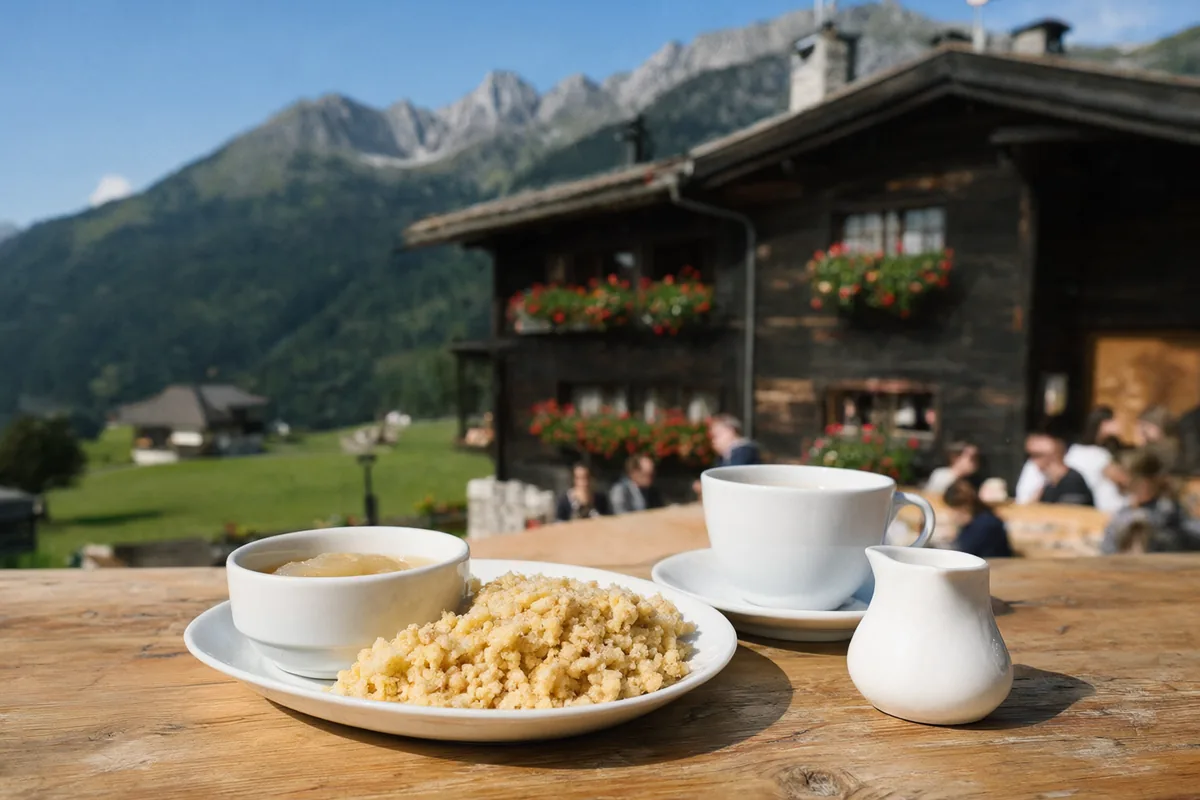
- Ribel (traditional restaurants and breakfast): coarse cornmeal cooked in milk and water, then slowly fried in butter until it breaks into golden crumbs. It is eaten with apple purée, jam, cheese or sugar, often with a cup of coffee, and the same dish is made in the Swiss Rhine valley across the river.
- Sura Kees (shops, dairies and restaurants): a low-fat sour milk cheese typical of Liechtenstein and the Rhine valley, with a soft white centre. It is eaten sliced on bread and used in Käsknöpfle.
- Rösti (everywhere): grated potato fried into a crisp cake, a Swiss staple often topped with a fried egg, cheese or bacon, or served with sliced veal.
- Zürcher Geschnetzeltes (everywhere): thin strips of veal in a creamy mushroom and white wine sauce, usually served with rösti.
- Wiener Schnitzel (everywhere): a thin breaded veal cutlet, the Austrian classic, often also made with pork (Schweinsschnitzel), served with potato salad or chips.
- Bratwurst mit Zwiebelsauce (everywhere): a pale veal sausage with onion gravy and rösti, as in neighbouring St Gallen.
- Wild (autumn): game season brings venison, roe deer and chamois dishes with red cabbage, spätzle, chestnuts and cranberries. Look for Hirschpfeffer, a rich venison stew.
- Apfelküchle (cafés and restaurants): apple rings fried in batter and dusted with cinnamon sugar, sometimes served with vanilla sauce.
- Birnbrot (bakeries, autumn and winter): a dense loaf of dried pears, figs, nuts and spices wrapped in bread dough, an Alpine Christmas speciality.
- Liechtenstein wine (everywhere): mostly Pinot Noir, called Blauburgunder, plus Chardonnay and Müller-Thurgau, grown on sunny slopes in Vaduz, Balzers, Triesen, Schaan and Eschen.
How to read a German menu in Liechtenstein
German is the official language of Liechtenstein. People speak an Alemannic dialect close to Swiss German, but menus are written in standard German, and many in Vaduz and Malbun have English too. Some words follow Swiss usage rather than German, for example wine by the glass is Offenwein, sold by the decilitre (dl). At lunch, many restaurants offer a Mittagsmenü or Tagesmenü, a set dish of the day, which is the best value way to eat out in an expensive country.
| German | Meaning |
|---|---|
| Vorspeisen | Starters |
| Hauptgerichte / Hauptspeisen | Main courses |
| Nachspeisen / Dessert | Desserts |
| Mittagsmenü / Tagesmenü | Set lunch / dish of the day |
| Tagessuppe | Soup of the day |
| Beilage | Side dish |
| Rind / Kalb / Schwein | Beef / veal / pork |
| Wild / Hirsch / Reh | Game / venison / roe deer |
| Fisch / Forelle / Egli | Fish / trout / perch |
| Käse | Cheese |
| Hausgemacht | Homemade |
| Offenwein (1 dl) | Wine by the glass, priced per decilitre |
| Leitungswasser | Tap water |
| Ruhetag | Day the restaurant is closed |
Wine on Liechtenstein and Swiss menus is often priced per decilitre, so the figure next to "1 dl" is for a small glass and "5 dl" is a half-litre carafe. swap.menu reads German menus, explains each dish in your language, and converts the Swiss franc prices so you know what a glass or carafe actually costs.
Tipping, paying in francs and meal times
As in Switzerland, service is included in menu prices in Liechtenstein, and so is VAT, which Liechtenstein applies under its customs union with Switzerland. There is no cover charge. Tipping is optional: locals round up the bill or leave a few francs, and around 5 to 10 percent is generous for good service. Tell the server the total you want to pay when they bring the card machine. Our guide to tax and service charges on menus explains how these lines work elsewhere.
The currency is the Swiss franc (CHF, often written Fr.), not the euro. Many businesses accept euros in cash, but at their own exchange rate and with change given in francs, so it is better to pay by card. Cards and contactless payment are accepted almost everywhere. If a card machine offers to charge you in your home currency, choose francs: our guide to paying in local currency explains why that choice costs you less.
Meal times are early. Lunch runs from about 11:30am to 1:30pm and dinner from about 6pm to 9pm, and many kitchens close completely in the afternoon. Village restaurants often have one or two closing days a week, marked as Ruhetag, and some close for holidays in spring or autumn, so check before you travel. Eating out in Liechtenstein costs about the same as in Switzerland, which means expensive by most standards. Tap water is excellent and safe to drink.
Where to eat in Liechtenstein, village by village
Liechtenstein's villages line the Rhine valley floor and climb the mountainside behind it. The Oberland in the south holds Vaduz, Schaan, Triesen, Balzers and the mountain villages, and the Unterland in the north is quieter farming country. Buses link everything, and Austria and Switzerland are minutes away. Jump to a destination:
Where to eat in Vaduz
Vaduz is the capital and the place almost every visitor goes, with the castle of the Prince on the wooded cliff above town. The pedestrian main street, the Städtle, has the art museum, the post museum, shops and a row of cafés and restaurants with terraces. Restaurants in the centre of Vaduz serve a mix of Swiss, Austrian and Italian dishes, and most have Käsknöpfle and rösti on the menu. For a quick lunch, cafés sell sandwiches, cakes and the dish of the day, and bakeries sell pastries and Birnbrot in winter.
Vaduz has vineyards right in town, below the castle, and the Prince's wine estate has a tasting room where you can try local Pinot Noir and Chardonnay. In the evening, the centre of Vaduz is quiet once the day visitors leave, so the best dinners are often in the older streets towards the vineyards, or in the hotels. A tip for Vaduz: tour buses arrive mid-morning and leave by mid-afternoon, so an early lunch or a late afternoon coffee avoids the busiest hours.
Where to eat in Schaan
Schaan, just north of Vaduz, is Liechtenstein's largest village and its working centre, with the country's only railway station and much of its industry. It has a practical, local food scene: bakeries, cafés, pizzerias, Asian and Turkish takeaways, and traditional inns (Gasthaus) where workers eat a set lunch. It is a good place in Liechtenstein to eat more cheaply than in the capital.
The older part of Schaan, around the church, has inns serving Käsknöpfle, schnitzel and seasonal game. Schaan also has vineyards on the slopes behind the village. Because it is the transport hub, with buses to Feldkirch and the Swiss station at Buchs, Schaan is a convenient base if you are staying a few days and exploring by public transport.
Where to eat in Triesenberg and Malbun
Triesenberg is a village of scattered chalets high on the mountainside above Vaduz, settled in the Middle Ages by Walser people from the Valais in Switzerland, whose culture and dialect survive here. The views over the Rhine valley are the best in Liechtenstein, and the village inns serve hearty mountain food, including Käsknöpfle, Ribel and game in autumn, often with a terrace looking down to the river.
Above Triesenberg, through a road tunnel, lies Malbun, a small family ski resort in winter and a hiking base in summer. Its hotels and mountain restaurants serve rösti, Käsknöpfle, soups, sausages and apple fritters to skiers and walkers, and some huts on the trails sell simple food and drinks in summer. Malbun is small and quiet, and in the shoulder seasons many places close, so check before you go. The hamlet of Steg, between Triesenberg and Malbun, is known for its cross-country ski trails and a few inns.
Where to eat in Balzers and Triesen
Balzers is the southernmost village, below the restored Gutenberg Castle, and it sits right on the Swiss border. It is a wine village, and several small producers make Pinot Noir on the slopes around it. The village inns serve traditional Liechtenstein food and local wine, and it is a pleasant place for a quiet lunch after walking up to the castle.
Triesen, between Balzers and Vaduz, has an old village centre with a chapel, vineyards and a few restaurants. Neither village is a dining destination in its own right, but both are good for a relaxed meal away from the tour groups in Vaduz, and for trying local wines at their source. If you are cycling the Rhine cycle path along the valley, Balzers and Triesen make good lunch stops.
Where to eat in the Unterland
The Unterland, the northern half of Liechtenstein, is made up of five villages: Eschen, Mauren, Gamprin, Ruggell and Schellenberg. It is rolling farmland, orchards and forest, with few visitors, and it is where Liechtenstein feels most rural. The food is in traditional village inns that serve Käsknöpfle, schnitzel, sausages and seasonal dishes such as asparagus in spring and game in autumn, mostly to local regulars.
Schellenberg has castle ruins and walking trails with views towards Lake Constance, and Ruggell has a wetland nature reserve on the Rhine. Eschen has vineyards and a few small producers. The Unterland is best for a day of walking or cycling with a long lunch at an inn, so check opening days first, as many close one or two days a week.
Where to eat in Feldkirch and the Rhine valley
Liechtenstein's neighbours are close enough for lunch. Feldkirch in Austria is about 15 minutes by bus from Schaan, a medieval town with arcaded streets, a weekly market and a good choice of inns and cafés. The food of Vorarlberg is close to Liechtenstein's: Kässpätzle (the Austrian name for Käsknöpfle), Riebel, schnitzel and cake in a coffee house. Prices in euros are usually lower than in Liechtenstein. Our Austria food guide covers Vorarlberg and the rest of the country.
Across the Rhine bridges, the Swiss side of the valley has the railway town of Buchs and, a little further south, the wine villages of the Bündner Herrschaft around Maienfeld, known for Pinot Noir. In the canton of Graubünden you can try air-dried beef (Bündnerfleisch) and capuns, chard leaves wrapped around spätzle dough with dried meat. Our Switzerland food guide covers Swiss food from Zurich to Geneva.
Vegetarian, vegan and allergy tips
Vegetarians can eat reasonably well in Liechtenstein, because Käsknöpfle, Ribel, rösti without bacon, Apfelküchle and many soups are meat-free. Ask about the soup base, because many are made with meat stock (Fleischbrühe), and check that rösti is not fried with bacon or lard. The German word for vegetarian is vegetarisch (for the dish) and Vegetarier or Vegetarierin (for a person). Vegan is vegan, and vegans will find the traditional food hard, as it is built on butter, cheese, milk and eggs. Larger restaurants in Vaduz usually have at least one vegan option.
Gluten is everywhere, in dumplings, spätzle, breaded schnitzel and cakes. Ribel is made from cornmeal and is naturally gluten-free, but ask how it is prepared. Nuts appear in Birnbrot, cakes and some sauces. Gluten-free is glutenfrei, and staff in Liechtenstein generally understand allergies well. Our guide to eating abroad with food allergies explains how to explain an allergy clearly when you do not speak the language.
Useful German phrases for ordering
Grüezi / Hoi "Hello", the formal and informal greetings used in Liechtenstein, as in eastern Switzerland
Einen Tisch für zwei, bitte "A table for two, please"
Was empfehlen Sie? "What do you recommend?"
Ich hätte gern das "I would like this" (pointing at the menu)
Ich bin allergisch gegen... "I am allergic to..."
En Guete! "Enjoy your meal!", the dialect version you will hear from staff and other diners
Zahlen, bitte "The bill, please" (literally "pay, please")
Danke, es war sehr fein "Thank you, it was very good"
How swap.menu helps you eat in Liechtenstein
Menus in Liechtenstein are usually in German only once you leave the centre of Vaduz, and many dishes use Swiss or local names that are not in a phrasebook. Photograph the menu with swap.menu and every dish appears in your language with the German name beside it and a short explanation, so you know that Käsknöpfle are cheese dumplings, that Ribel is fried cornmeal and that Egli is perch. Every price is converted from Swiss francs to your home currency, which matters in one of the most expensive places in Europe to eat out.
Tap the dishes you want, add a note such as "no bacon" or "gluten-free, please", typed or spoken, and swap.menu translates your order into German. Show the waiter your phone, or let them scan the QR code and read your order on their own screen. The same works across the border in Austria and Switzerland. Try it on a sample menu with the free demo, or see travel pass prices.
Off to Liechtenstein? Your first 3 menu scans are free, and a travel pass starts from $4.99 with nothing that renews.
Start free with 3 scansLiechtenstein food FAQ
Do you tip in restaurants in Liechtenstein?
Service is included in menu prices in Liechtenstein, so tipping is optional. Locals round up or leave a few francs, and around 5 to 10 percent is a generous tip for good service.
What is the national dish of Liechtenstein?
Käsknöpfle, small flour dumplings tossed with melted cheese and topped with fried onions, is usually called the national dish. It is served with apple sauce and often potato salad. Ribel, fried cornmeal eaten with apple purée or coffee, is the other traditional dish.
What currency is used in Liechtenstein?
Liechtenstein uses the Swiss franc. Some businesses accept euros in cash at their own rate, with change given in francs, so paying by card in francs is usually the better choice.
Is it expensive to eat out in Liechtenstein?
Yes, eating out in Liechtenstein costs about the same as in Switzerland. Set lunch menus, bakeries and the inns of Schaan and the Unterland are the best value, and Feldkirch in Austria is cheaper.
What time do people eat dinner in Liechtenstein?
Dinner is early, usually from about 6pm, and many kitchens stop serving by 9pm. Lunch is from about 11:30am to 1:30pm, and many restaurants close in the afternoon.
How can I read a menu in Liechtenstein if I do not speak German?
Learn a few words such as Vorspeisen, Hauptgerichte and Tagesmenü, or photograph the menu with swap.menu. It translates every dish into your language, explains local specialities, converts Swiss franc prices to your currency and translates your order back into German.
Travelling further in Europe? Read our food guides for nearby countries:
- Switzerland food guide
- Austria food guide
- Germany food guide
- Italy food guide
- Luxembourg food guide
- Monaco food guide
Or browse every travel food guide.