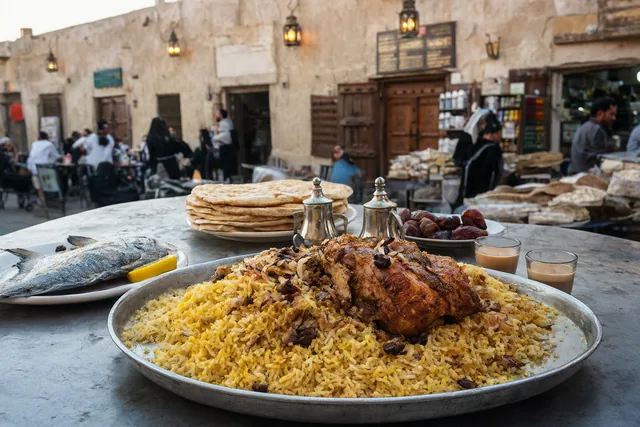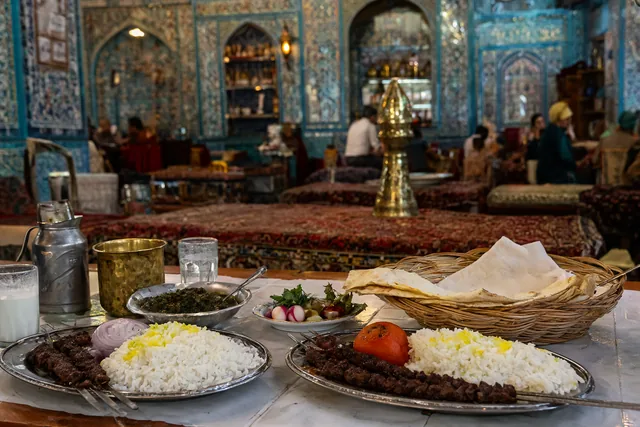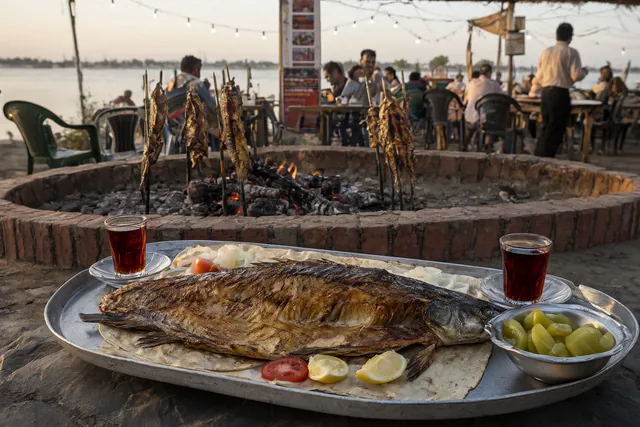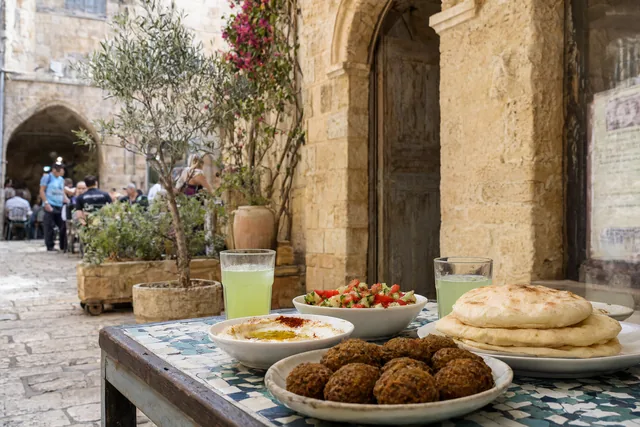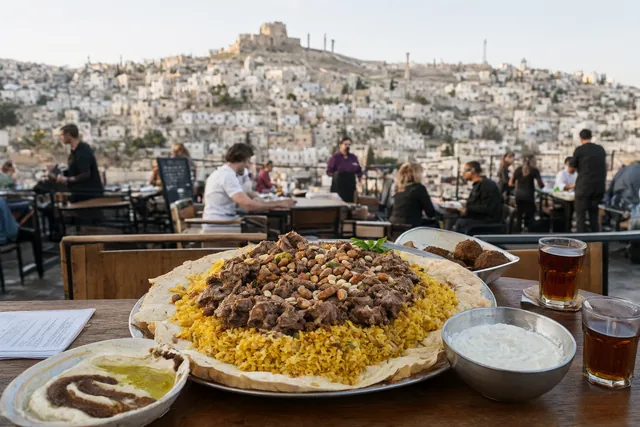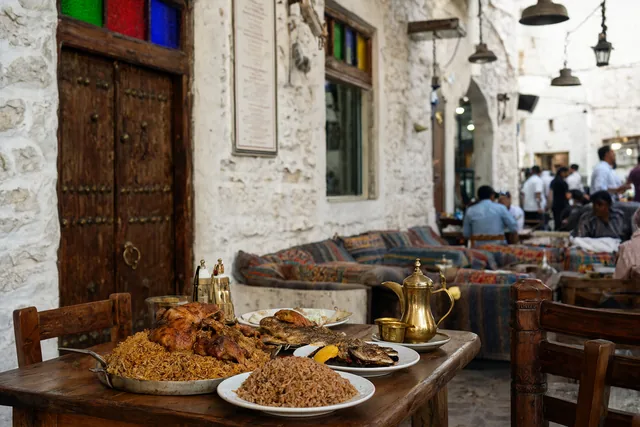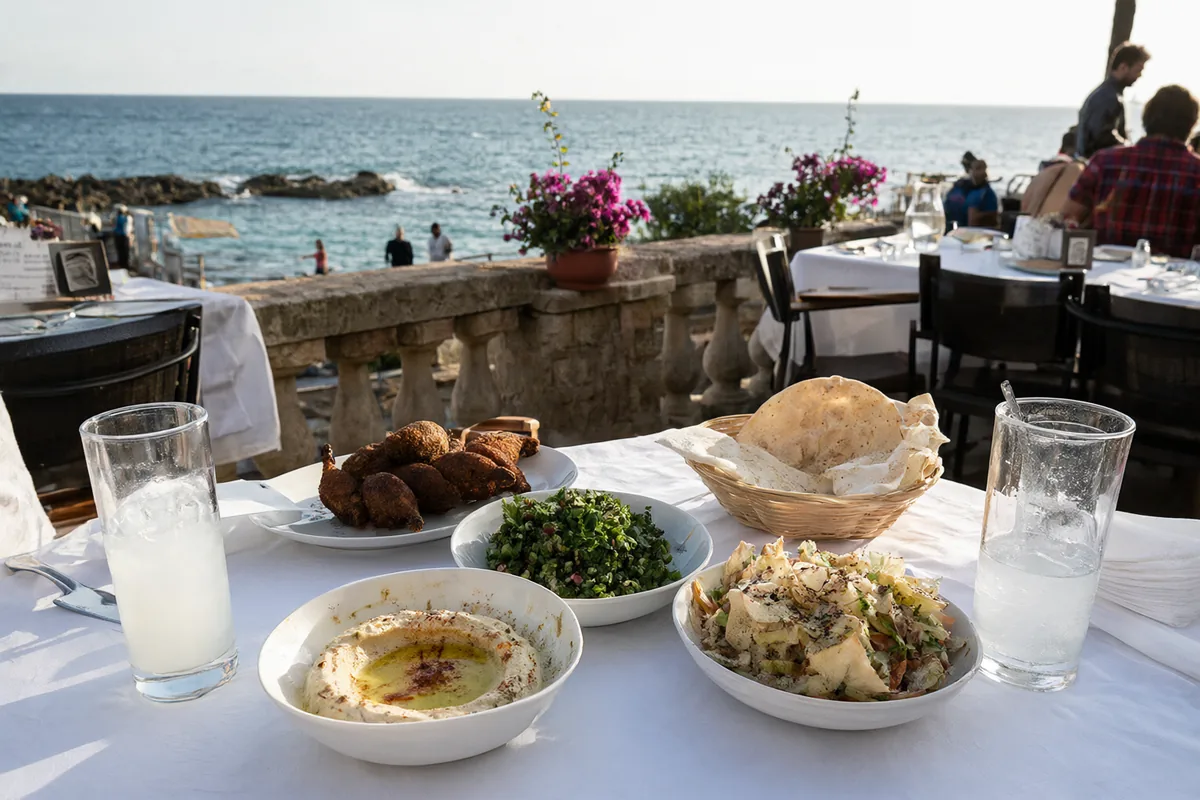
Lebanon is a small country with one of the most loved cuisines in the world. Lebanese food is built on mezze, the long parade of small dishes that turns a meal into an afternoon, and on fresh herbs, lemon, olive oil, garlic and bread baked minutes before it reaches the table. This Lebanon food guide covers the dishes to know, how to read an Arabic menu, how tipping and paying work, and then goes city by city through where to eat in Beirut, Byblos, Batroun, Tripoli, Zahle, Sidon and Tyre. Distances are short: you can have breakfast in Beirut, lunch by the sea in Byblos and dinner in the Bekaa Valley the same day.
What to eat in Lebanon: 12 dishes to know
A Lebanese meal starts with cold mezze, moves on to hot mezze, and then, if you still have room, grilled meat or fish. These are the dishes worth knowing by name.
- Hummus: chickpeas blended with tahini, lemon and garlic, served with olive oil. Order hummus bi lahmeh to have it topped with sizzling minced lamb and pine nuts.
- Tabbouleh: a salad of finely chopped parsley with tomato, mint, onion, lemon and a little bulgur. In Lebanon it is green, not grainy.
- Fattoush: a chopped salad with crisp fried bread, purslane, radish and a sour dressing of sumac and pomegranate molasses.
- Moutabal and baba ghanouj: smoky aubergine, blended with tahini (moutabal) or chopped with tomato, onion and pomegranate (Lebanese baba ghanouj).
- Kibbeh: bulgur and minced meat in many forms, fried as torpedo-shaped croquettes, baked in a tray, or served raw as kibbeh nayyeh, finely pounded lamb with olive oil, mint and onion.
- Warak enab: vine leaves rolled around rice, either vegetarian with lemon and olive oil or with meat.
- Man'oushe: flatbread baked with za'atar (thyme, sumac and sesame) and olive oil, or with cheese. The classic Lebanese breakfast, folded and eaten on the move.
- Shawarma: chicken or beef from the spit, wrapped in thin bread with pickles. Chicken shawarma comes with toum, a fierce whipped garlic sauce.
- Shish taouk and kafta: marinated chicken skewers and spiced minced meat skewers, the mainstays of the mashawi (grill) section.
- Sfiha baalbakiyeh (Baalbek): small open pies of minced lamb, tomato and pomegranate molasses.
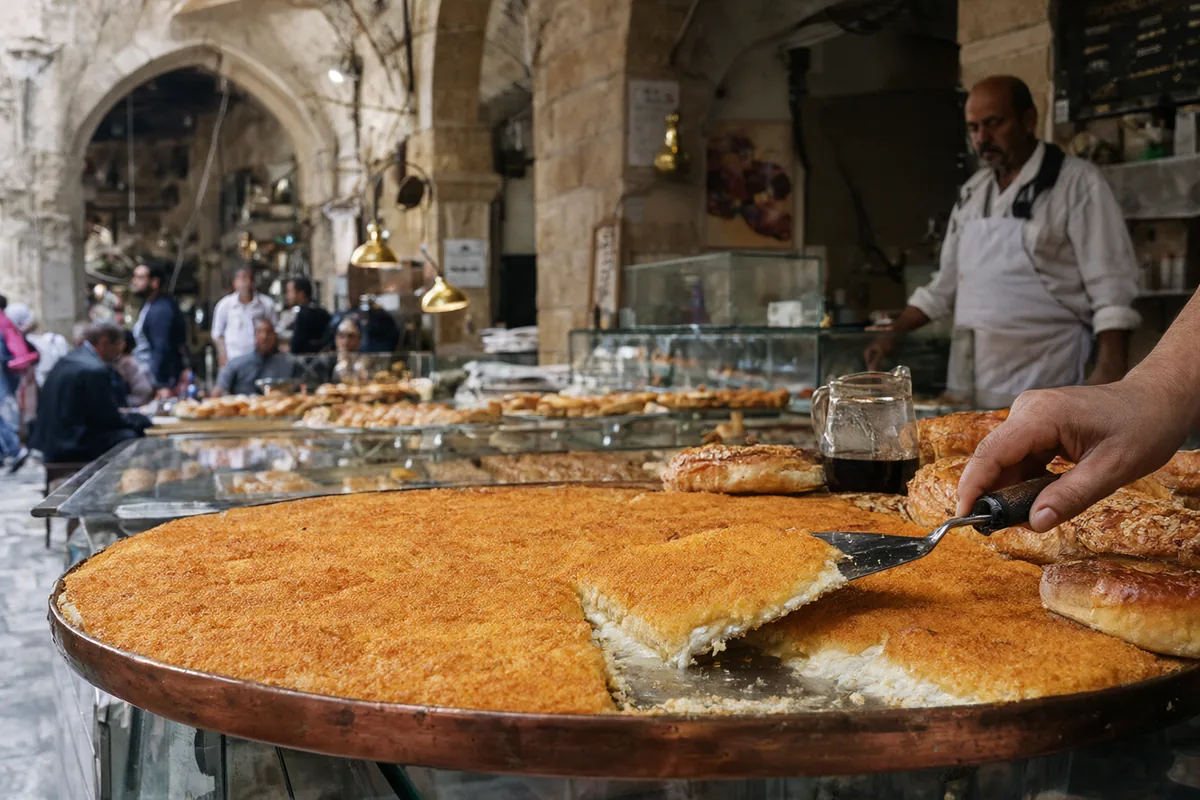
- Knefeh (Tripoli): sweet cheese under a layer of semolina, soaked in syrup and often eaten for breakfast inside a sesame ka'ak bread.
- Arak: the national spirit, distilled from grapes and flavoured with aniseed, mixed with water and ice until it turns cloudy white and sipped through a long mezze meal.
Other names you will meet: fatteh (chickpeas, yoghurt and crisp bread), mjaddara (lentils and rice or bulgur with caramelised onions), labneh (strained yoghurt), samkeh harra (fish baked with chilli and tahini), maamoul (date or nut-filled biscuits) and mouhalabieh (milk pudding with orange blossom). Lebanon also makes good wine, mostly from the Bekaa Valley.
How to read an Arabic menu
Most restaurants in Lebanon print menus in Arabic and English, and many add French. Bakeries, shawarma counters and sweet shops in the souqs are the places where you may see Arabic only, usually on a board behind the counter. Arabic is written from right to left. Mezze menus are usually split into cold (bared) and hot (sukhn) sections.
| Arabic | Romanised | Meaning |
|---|---|---|
| مازة | mezze | Small shared dishes |
| بارد / سخن | bared / sukhn | Cold / hot |
| مشاوي | mashawi | Grills |
| لحمة | lahmeh | Meat |
| جاج | djej | Chicken |
| سمك | samak | Fish |
| نيّة | nayyeh | Raw, as in kibbeh nayyeh |
| منقوشة | man'oushe | Baked flatbread with topping |
| كعك | ka'ak | Sesame bread ring |
| لبنة | labneh | Strained yoghurt |
| طحينة | tahini | Sesame paste sauce |
| صيامي | siyami | Lenten, made without animal products |
| حلويات | halawiyat | Sweets, desserts |
| نباتي | nabati | Vegetarian |
Fish restaurants on the coast often sell fish by weight. You choose from the display, it is weighed and priced per kilo, and you say how you want it cooked: grilled, fried or baked. A mezze for two can easily run to ten or more dishes, so order a few at a time.
Lebanese menus can show prices in Lebanese pounds, in US dollars, or both, and a fish counter price is per kilo, not per plate. swap.menu reads both currencies, converts them to your home currency and flags priced-by-weight items and service lines, so a long mezze lunch does not end with a surprise.
Tipping, cash and paying the bill
Check your government's current travel advice before planning a trip. Menu prices in Lebanon normally include VAT, but some restaurants add a service charge, usually shown at the bottom of the menu or bill. Our guide to tax and service charges on menus explains how these lines work around the world.
Tipping is customary. Around 10 percent is normal in sit-down restaurants, or a little extra where a service charge has already been added. Round up at cafés and bakeries, and tip the valet at restaurants with valet parking, which is very common in Beirut.
The currency is the Lebanese pound (LBP, written LL or ل.ل), also called the lira. Since 2019, US dollars have been widely used alongside it, and many restaurants list prices in dollars, in pounds, or in both. Cash is still preferred in many places, especially outside Beirut, so carry clean US dollar notes and some pounds for small purchases. Upmarket restaurants and hotels usually accept international cards. If a card machine offers to charge you in your home currency, decline: our guide to paying in local currency explains why.
The Lebanese eat late and long. Lunch runs from about 1pm to 4pm, and a Sunday family lunch in the mountains can last all afternoon. Dinner starts around 8:30pm or 9pm and goes on well past midnight in Beirut.
Alcohol is legal and widely served in restaurants and bars, and arak, wine and beer are part of the table. Some restaurants in conservative areas, including parts of Tripoli and Sidon, do not serve it. During Ramadan, Lebanon has no general ban on eating in public, and restaurants in mixed and Christian areas open as usual, but in mainly Muslim neighbourhoods many places close by day and open for iftar at sunset. Eat and drink discreetly there during daylight.
Where to eat in Lebanon, city by city
Lebanon covers only about 10,000 square kilometres, and most of these cities are within two hours of Beirut. Jump to a city:
Where to eat in Beirut
Beirut is the centre of Lebanese eating out, with everything from street-corner bakeries to formal mezze restaurants. The districts of Mar Mikhael and Gemmayzeh, along Armenia Street and Gouraud Street, are packed with restaurants, wine bars and cafés in old stone houses with arched windows, and are where Beirut goes out at night. Hamra, near the American University, is cheaper and more student-oriented, with shawarma counters, juice bars and cafés. Achrafieh, on the hill above, has quieter neighbourhood restaurants and some of the best bakeries for a morning man'oushe.
Do not miss Bourj Hammoud, Beirut's Armenian district, for basterma (air-dried spiced beef), sujuk sausage, lahmajoun, tiny manti dumplings and Armenian sweets. Along the Corniche, the seafront promenade, carts sell ka'ak bread, roasted corn and coffee to walkers and fishermen. The long-running Souk el Tayeb farmers' market brings producers from across the country to Beirut. A Beirut tip: on a first visit, order a mixed mezze and a grill at a traditional restaurant, then use breakfast and lunch for the bakeries and sandwich shops, which is how Beirutis actually eat day to day.
Where to eat in Byblos
Byblos, or Jbeil in Arabic, 40 kilometres north of Beirut, is one of the oldest continuously inhabited towns in the world and one of the easiest day trips from the capital. The stone lanes of the old souk lead down to a small harbour ringed by fish restaurants with views over the water. This is where to order fish by weight, grilled or fried, with a full spread of mezze, samkeh harra and a bowl of sayadieh, fish with spiced rice and caramelised onions.
The souk itself has cafés, ice cream and juice stalls and small sandwich shops for a cheaper lunch. In summer, Byblos stays busy into the night with restaurants and bars around the old town and along the coast. Visit Byblos's Crusader castle and the Phoenician ruins in the morning, then aim for a long lunch at the harbour in the afternoon, when the light is best and the restaurants are not yet full.
Where to eat in Batroun
Batroun, a small coastal town further north, is known across Lebanon for its lemonade, made from local lemons and sometimes flavoured with orange blossom water, sold at old juice shops in the town centre. The old town of Batroun has narrow stone streets, a Phoenician sea wall and churches by the water, and its seafront has fish restaurants and beach bars that fill up in summer.
The hills behind Batroun are dotted with vineyards and small wineries, and the area has become a popular weekend escape from Beirut for wine tasting and long lunches. In the evenings, Batroun's old town turns into one of the liveliest nightlife spots outside the capital, with bars in courtyards and on rooftops. A tip for Batroun: on summer weekends it gets very crowded, so arrive early or go midweek if you want a table at the water's edge.
Where to eat in Tripoli
Tripoli, Lebanon's second city, is the capital of Lebanese sweets. The city is famous for its knefeh, its halawet el jibn (rolls of soft sweet cheese dough filled with cream) and its baklava, and the old sweet shops of Tripoli draw people from across the country. Breakfast here means knefeh in a sesame bread, or ful and fatteh at a small restaurant in the souk.
The old souks below the Citadel of Raymond de Saint-Gilles are among the best-preserved Mamluk markets in the Middle East, with spice sellers, butchers, soap makers at Khan al-Saboun, bakeries and small cafés. Tripoli is more conservative than Beirut, so dress modestly in the old city, and expect most traditional restaurants to be alcohol-free. Prices in Tripoli are noticeably lower than in the capital, and the street food is some of the best value in Lebanon.
Where to eat in Zahle
Zahle, in the Bekaa Valley about an hour east of Beirut over the mountains, is the home of the classic Lebanese mezze lunch. Along the Berdawni river at the top of the town, garden restaurants with tables under the trees serve huge spreads of mezze, raw kibbeh nayyeh, grilled meats and arak, and a weekend lunch here is a Lebanese tradition. Zahle has a long reputation for its arak, and the town is known locally for its wine and its poets.
The Bekaa around Zahle is Lebanon's farming heartland and its main wine region, with many wineries open to visitors. The valley is also where to try fresh labneh, local cheeses and seasonal fruit from roadside stalls. Zahle makes a good stop on the way to the Roman temples at Baalbek, where you should try sfiha baalbakiyeh, the small meat pies the town is named for.
Where to eat in Sidon
Sidon, or Saida, 40 kilometres south of Beirut, is an old port with a Crusader Sea Castle and a souk that still works as a market rather than a tourist attraction. The covered lanes of the old souk are full of bakeries, butchers, falafel and ful shops and sweet makers, and Sidon is known for its sanioura, a crumbly shortbread biscuit. The area around the fishing harbour has simple restaurants serving the morning's catch.
Sidon is a good place to eat a traditional breakfast of ful, hummus and fatteh at a counter in the souk, with fresh bread and a plate of mint, tomato and onion. Like Tripoli, Sidon is conservative and most restaurants in the old town do not serve alcohol. Combine Sidon with a stop at the restored Khan el-Franj, the old caravanserai on the waterfront.
Where to eat in Tyre
Tyre, or Sour, in the far south, is a seaside town with Roman ruins, long sandy beaches and a small fishing port. The best food in Tyre is around the old harbour and the Christian quarter behind it, where seafood restaurants and small cafés look over the fishing boats. Order grilled fish by weight, fried calamari and a full mezze, or a simple fish sandwich from a stall near the port.
In summer, the public beach south of Tyre's centre has simple beach cafés serving grilled meat, salads and cold drinks. The farms of south Lebanon grow citrus, bananas and vegetables, so the salads and fruit here are excellent. Tyre is quieter than the northern coast, and prices are lower, which makes it a relaxed place for a long seafood lunch.
Vegetarian, vegan and allergy tips
Lebanon is one of the easiest countries in the region for vegetarians and vegans. Much of a mezze is plant-based: hummus, moutabal, tabbouleh, fattoush, falafel, vegetarian vine leaves, mjaddara, ful and many dishes cooked in olive oil. Lebanon's Christian communities fast before Easter and at other times, and dishes marked siyami contain no animal products at all. The word for vegetarian is nabati.
Watch for hidden meat in stuffed vegetables and vine leaves, lamb fat in some kibbeh, butter or ghee in rice and sweets, and yoghurt in sauces. Sesame, in the form of tahini, is in a huge number of dishes and dressings. Pine nuts, pistachios and walnuts appear in sweets and on top of meat dishes. Our guide to eating abroad with food allergies explains how to communicate an allergy clearly when you do not speak the language.
Useful Arabic phrases for ordering
Many Lebanese switch easily between Arabic, French and English, and a "merci" is as common as "shukran". These phrases use the Lebanese dialect.
مرحبا Marhaba: "Hello"
شو بتنصحني؟ Shu btinsahni?: "What do you recommend?"
بدّي هيدا Baddi hayda: "I want this" (pointing)
بلا لحمة Bala lahmeh: "Without meat"
عندي حساسية على... Andi hasesiyeh ala...: "I am allergic to..."
الحساب لو سمحت El-hsab law samaht: "The bill, please"
صحتين Sahtein: "To your health", said before eating. The reply is "ala albak"
يسلمو إيديك Yislamo ideyk: "Bless your hands", a compliment to the cook
How swap.menu helps you eat in Lebanon
A Lebanese mezze menu can list forty dishes, half of them variations on kibbeh, and a Tripoli sweet shop board may be in Arabic only. Photograph it with swap.menu and every dish appears in your language with the Arabic name beside it and a short explanation, so you know that kibbeh nayyeh is raw lamb, that samkeh harra is spicy, and that halawet el jibn is a sweet, not a cheese plate. Prices in Lebanese pounds or US dollars are converted to your home currency, and we flag service lines and fish priced by the kilo.
Tap the dishes you want, add a note such as "no pine nuts" or "vegan, please", typed or spoken, and swap.menu translates your order into Arabic. Show the waiter your phone, or let them scan the QR code and read your order on their own screen. Try it now on a sample menu with the free demo, or see travel pass prices.
Off to Lebanon? Your first 3 menu scans are free, and a travel pass starts from $4.99 with nothing that renews.
Start free with 3 scansLebanon food FAQ
Do you tip in restaurants in Lebanon?
Yes, tipping is customary. Around 10 percent is normal in sit-down restaurants, and a little extra is usual even where a service charge has been added. Round up at cafés and tip valet parking attendants.
What food is Lebanon famous for?
Lebanon is famous for mezze, especially hummus, tabbouleh, fattoush, moutabal and kibbeh, and for man'oushe, shawarma with garlic sauce, grilled skewers and sweets such as knefeh and baklava. Arak and Bekaa Valley wine are the traditional drinks.
Should I bring cash to Lebanon?
Yes. Cash is widely preferred, especially outside Beirut, and many places price in US dollars as well as Lebanese pounds. Carry clean US dollar notes and some local currency, and use cards at hotels and upmarket restaurants.
What time do people eat dinner in Lebanon?
Dinner usually starts around 8:30pm or 9pm and can run past midnight in Beirut. Lunch is between about 1pm and 4pm, and weekend lunches in the mountains or the Bekaa often last all afternoon.
Is tap water safe to drink in Lebanon?
It is best not to drink the tap water in Lebanon. Bottled water is cheap and served everywhere, and restaurants bring it to the table.
How can I read an Arabic menu in Lebanon?
Most restaurants have English or French menus, but bakeries and sweet shops may use Arabic only. Learn a few words such as mezze, mashawi and nayyeh, or photograph the menu with swap.menu, which translates every dish, explains it, converts prices to your currency and translates your order into Arabic.
Travelling further in the region? Read our food guides for neighbouring countries:
- Jordan food guide
- Israel food guide
- Cyprus food guide
- Turkey food guide
- Armenia food guide
- Egypt food guide
Or browse every travel food guide.