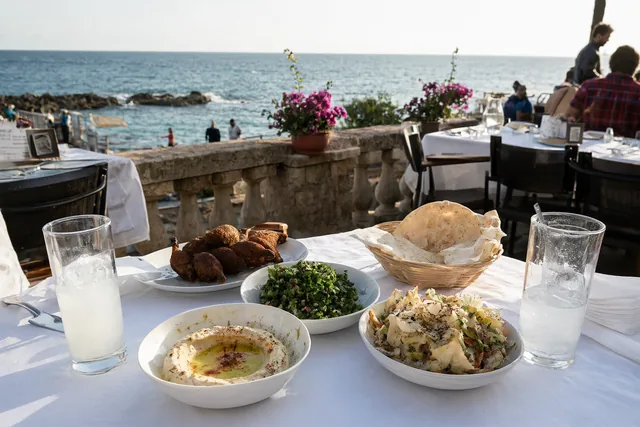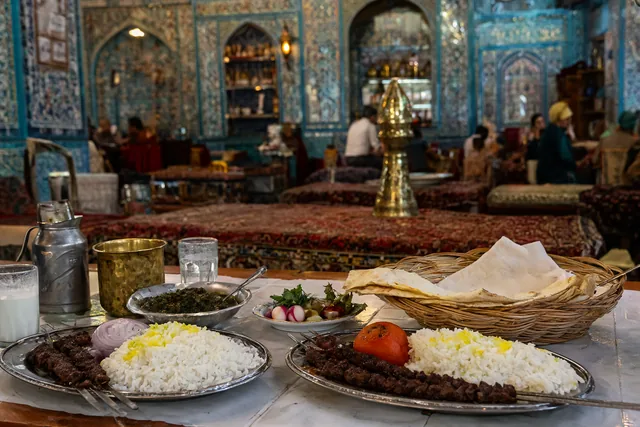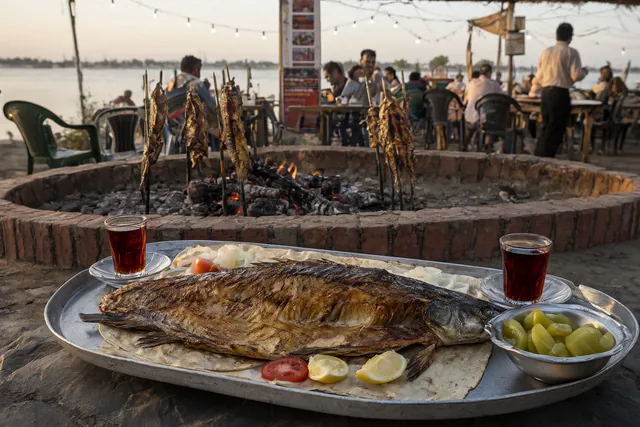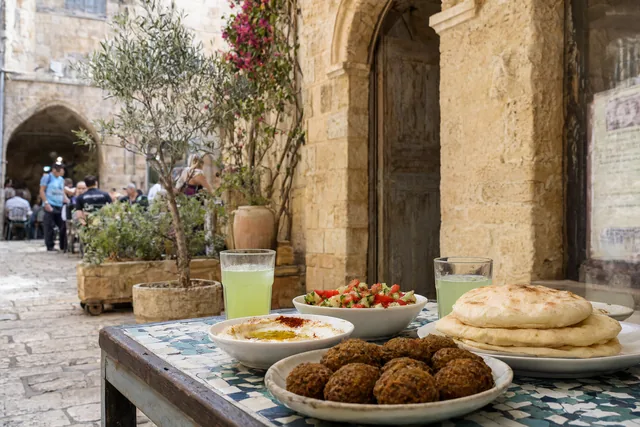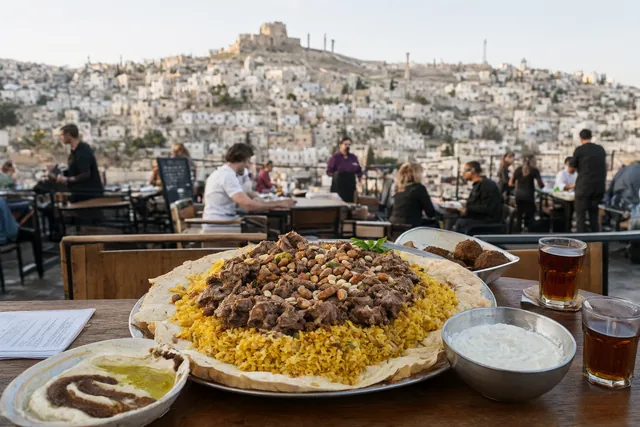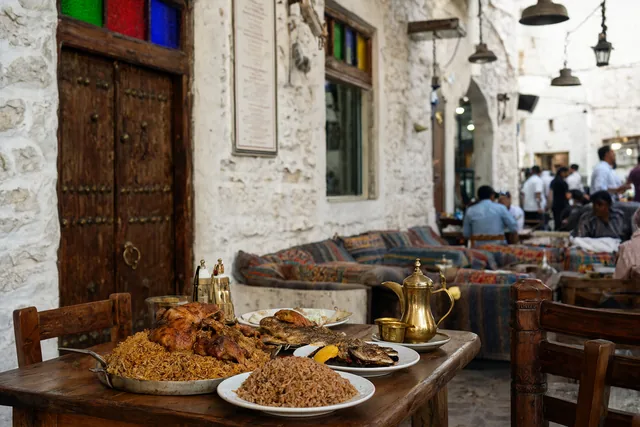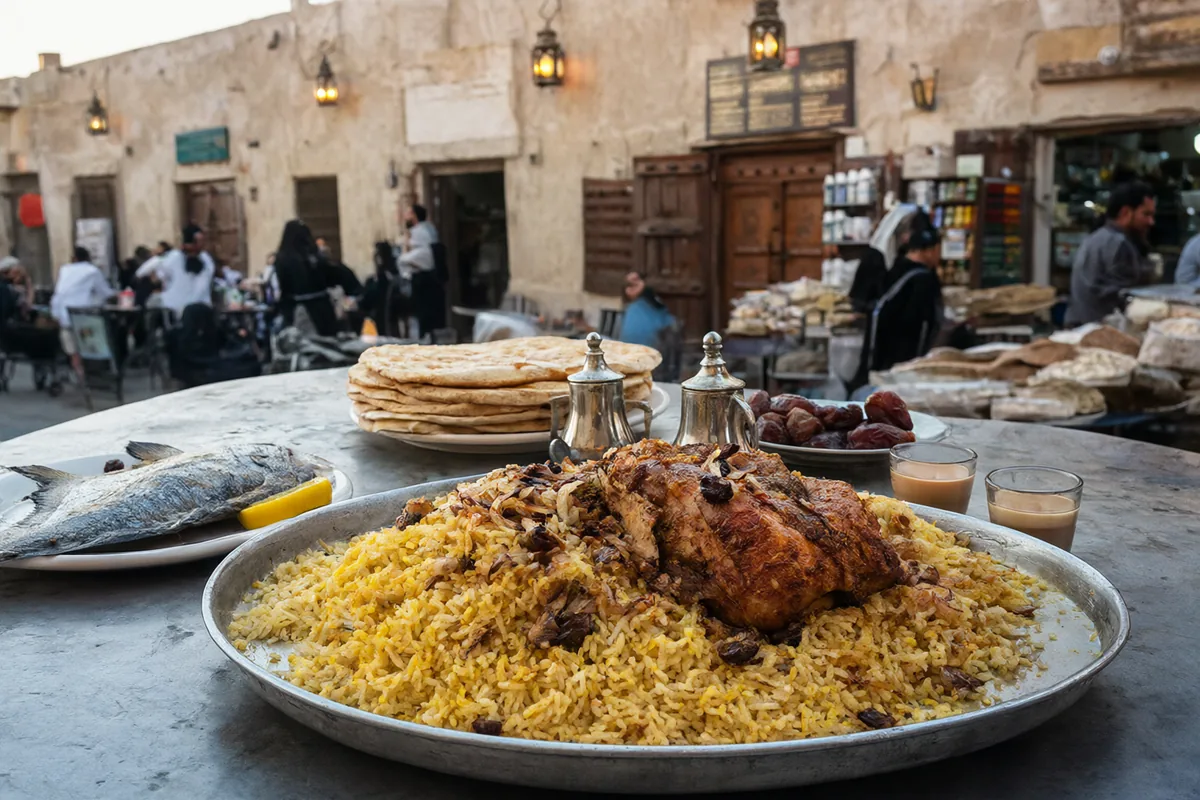
Kuwait is a small, wealthy Gulf state where eating out is the main social activity, from family dinners that start after 9pm to late-night tea and grilled meat in the old souq. Kuwaiti cooking sits between Arabia, Iran and India: spiced rice with chicken, lamb or fish, Iranian-style flatbread hot from street bakeries, and a love of cardamom, saffron and dried lime. This Kuwait food guide covers the dishes to know, how to read the Arabic on a menu, tipping and paying, the rules on alcohol and Ramadan, and then where to eat in Kuwait City, Sharq, Salmiya, Hawalli, Fahaheel and Jahra. The country is compact, so you can eat your way across all six in a few days.
What to eat in Kuwait: 12 dishes to know
Traditional Kuwaiti food is home cooking first, and many of these dishes appear at family meals and during Ramadan more than on restaurant menus. Look for restaurants that describe themselves as serving Kuwaiti or "popular" (sha'bi) food, and for the stalls in Souq Al Mubarakiya.
- Machboos (everywhere): the national dish, long-grain rice cooked in a spiced stock with chicken, lamb or fish, flavoured with loomi (dried black lime), cardamom, cinnamon and a spice mix called bezar. Often topped with fried onions and raisins and served with a tomato sauce called dakkous.
- Mutabbaq zubaidi: pomfret (zubaidi), the most prized fish in Kuwait, fried or grilled and served on spiced rice. Zubaidi is seasonal and priced to match.
- Murabyan: rice cooked with Gulf shrimp, turmeric and spices, a dish that goes back to the days when Kuwait lived from the sea.
- Hamour: grouper, the everyday fish of the Gulf, served grilled, fried or in a curry-like sauce.
- Gabout: flour dumplings stuffed with meat or chickpeas, simmered in a tomato and dried lime stew.
- Harees and jireesh: slow-cooked wheat with meat, beaten until smooth (harees) or left coarse (jireesh), both essential during Ramadan and Eid.
- Tashreeb: pieces of thin bread soaked in a meat and vegetable stew, a winter and Ramadan favourite.
- Mumawwash: rice cooked with mung beans, often served with fried fish or dried shrimp.
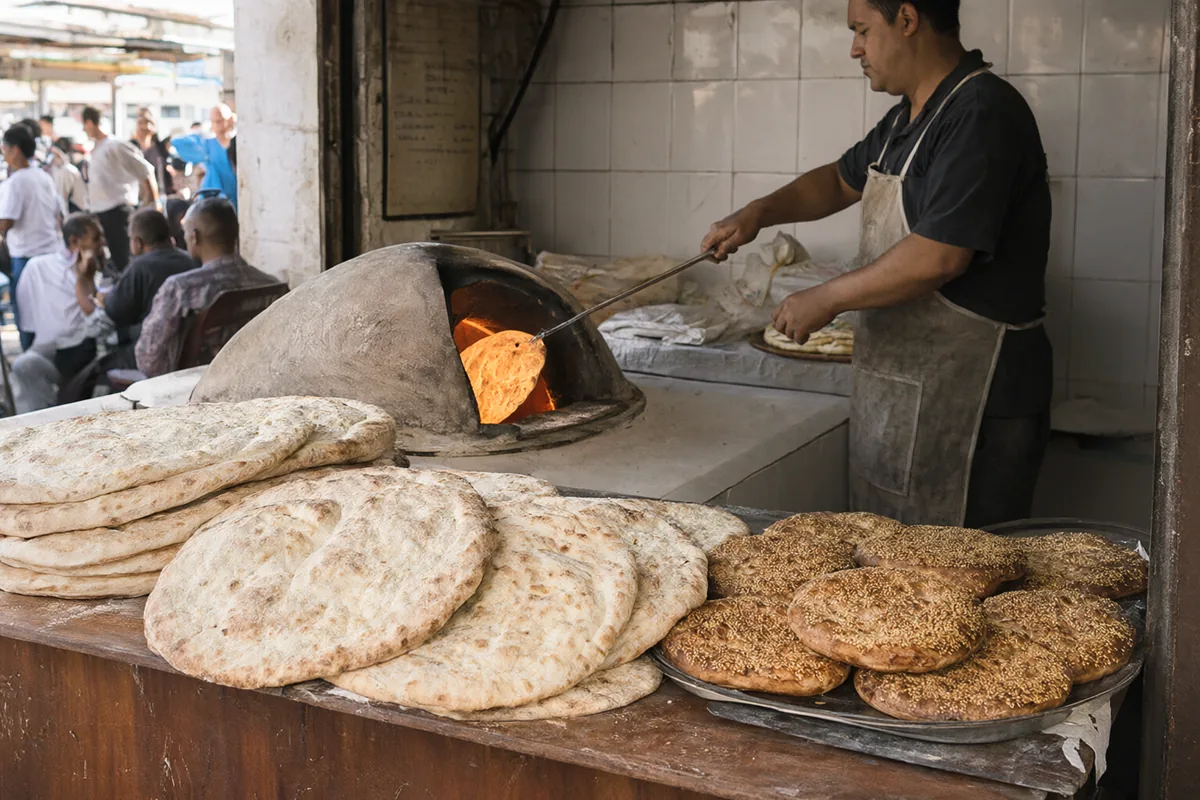
- Khubz irani and tannour bread: large flatbreads baked on the walls of a clay oven in small bakeries, sold hot for very little and eaten with everything.
- Balaleet: sweet vermicelli flavoured with saffron, cardamom and rosewater, topped with a thin omelette. A breakfast dish.
- Luqaimat: small fried dough balls drizzled with date syrup (dibs) and sesame seeds, sold at cafés and Ramadan stalls.
- Gahwa and dates: light Arabic coffee spiced with cardamom and sometimes saffron, poured in small handleless cups and served with dates. Shake the cup gently from side to side when you have had enough.
Kuwait's large Indian, Egyptian, Lebanese, Syrian, Iranian and Filipino communities mean the everyday food on the street is just as often shawarma, biryani, Egyptian ful or a Lebanese grill. Street snacks sold from carts and in the souq include nikhi (boiled chickpeas with cumin) and baqilla (boiled broad beans).
How to read an Arabic menu in Kuwait
Restaurants in malls and hotels almost always have menus in Arabic and English, but small bakeries, souq stalls, fish restaurants and cafeterias may post prices in Arabic only. Arabic is written from right to left. Kuwaiti dialect also has its own pronunciation: the letter ج often sounds like "y", so chicken (dijaj) is said "dyay", and ك can sound like "ch", so fish (samak) becomes "samach". In the Gulf, the word aish means rice, not bread.
| Arabic | Romanised | Meaning |
|---|---|---|
| مقبلات | muqabbilat | Starters |
| مشاوي | mashawi | Grills |
| مجبوس | machboos | Spiced rice with meat or fish |
| عيش | aish | Rice (in the Gulf) |
| لحم | laham | Meat, usually lamb |
| دجاج | dijaj (dyay) | Chicken |
| سمك | samak (samach) | Fish |
| روبيان | rubyan | Shrimp, prawns |
| زبيدي / هامور | zubaidi / hamour | Pomfret / grouper |
| خبز | khubz | Bread |
| لبن | laban | Salted drinking yoghurt |
| حلويات | halawiyat | Sweets, desserts |
| شاي / قهوة | chai / gahwa | Tea / coffee |
| نباتي | nabati | Vegetarian |
Fish restaurants often price by weight, per kilo, and you choose your fish from the counter before it is cooked. Prices in Kuwait are written with three decimals, because the dinar is divided into 1,000 fils: "1.250" means one dinar and 250 fils, not one and a quarter fils.
A Kuwaiti menu that says "1.750" or "KD 3.500" trips up many visitors, who are used to two decimal places. swap.menu reads three-decimal dinar prices correctly, converts them to your home currency and flags any service charge line, so a plate of zubaidi priced by the kilo holds no surprises.
Tipping, service charges and paying
Most restaurants in Kuwait show the full price on the menu. Some hotel restaurants and upmarket places add a service charge, so check the bottom of the bill before you tip. Kuwait, unlike most of its Gulf neighbours, had not introduced VAT at the time of writing, so a separate tax line is unusual, but it is worth a glance at the bill. Our guide to tax and service charges on menus explains how these lines work around the world.
Tipping is appreciated but not compulsory. Around 10 percent is normal in sit-down restaurants where no service charge has been added. At cafeterias, bakeries and shawarma shops, rounding up or leaving the coins is enough. Much of the restaurant workforce is from South Asia and the Philippines, and a tip handed to the waiter directly is the surest way for it to reach them. Delivery is enormous in Kuwait, and a small tip for the driver is customary.
The currency is the Kuwaiti dinar (KWD, written KD or د.ك), divided into 1,000 fils. Cards are accepted almost everywhere, including small cafés, and contactless payment is normal. The local debit network is called KNET, and some very small shops and souq stalls only take KNET or cash, so carry a few dinars. If a card machine offers to charge you in your home currency, decline and pay in dinars: our guide to paying in local currency explains why.
Kuwait eats late. Lunch, the main family meal, runs from about 1pm to 3pm, and dinner rarely starts before 8:30pm, with restaurants and malls busy until midnight and later. The weekend is Friday and Saturday, and Friday lunch is the big family meal of the week. In summer, when daytime temperatures pass 45 degrees, life moves indoors and into the evening.
Alcohol is banned in Kuwait. It is not served anywhere, including international hotels, and it is illegal to bring it into the country. Restaurants serve fresh juices, mocktails, laban, sweet tea and coffee instead. During Ramadan, eating, drinking and smoking in public during daylight hours is against the law and applies to visitors too. Most restaurants close in the day and open at sunset for iftar, and many stay open very late for ghabga, the Kuwaiti late-night Ramadan gathering with food. Mid-Ramadan brings Gergean, when children go door to door collecting sweets and nuts.
Where to eat in Kuwait, district by district
Kuwait is essentially one large metropolitan area along the coast, so these are the districts and towns where the food is, from the old souq to the southern suburbs. Jump to a district:
Where to eat in Kuwait City
The heart of traditional eating in Kuwait City is Souq Al Mubarakiya, one of the oldest markets in the Gulf and the best place in the country to try Kuwaiti food in a casual setting. The covered lanes are full of date sellers, spice shops, honey and nut stalls and sweet shops, and around the edges are open-air restaurants with plastic tables where you order grilled meat, kebabs, fried fish and rice, with piles of hot flatbread and fresh herbs, radishes and onions on the side. Go in the evening, when the heat drops and families come out, and finish with sweet tea or a cardamom coffee.
Beyond the souq, central Kuwait City is a business district with hotels and office towers, and much of its restaurant life is in hotel restaurants and the new waterfront developments. The neighbourhoods around the souq and the Grand Mosque have small cafeterias serving Indian and Egyptian food at low prices, a good option for a quick lunch. For a sit-down Kuwaiti meal, look for restaurants that serve machboos, murabyan and gabout and decorate in the style of an old Kuwaiti house, with carved wooden doors and courtyard seating. Kuwait City is also the place to see a diwaniya, the traditional evening gathering of men at home, though you will usually only join one by invitation.
Where to eat in Sharq
Sharq, the old pearl-diving quarter on the eastern side of Kuwait City, is the place to see Kuwait's relationship with the sea. The main fish market beside the Souq Sharq waterfront is worth a visit early in the morning, when the catch comes in and buyers bargain over hamour, zubaidi, sea bream and Gulf shrimp. The fish is mostly sold whole by the kilo. Some restaurants nearby will cook what you buy, or you can eat at a seafood restaurant where you choose from the display and decide whether you want it grilled, fried or cooked into rice.
From Sharq, the Arabian Gulf Street runs along the coast past the Kuwait Towers and is lined with cafés and restaurants with sea views, busiest after sunset and on weekend evenings. This stretch is where Kuwaitis come for shisha, juice and late dinners, and the cafés serve everything from Lebanese mezze to Turkish breakfast. A Sharq tip: zubaidi is at its best and most plentiful from late summer into autumn, and its price on the menu changes with the season, so check before you order.
Where to eat in Salmiya
Salmiya is Kuwait's busiest residential and shopping district and the easiest place for a visitor to eat well on any budget. Salem Al Mubarak Street is the main strip, lined with shops, cafés and restaurants serving Lebanese, Indian, Iranian, Turkish, Filipino and international food, and the coastal road along the Marina area has waterfront cafés and dessert shops. Salmiya is where you find the widest choice of breakfast cafés, burger bars, speciality coffee and dessert shops, a large part of modern Kuwaiti eating out.
Salmiya's back streets are where to find the cheapest and often best food: shawarma counters, Indian and Pakistani cafeterias serving biryani and karak tea, and Iranian bakeries pulling flatbread from the oven. Kuwaitis are serious about dessert, and Salmiya is the place to try kunafa, Turkish ice cream and saffron cakes. In the evening, especially at weekends, traffic around Salmiya is heavy, so allow time or take a taxi. Most Salmiya restaurants list prices in English as well as Arabic.
Where to eat in Hawalli
Hawalli, just inland from Salmiya, is one of the most densely populated parts of Kuwait and home to large Egyptian, Syrian, Lebanese, Palestinian and Indian communities. That makes it the place for authentic, inexpensive Arab food. Tunis Street is the best-known food street in Hawalli, a long road of restaurants, juice bars, sweet shops and shawarma stands that stays busy late into the night. Look for Syrian shawarma wrapped in thin bread, Egyptian koshari and ful, Lebanese manakish and fresh juice cocktails layered with fruit and cream.
Hawalli is less polished than Salmiya and more about value. Many restaurants here are cafeterias with Arabic-only boards above the counter and a short list of dishes, which is where a translated menu helps. Breakfast in Hawalli means ful, falafel, hummus and fresh bread, often eaten standing or at a shared table. Prices are among the lowest in Kuwait, and a filling meal costs a fraction of what you pay at the mall restaurants.
Where to eat in Fahaheel
Fahaheel, about 40 kilometres south of Kuwait City near the oil town of Ahmadi, is a town in its own right and the food centre of southern Kuwait. It has a large South Asian population, and Fahaheel is one of the best places in the country for Indian food, especially Keralan and South Indian: dosa, appam, fish curry, parotta and beef fry, served at cafeterias for very little. The old market streets of Fahaheel are full of small restaurants, sweet shops and bakeries turning out hot flatbread.
The Fahaheel waterfront has a seaside promenade with cafés and family restaurants, and is busiest on weekend evenings. The nearby suburbs of Mangaf and Mahboula are also full of Indian, Sri Lankan, Nepali and Filipino eateries. A tip for Fahaheel: many cafeterias here run a busy lunch trade with a set "meals" plate of rice, curries and sides, written on a board rather than a printed menu, so ask what is on today.
Where to eat in Jahra
Jahra, west of Kuwait City at the head of Kuwait Bay, is the most traditional part of the country and the gateway to the desert. It has a much smaller food scene than Salmiya or Hawalli, and visitors mostly come for the historic Red Fort. What Jahra does well is everyday Kuwaiti and Bedouin-style food: grilled meat, rice with lamb, camel milk and dates. In winter and spring, when the weather cools, Kuwaiti families head to the desert north and west of Jahra for camping, and the shops around Jahra sell everything for a desert barbecue.
The local restaurants in Jahra serve machboos, grilled chicken and kebabs to a mostly local crowd, and menus are more likely to be in Arabic only. Jahra is also a good place to buy dates, which Kuwaitis take seriously: shops sell dozens of varieties by the kilo, from soft, dark khalas to crisp barhi in season. Treat Jahra as a half-day trip with a meal rather than a dining destination.
Vegetarian, vegan and allergy tips
Traditional Kuwaiti food is built on meat, fish and rice, and even dishes that look vegetarian may use meat stock or ghee (clarified butter). Rice in machboos-style dishes is cooked in the meat or fish stock. That said, vegetarians eat well in Kuwait thanks to its Indian and Levantine communities: Indian cafeterias offer dal, chana masala, dosa and vegetable biryani, and Lebanese and Syrian restaurants have hummus, moutabal, falafel, tabbouleh, fattoush and grilled halloumi. The word to use is nabati, vegetarian, and Indian restaurants understand "veg" and "pure veg". All meat served in Kuwait is halal, and pork is not available.
Common hidden ingredients include ghee in rice and sweets, pine nuts and pistachios in desserts, sesame in bread toppings, tahini in dips and sauces, and dried shrimp in some rice dishes. Nuts are everywhere in Kuwaiti sweets. Our guide to eating abroad with food allergies explains how to communicate an allergy clearly when you do not share a language.
Useful Arabic phrases for ordering
English is widely spoken in Kuwait, and many restaurant staff speak Hindi, Malayalam or Tagalog more readily than Arabic. These Kuwaiti phrases are still appreciated, especially in the souq.
السلام عليكم Assalamu alaykum: "Peace be upon you", the standard greeting
شلونك؟ Shlonak?: "How are you?" (shlonich to a woman)
شنو تنصحني؟ Shinu tinsahni?: "What do you recommend?"
أبي هذا Abi hatha: "I want this" (pointing)
بدون لحم Bidoon laham: "Without meat"
عندي حساسية من... Indi hasasiya min...: "I am allergic to..."
الحساب لو سمحت Il-hsab law samaht: "The bill, please"
مشكور Mashkoor: "Thank you", the everyday Gulf way
How swap.menu helps you eat in Kuwait
In Kuwait, the menus most likely to confuse you are the best ones: the Arabic board above a Hawalli shawarma counter, a souq restaurant's handwritten list, or a Kuwaiti menu that lists gabout, tashreeb and mumawwash with no explanation. Photograph it with swap.menu and every dish appears in your language with the Arabic name beside it and a short description, so you know that mutabbaq zubaidi is pomfret on spiced rice and that jireesh is cracked wheat with meat. Every price is converted from Kuwaiti dinars, with their three decimals, to your home currency, and we flag any service charge.
Tap the dishes you want, add a note such as "no nuts" or "vegetarian, please", typed or spoken, and swap.menu translates your order into Arabic. Show the waiter your phone, or let them scan the QR code and read your order on their own screen. Try it now on a sample menu with the free demo, or see travel pass prices.
Off to Kuwait? Your first 3 menu scans are free, and a travel pass starts from $4.99 with nothing that renews.
Start free with 3 scansKuwait food FAQ
Do you tip in restaurants in Kuwait?
Tipping is appreciated but not required. Around 10 percent is normal in sit-down restaurants when no service charge is on the bill, and rounding up is enough at cafeterias and cafés. Check the bill first, as some hotel restaurants add a service charge.
What food is Kuwait famous for?
Kuwait is best known for machboos, spiced rice with chicken, lamb or fish, and for seafood dishes such as mutabbaq zubaidi (pomfret on rice) and murabyan (shrimp rice). Other classics are gabout dumplings, harees, balaleet and luqaimat with date syrup, with Arabic coffee and dates served throughout the day.
Can you drink alcohol in Kuwait?
No. Alcohol is banned throughout Kuwait, including in hotels, and it is illegal to bring it into the country. Restaurants serve juices, mocktails, tea, coffee and laban instead.
Is it expensive to eat out in Kuwait?
It depends where you eat. Mall and hotel restaurants are priced like those in other Gulf cities, but cafeterias, bakeries and shawarma shops in districts like Hawalli and Fahaheel are very cheap. A hot flatbread from a neighbourhood bakery costs very little.
Is tap water safe to drink in Kuwait?
Kuwait's tap water is desalinated and treated, but most residents and restaurants use bottled or filtered water for drinking. Bottled water is cheap and available everywhere, and in summer you will need plenty of it.
How can I read an Arabic menu in Kuwait?
Learn a few key words such as laham (meat), dyay (chicken), samach (fish) and aish (rice), or photograph the menu with swap.menu. It translates every dish into your language, explains what it is, converts dinar prices to your currency and translates your order into Arabic for the waiter.
Travelling further in the Gulf? Read our food guides for neighbouring countries:
- Saudi Arabia food guide
- Bahrain food guide
- Qatar food guide
- United Arab Emirates food guide
- Iraq food guide
- Iran food guide
Or browse every travel food guide.